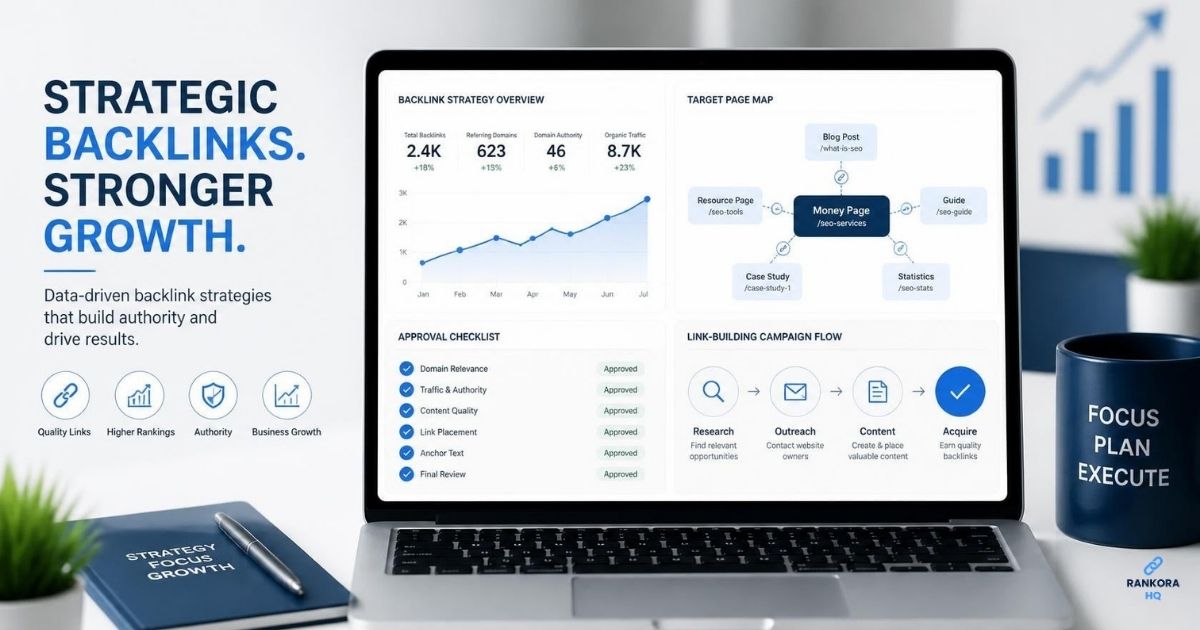
Most client link-building problems start before outreach begins. The client wants backlinks, the agency wants movement, but nobody has agreed on goals, assets, target pages, risk level, or reporting standards. That is where an agency link building strategy becomes useful. It turns link building from random placement chasing into a controlled plan tied to rankings, authority, and client growth.
In my experience running white-label content placement campaigns, the strongest results come when every link has a reason behind it. A proper agency link building strategy shows which pages need support, which assets can earn trust, which tactics fit the client, and how success will be measured. This guide walks through the planning process step by step, so your next client link-building plan is clear, safe, and easy to explain.
What an agency link building strategy actually decides
An agency link building strategy decides why links are being built, where they should point, how they should be earned, and how success will be judged. Without that plan, link building becomes a monthly delivery task instead of an SEO growth system.
For agency clients, the strategy should create alignment before outreach starts. It gives the client, account manager, SEO team, writer, and outreach team the same direction.
It defines the purpose behind every link
Every link should support a clear SEO or business goal. That goal might be improving rankings for a service page, strengthening topical authority, supporting a new content hub, or closing a gap against competitors.
It connects client goals with SEO priorities
Client goals and SEO priorities are not always the same thing. A client may want more leads from one service, but the page may not be ready to rank yet. Another page may already be sitting on page two and need only a few relevant links to move.
It prevents random outreach and wasted placements
Random outreach creates random results. The publisher may look good on paper, but the link may point to the wrong page, use the wrong anchor, or support a page that has no ranking potential.
Start with the client’s goals and current SEO position
A strong client link building plan starts with the client’s real goal, not with a backlink target. Before I choose publishers, anchors, or tactics, I first look at what the client actually wants to improve.
That goal may be more leads, stronger rankings, better authority, or support for a new service page. Each goal needs a different link acquisition strategy.
Identify the business goal before choosing links
The first step is to ask what success should look like. Does the client want more demo bookings, more local leads, more SaaS signups, or more traffic to informational pages?
This matters because not every link has the same job. A link to a service page may support conversions. A link to a guide may build topical authority. A link to the homepage may strengthen the overall domain.
Review rankings, traffic, competitors, and authority gaps
Next, check where the client stands now. Look at current rankings, organic traffic, referring domains, anchor profile, and competitor backlink gaps.
This gives the agency a clear starting point. If competitors have stronger topical links, the campaign should focus on relevance. If the client has weak authority, the plan may need broader editorial placements first.
Separate quick wins from long-term authority building
Some pages are close to ranking and need focused support. Others need months of content, internal links, and backlinks before they can compete.
I usually separate pages into two groups: quick-win pages and long-term authority pages. This keeps the campaign practical and avoids promising fast results where the page is not ready.
Set realistic expectations for timeline and movement
Link building does not move every page at the same speed. A low-competition page may respond faster than a crowded commercial keyword.
Agencies should explain this clearly before the campaign starts. A good strategy sets a realistic timeline, expected link cadence, and the main signals the client should watch.
Build the client link building plan around assets
A client link building plan should be built around the assets the client already has. Before choosing outreach angles, I first check what pages, data, tools, guides, or brand proof can actually support link acquisition.
Good assets make outreach easier. Weak assets force the agency to rely too much on paid placements or generic guest post angles.
Audit existing assets that can earn links
Start by reviewing the client’s strongest pages. These may include original research, detailed guides, case studies, tools, comparison pages, statistics posts, or expert-led articles.
The goal is simple: find pages that give publishers a real reason to link. If the page adds nothing useful, it will be harder to place naturally.
Decide which pages deserve support first
Not every page should receive backlinks right away. Some pages have commercial value but poor content. Others already rank close to page one and need authority support.
I usually prioritize pages that have clear search intent, strong internal links, and a realistic chance to move. This keeps the campaign focused on results, not just link count.
Match assets to outreach angles
Each asset needs a clear outreach angle. A statistics page can support data-based outreach. A case study can support expert commentary. A service page may need contextual editorial links from relevant industry content.
This step makes the editorial link strategy more natural. The link fits the publisher’s content instead of feeling forced.
When a client needs better content before links
Sometimes the best link-building decision is to pause and improve the page first. If the content is thin, outdated, unclear, or too sales-heavy, backlinks may not help much.
In that case, I tell the client honestly. Stronger content gives every future link more value and makes the campaign easier to defend.
Choose target pages with commercial value and ranking potential
Target pages decide where the value of a link-building campaign goes. If the wrong pages receive links, even good placements may not create meaningful growth.
For agency clients, I prefer to choose target pages based on ranking potential, business value, and page quality. This keeps the link acquisition strategy tied to real outcomes.
Prioritize pages already close to ranking
Pages sitting near the bottom of page one or on page two often deserve early attention. They already have some visibility, so the right backlinks can support faster movement.
These pages are usually better first targets than brand-new pages with no traction. The goal is to use links where they can make a clear difference.
Balance homepage, service pages, blog posts, and resource pages
A healthy plan does not send every link to one type of page. The homepage may need authority. Service pages may need commercial support. Blog posts and resource pages may help build topical depth.
This balance makes the backlink profile look more natural. It also supports the full SEO structure instead of pushing only one page.
Avoid sending links only to money pages
Money pages matter, but too many links to them can look forced. Publishers also prefer linking to useful resources, not only sales pages.A better approach is to support commercial pages through a mix of direct links and supporting content. Internal links can then pass relevance from informational pages to service pages.
Create a simple target-page map for approvals
Before outreach begins, create a target-page map for the client. It should show the page URL, target keyword, purpose, preferred anchor direction, and priority level.
Select tactics that match the strategy, not the trend
The right tactic depends on the client’s goals, pages, niche, and risk level. I do not choose guest posting, niche edits, or digital PR because they are popular. I choose them because they fit the campaign plan.
A good link acquisition strategy uses tactics as tools. The strategy comes first. The tactic comes after.
Editorial guest posting for authority and relevance
Editorial guest posting works well when the client needs relevant links from real industry sites. It is useful for building authority around service pages, guides, and topical clusters.
Niche edits for contextual support
Niche edits can work when the client needs links from existing pages that already have age, traffic, or topical relevance. They are useful when the link fits naturally into the content.
Digital PR when the client has newsworthy angles
Digital PR is better when the client has something worth talking about. This could be data, expert insight, a report, a strong opinion, or a timely industry angle.
Unlinked mentions and partnerships for brand-based wins
Some clients already have brand mentions, partner pages, supplier relationships, podcast features, or community mentions. These can become strong link opportunities.
How to decide which tactic fits which client
Match the tactic to the client’s situation. A new SaaS brand may need authority and trust. A local business may need relevance. An agency client with strong content may need editorial links to specific pages.
The best tactic is the one that supports the target page, fits the client’s risk level, and can be repeated without lowering quality.
Add risk controls before campaign execution
Risk controls protect the client before links go live. They help the agency avoid weak publishers, unnatural anchors, irrelevant placements, and reporting issues.
Define quality rules for publishers
Every campaign should have clear publisher standards. These may include minimum traffic, topical relevance, clean outbound links, indexed pages, and real editorial content.
Check relevance, traffic, editorial standards, and link placement
A good link should make sense on the page. The topic, surrounding paragraph, anchor text, and destination URL should all feel natural.
Avoid footprints, over-optimized anchors, and weak networks
Agencies should avoid patterns that look forced. This includes repeated exact-match anchors, links from the same site network, thin guest posts, and pages built only for outbound links.
Anchor text should be varied and natural. The goal is to support SEO without creating an obvious manipulation pattern.
Build an approval workflow before anything goes live
Client approval should happen before publication, not after. Share the publisher, topic, target page, anchor direction, and placement details in advance.
Set campaign cadence, reporting, and review cycles
A link-building campaign needs a clear rhythm. Without cadence, the agency may build links too fast, report too late, or miss early signs that the strategy needs adjustment.
I like to plan cadence before outreach starts. It keeps delivery steady and makes the campaign easier for clients to understand.
Decide monthly link velocity based on the client’s stage
Link velocity should match the client’s website, niche, and current authority. A new site may need a slower pace. An established site with strong content may handle a more active campaign.
Create a repeatable outreach and approval rhythm
Agencies need a simple workflow for outreach, content, approvals, and publishing. This avoids delays and keeps everyone clear on what happens next.
A clean rhythm may look like this: plan targets, approve publishers, create content, confirm placement, publish, then report. Simple systems scale better than messy ones.
Track links, anchors, target pages, and publisher quality
Every campaign should track the basics. This includes live URLs, anchor text, target pages, publisher metrics, content topics, and publication dates.
This tracking helps the agency avoid anchor repetition, overusing the same page, or choosing weak publishers later in the campaign.
Use white-label reports clients can understand
Clients do not just need a list of links. They need to understand what was built, why it matters, and how it supports the strategy.
A strong white-label report should show placements, target pages, anchor usage, publisher relevance, and next steps. This turns monthly reporting into a strategy conversation, not just a delivery update.
Common mistakes agencies make in link building campaign planning

Most link-building mistakes happen when agencies rush into execution without a clear plan. The issue is usually not the tactic itself. It is the lack of strategy behind the tactic.
Selling link volume instead of strategy
Clients may ask for “10 links per month,” but link count alone is not a strategy. Ten weak or irrelevant links can create more risk than value.
Using the same plan for every client
Every client has a different website, niche, authority level, and risk tolerance. Using the same campaign structure for all of them creates poor results.
A SaaS client, local business, and eCommerce brand should not receive the same link acquisition strategy. The plan must fit the client’s market.
Ignoring target-page intent
Some pages are built to inform. Others are built to convert. If the agency ignores search intent, the links may not support the right outcome.
Choosing metrics without checking real relevance
DR, DA, and traffic are useful, but they do not tell the full story. A high-metric site can still be irrelevant, low-quality, or too broad for the client.
Reporting links without explaining business impact
A report that only lists live URLs is incomplete. Clients need to know why those links were built and how they support the campaign.
Frequently Asked Questions
What is an agency link building strategy?
An agency link building strategy is a plan that decides which links to build, which pages to support, which tactics to use, and how results will be measured.
How do you create a client link building plan?
Start with the client’s goals, review their current SEO position, choose target pages, match assets to tactics, set risk controls, and track results monthly.
How many backlinks should an agency build per month?
It depends on the client’s website, niche, competition, and authority level. A steady, natural link cadence is better than chasing high link volume.
Which pages should get backlinks first?
Pages with business value, strong content, clear search intent, and ranking potential should usually come first. Page-two and lower-page-one URLs are often good starting points.
What makes an editorial link strategy safer?
A safer editorial link strategy uses relevant publishers, natural anchor text, useful content, and client approval before anything is published.
How should agencies measure link building results?
Agencies should track live links, target pages, anchor text, publisher quality, rankings, organic traffic, and how links support the client’s business goals.
Conclusion
A strong link-building campaign starts with planning, not outreach. Before you build SEO agency backlinks for a client, you need to understand their goals, audit their assets, choose the right target pages, select suitable tactics, control risk, and measure progress clearly.
That is what makes an agency link building strategy valuable. It gives every link a purpose and helps the client see why each placement matters.
For agencies, the real win is not just delivering links. It is building a repeatable system that improves rankings, protects the client’s site, and makes reporting easier. If you want support with editorial placements, niche edits, content, and white-label reporting, Rankora HQ can help you run cleaner client campaigns with full approval at every step.
Author Bio:
Muhammad Awais is the founder of Rankora HQ, a white-label editorial content placement service based in Salalah, Oman. He helps SEO agencies and brands build topical authority through high-quality publishing partnerships on DR 40-90 editorial sites.