Niche edits can be useful when you need relevant backlinks without waiting for a brand-new article to be written, approved, and published. In my experience, the biggest benefits of niche edits come from speed, context, and the fact that the link is added to content that already exists.
But they are not perfect for every campaign. The benefits of niche edits only matter when the page is relevant, the publisher is trustworthy, and the link fits naturally inside the content. This article breaks down the main benefits of niche edits, the real limitations, and the risks you should check before approving a placement.
Quick Definition: What Niche Edits Are
Niche edits are backlinks added into existing content on a relevant website. Instead of creating a new guest post from scratch, the link is placed inside an article that is already published, indexed, and sometimes already getting search visibility.
That is why the benefits of niche edits usually come from three things: speed, context, and existing page history. But the quality depends on where the link is placed, how natural the anchor looks, and whether the surrounding content truly matches the target page.
How Niche Edits Differ From New Guest Posts
A guest post starts with new content. You choose the topic, write the article, submit it for approval, and wait for publication. That gives you more control over the message, structure, and link placement.
A niche edit works differently. The page already exists. You are asking the publisher to add your link into a relevant section of that page. This can be faster, but it also means you have less control over the full article.
Benefits of Niche Edits for Faster Link Deployment
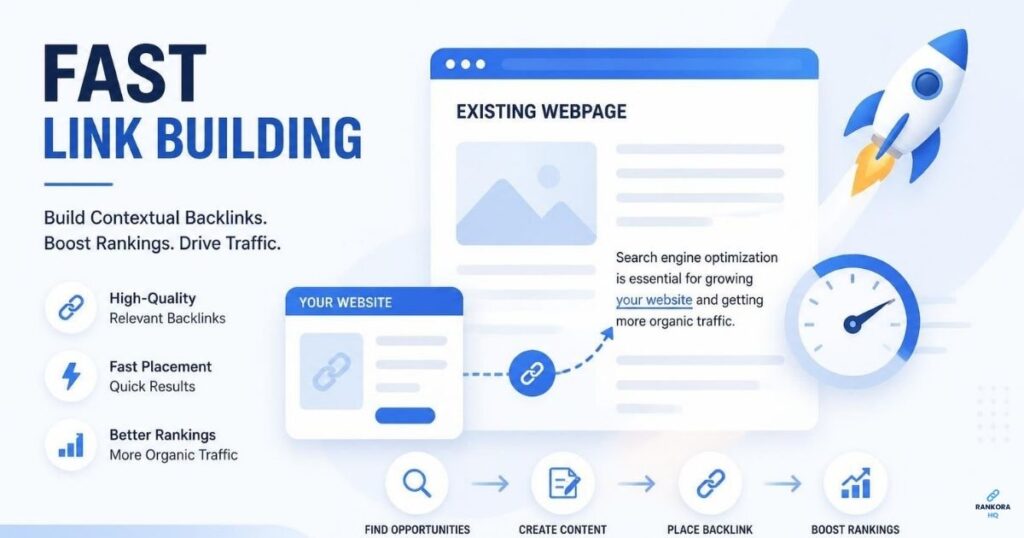
One of the main benefits of niche edits is speed. Since the article is already live, the process usually needs less time than planning, writing, editing, and publishing a new guest post.
For SEO agencies, this can be helpful when a client campaign needs steady link growth without waiting weeks for new content production. The link can be added into a relevant page once the publisher approves the placement.
Why Existing Content Backlinks Can Go Live Faster
Existing content backlinks do not need a full article brief, draft, or publishing schedule. The page is already built.
The main work is finding a relevant page, checking its quality, agreeing on placement, and making sure the link fits naturally. That shorter workflow is why niche edits are often faster than guest posts.
Where Speed Helps SEO Agencies and Client Campaigns
Speed matters when a campaign has deadlines, ranking gaps, or pages that need authority support. A well-placed niche edit can help agencies move faster without adding more content work.
This is especially useful when the target page already has strong on-page SEO and only needs relevant backlink support.
When Fast Placement Should Not Mean Rushed Quality
Fast does not always mean better. A niche edit should still be reviewed carefully before approval.
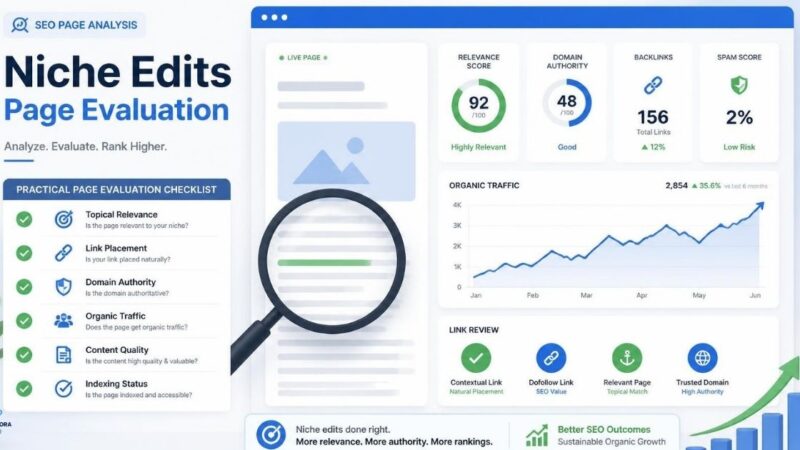
The page should be relevant, indexed, readable, and editorially sound. If the link is added to weak content just because it is quick, the placement can create more risk than value.
Benefits of Niche Edits From Established Pages
A key advantage of niche edits is that the link can be placed on a page that already has history. The page may already be indexed, crawled, and trusted by search engines.
This is one reason the benefits of niche edits can be stronger than links from brand-new pages, as long as the page is relevant and active.
Existing Pages May Already Have Search History
An existing page may already have impressions, rankings, backlinks, or traffic. That history can make the placement more valuable than a fresh article with no search presence yet.
But history alone is not enough. The page still needs to be useful, updated, and relevant to the target website.
Older URLs Can Carry More Trust Signals
Older URLs often have more signals behind them. They may have been crawled many times, linked internally, or referenced by other sites.
That can help a niche edit feel more natural when the link is added carefully. The link should support the topic, not look forced into an unrelated paragraph.
Why Page-Level Relevance Matters More Than Domain Age
A strong domain does not automatically mean a strong placement. The actual page matters more.
If the page topic matches your target page, the link has better contextual value. If the page is unrelated, even a high-DR domain can become a weak or risky placement.
Contextual Link Insertion Benefits
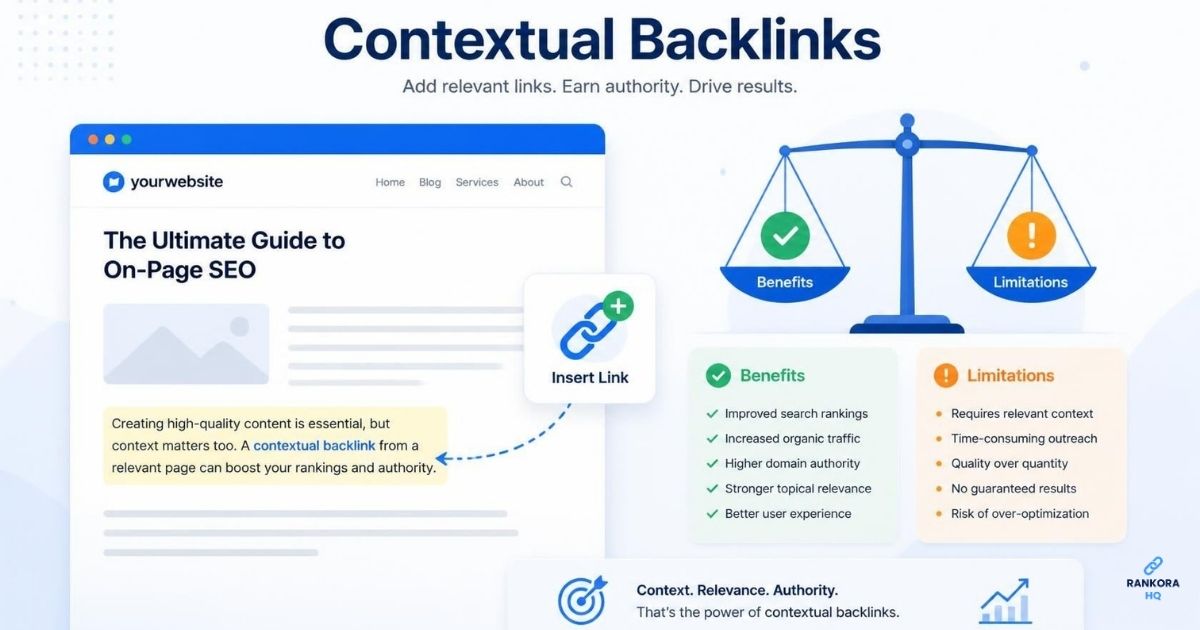
Context is one of the strongest link insertion benefits. A niche edit works best when the backlink is added inside a paragraph that already discusses a closely related topic.
This makes the link more useful for readers. It also helps the placement look editorial instead of forced.
Why Contextual Links Feel More Natural to Readers
Contextual links are placed within the body of the content, not in random sidebars or footers. The reader sees the link while reading about a related subject.
That makes the link feel like a helpful next step. It should add value to the page, not interrupt the article.
How Topical Relevance Improves Placement Quality
Topical relevance means the host page and target page are connected by subject. For example, a link-building article linking to a niche edits service page makes sense.
This is where the benefits of niche edits become clear. A relevant page can give the link stronger context than a general website with no topical match.
Why Anchor Text Must Support the Surrounding Content
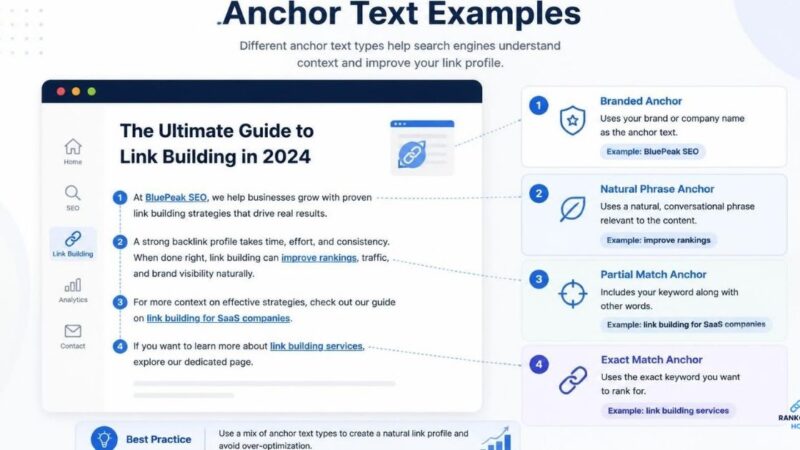
Anchor text should fit naturally into the sentence. It should not look stuffed, repeated, or written only for search engines.
A good anchor supports the topic around it. If the paragraph feels awkward after adding the link, the placement should be revised or rejected.
Content and Cost Efficiency Advantages
Another benefit of niche edits is that they do not always require a new article. The host page already exists, so the campaign can focus more on placement quality and relevance.
This can save time for agencies that manage several client campaigns at once. But cost efficiency should never come at the expense of editorial review.
Less New Content Production Is Required
With guest posting, you usually need a fresh topic, outline, draft, edits, and approval. With niche edits, most of that work is reduced.
The main task is to find a suitable page where the link genuinely adds value. That makes niche edits useful when the goal is link placement, not new content creation.
Why Niche Edits Can Support Commercial Pages Carefully
Niche edits can sometimes support service pages, product pages, or other commercial URLs. This works best when the host article already discusses a related problem or solution.
The key word is carefully. If the link feels too promotional or unrelated, it can weaken the placement and create trust issues.
How Agencies Can Scale Without Lowering Editorial Standards
For agencies, niche edits can help build links at a steady pace. They reduce the need to produce a new guest post for every placement.
Still, every link should pass a quality check. Relevance, traffic, indexing, anchor text, and publisher standards matter more than getting a large number of placements quickly.
Limitations of Niche Edits You Should Know
Niche edits are useful, but they come with limits. The biggest limitation is control. You are adding a link to someone else’s existing page, not building the whole asset yourself.
That means the placement must be checked carefully before approval. Good niche edits need relevance, clean content, and a publisher who maintains quality.
Less Control Over the Host Page
With a niche edit, you usually cannot control the full article. The title, structure, internal links, and existing outbound links are already there.
You can request a clean placement, but the final page still belongs to the publisher. This is why manual review matters before the link goes live.
Existing Content Can Be Edited or Removed Later
An existing page can change after your link is placed. The publisher may update the article, remove sections, change outbound links, or delete the page.
This is one of the main niche edit risks. A placement that looks good today still needs monitoring later.
Placement Quality Depends on the Publisher’s Standards
Not every publisher handles niche edits properly. Some add links naturally. Others insert links into weak paragraphs with no real editorial care.
In my experience, this is where many campaigns fail. The link itself is not the problem. The problem is poor placement quality, low relevance, and no approval process.
Niche Edit Risks and Quality Red Flags
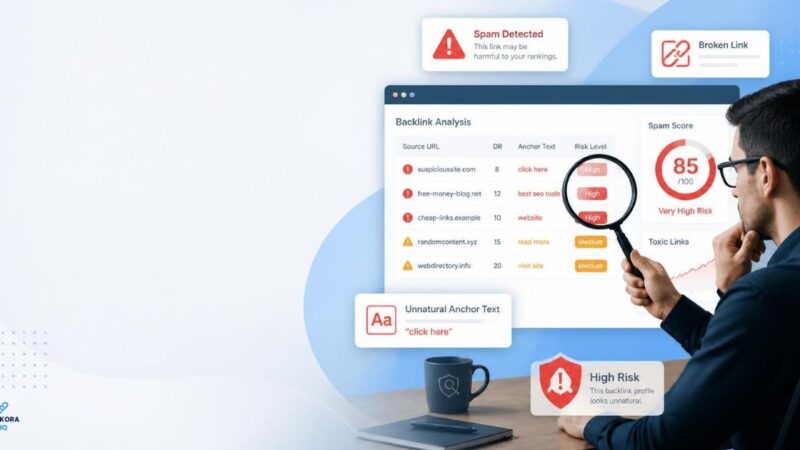
Niche edits become risky when placement quality is ignored. A link can look valuable on the surface, but still be weak if the page has poor relevance, thin content, or unnatural anchor text.
The goal is not just to get a backlink. The goal is to earn a contextual placement that makes sense for the reader and the page.
Relevance Mismatch Creates Weak Link Value
A niche edit should appear on a page that closely matches your topic. If the host page is unrelated, the link loses context.
For example, a SaaS link inside a random lifestyle article may look forced. Even if the domain has strong metrics, the placement itself is weak.
High DR Does Not Guarantee a Good Placement
DR can help with quick filtering, but it should not be the final decision. A high-DR site can still have poor pages, no traffic, or weak editorial standards.
Page quality matters more than surface-level authority. Check the actual URL, content depth, traffic signs, outbound links, and topical fit.
Over-Optimized Anchor Text Can Look Unnatural
Anchor text should sound natural inside the sentence. If every link uses exact-match commercial keywords, it can look manipulative.
A safer approach is to mix branded, partial-match, and natural anchors. The anchor should support the paragraph, not dominate it.
Low-Quality Pages Can Damage Trust Instead of Building It
Some pages exist only to sell links. They may have thin content, too many outbound links, or no real audience.
These placements can hurt trust instead of helping SEO. In my process, I would rather reject a fast link than approve a placement that looks risky later.
Frequently Asked Questions
What are the main benefits of niche edits?
The main benefits of niche edits are faster placement, contextual relevance, and access to existing pages that may already have search history.
Are niche edits faster than guest posts?
Yes. Niche edits are usually faster because the content already exists, so there is no need to write and publish a full new article.
Are niche edits safe for SEO?
Niche edits can be safe when they are relevant, editorial, and placed on quality pages. They become risky when links are forced, irrelevant, or added to low-quality sites.
Do niche edits help rankings?
They can help rankings when the link comes from a relevant page with real quality signals. A link from an unrelated page may offer little value.
What is the biggest limitation of niche edits?
The biggest limitation is control. You do not own the host page, so the content, link placement, or page itself can change later.
Are high-DR niche edits always better?
No. DR is only one metric. Page relevance, traffic, content quality, and anchor fit matter more than domain authority alone.
When should I use niche edits?
Use niche edits when you need contextual backlinks for an existing page that already has useful content and clear search intent.
Conclusion
The real benefits of niche edits come from speed, context, and access to existing pages that may already have search history. They can be a smart way to support SEO campaigns when the page is relevant, the anchor fits naturally, and the publisher has real editorial standards.
But niche edits are not risk-free. You have less control over the host page, existing content can change, and weak placements can create quality issues. That is why I always treat niche edits as a quality-first strategy, not a shortcut.
If you want editorial link insertions with manual review, approval before publishing, and clear reporting, Rankora HQ’s niche edit link insertion service can help you build safer, more relevant placements.
Author Bio
Muhammad Awais is the founder of Rankora HQ, a white-label editorial content placement service based in Salalah, Oman. He helps SEO agencies and brands build topical authority through high-quality publishing partnerships on DR 40-90 editorial sites.