Google guest posting guidelines are not saying that every guest post is spam. The real issue is intent. If a contributed article is written to help readers, adds real value, and follows proper link rules, it can be part of a healthy content strategy. But when guest posting is used mainly to pass ranking signals through paid or manipulative links, it starts crossing into risky territory.
In my work with agencies, I see this confusion often. Some clients think guest posting is completely unsafe, while others treat it like a shortcut for rankings. Both views miss the point. This guide explains google guest posting guidelines in plain English, including Google guest post rules, paid link policy, sponsored links, anchor text risk, and where guest posting link spam actually begins.
What Google Guidelines About Guest Posting
Google guest posting guidelines are not fully banned on guest posts. Google’s concern is links created mainly to manipulate search rankings, not genuine contributed content written for real readers.
In simple terms, a guest post becomes risky when the article exists only to place a link. If the content is useful, relevant, editorially reviewed, and honest about sponsored relationships, it sits in a very different category.
Does Google Automatically Consider Guest Posting Spam?
No, Google does not automatically treat every guest post as spam. A guest article can be legitimate when it adds value to the publishing site’s audience and the link is placed naturally.
The problem starts when guest posting becomes a system for passing ranking credit. That includes paid articles with followed links, over-optimized anchors, or placements made only because a site has a high DR score.
The Difference Between Editorial Contribution and Link Manipulation
An editorial contribution is written to educate, explain, or share useful experience. The link supports the topic, but it is not the whole reason the article exists.
Link manipulation is different. It starts when the main goal is to influence rankings through artificial links. Google’s link spam policy specifically calls out links in guest posts with optimized anchor text when they are used to manipulate search results.
Why Intent Matters More Than the Word “Guest Post”
The label “guest post” does not decide whether something is safe or unsafe. Intent, quality, disclosure, and link treatment matter more.
In my experience, agencies get into trouble when they sell guest posting as a shortcut instead of treating it as editorial content placement. A strong contributed article should stand on its own, even if the link were removed.
What Google Counts as Link Spam
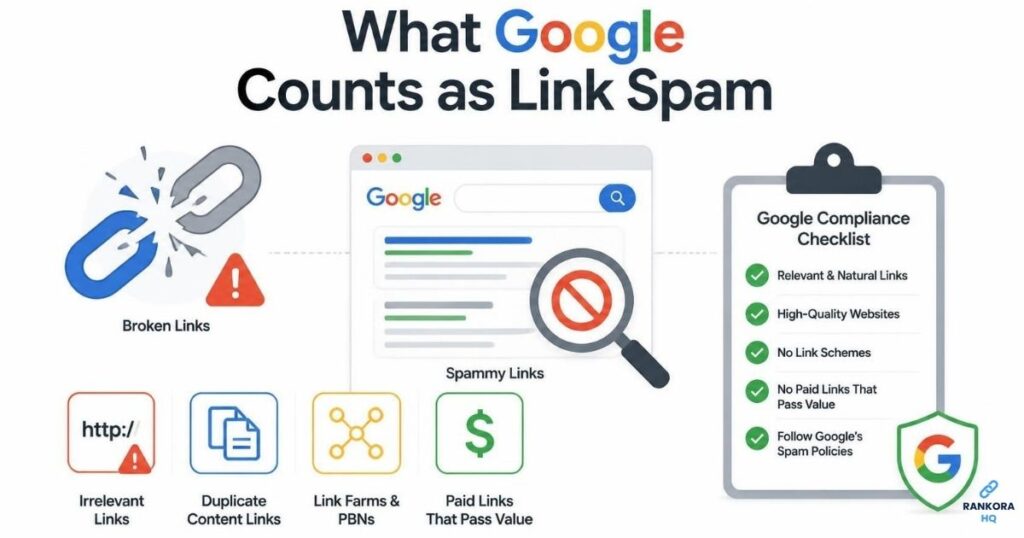
Google counts link spam as links created mainly to manipulate search rankings. That is the line agencies need to understand before planning any guest posting campaign.
A link can be placed inside a good article and still create risk if the purpose is artificial ranking control. The safest way to think about it is simple: if the link exists mainly for SEO signal manipulation, it moves closer to spam.
Links Created for to Manipulate Search Rankings
Google’s link spam policy focuses on real intent. If links are built primarily to influence rankings instead of helping users find relevant information, they can violate the policy.
This includes links placed without real editorial reason, links added only because a client paid for them, or links forced into content where they do not naturally belong.
Paid Posts, Advertorials, and Native Advertising Links
Paid content is not automatically the problem. The problem is paid content that includes links passing ranking credit.
Google specifically mentions advertorials and native advertising where payment is received for articles containing links that pass ranking credit.
For sponsored placements, Google recommends qualifying links with rel=”sponsored”. nofollow is still acceptable, but sponsored is preferred for paid links.
Optimized Anchor Text Inside Guest Posts and Press Releases
Keyword-heavy anchor text can raise risk when it is used to manipulate search results. Google’s policy directly references optimized anchor text in articles, guest posts, and press releases distributed on other sites.
Legitimate Guest Content vs Manipulative Link Building
Legitimate guest content is created for readers first. Manipulative link building is created for ranking signals first.
That difference matters because Google’s link spam policy focuses on links made mainly to manipulate search rankings. A guest article can be useful, but the link strategy behind it still needs to be clean.
What a Legitimate Contributed Article Looks Like
A legitimate contributed article answers a real question for the publisher’s audience. It fits the site’s topic, follows editorial standards, and does not feel like a hidden ad.
The link should support the article naturally. It should help the reader understand the topic better, not feel forced into the content for SEO value only.
When Guest Posting Becomes a Ranking Scheme
Guest posting becomes risky when the main goal is to place links that pass ranking credit. This is especially true with paid posts, repeated templates, irrelevant sites, and keyword-heavy anchors.
Google also warns about excessive usage of sponsored and guest posting without proper link tags. That is why agencies should treat link qualification as a compliance step, not an optional detail.
Why Topical Relevance and Editorial Review Matter
Topical relevance protects quality. If a finance brand is published on a random lifestyle blog with no clear connection, the placement looks weak before anyone even checks the link.
Editorial review matters too. Real publishers check the content, improve the article, and reject poor fits. That process helps separate editorial placement from bulk link selling.
How Google Paid Link Policy Applies to Sponsored Posts
Google paid link policy does not ban advertising, sponsorships, or paid placements. It focuses on whether paid links pass ranking credit without proper qualification.
That means a sponsored guest post can exist, but the links inside it need to be handled correctly. The problem begins when payment is involved and the link is still treated like a normal editorial vote.
Paid Links Are Not Banned, But They Must Be Qualified
Google understands that buying and selling links can happen for advertising and sponsorship. The issue is paid links that are created to manipulate rankings.
For agencies, this is an important distinction. A paid placement should not be sold as an organic ranking signal if the relationship is sponsored.
When to Use rel=”sponsored”
Use rel=”sponsored” when a link is part of advertising, sponsorship, or another paid agreement. Google says this attribute is used to mark paid links.
In guest posting, this matters when money, product, service exchange, or another form of compensation is involved. The link should be qualified instead of being treated as a pure editorial recommendation.
When rel=”nofollow” Is Still Acceptable
Google says nofollow is still an acceptable way to qualify paid links, although sponsored is preferred for paid placements.
So if a publisher uses nofollow instead of sponsored, that is not automatically wrong. The main goal is to avoid passing ranking credit through a link that exists because of payment.
Why Passing Ranking Credit Is the Real Policy Issue
The real risk is not the sponsored article itself. The risk is using that sponsored article to pass SEO value as if the link were earned naturally.
In my experience, this is where agencies need to be very clear with clients. Sponsored links can support visibility, referral traffic, and brand awareness, but they should not be framed as hidden ranking votes.
The Role of Anchor Text in Guest Posting Risk
Anchor text matters because it shows the purpose of a link. Google’s link spam policy specifically mentions links with optimized anchor text in guest posts, articles, and press releases when they are used to manipulate search rankings.
This does not mean every descriptive anchor is unsafe. It means agencies should avoid forcing commercial keywords into guest posts just to influence rankings.
Why Keyword-Rich Anchor Text Can Look Manipulative
Keyword-rich anchor text becomes risky when it feels unnatural or repeated across multiple placements.
For example, if every article links with the exact same money keyword, the pattern looks built for search engines, not readers. That is the opposite of how editorial links normally appear.
Safer Editorial Anchor Text Principles
A safer editorial anchor should fit the sentence naturally. It should help the reader understand where the link leads.
In practice, I prefer anchors that read like part of the article instead of a separate SEO instruction. The link should feel useful, not inserted.
What Agencies Should Avoid When Briefing Publishers
Agencies should avoid giving publishers rigid anchor text demands. That often creates unnatural writing and weakens editorial quality.
A better briefing process is to explain the topic, the audience, the preferred landing page, and the reason the link may help readers. Let the final placement follow the publisher’s editorial standards.
When Large-Scale Guest Posting Becomes Problematic
Large-scale guest posting becomes problematic when the main intent is to build links back to a site, not to publish useful content. Google has warned about contributing posts, guest posts, partner posts, and syndicated posts can violate its rules when they are used mainly for large-scale link building or guest posting for the purpose of manipulating Goggle algorithms.
Scale itself is not the only issue. The bigger concern is weak quality control, repeated patterns, and links that exist mainly to pass ranking value.
Excessive Guest Posting Without Proper Link Tags
Excessive sponsored or guest posting can create risk when links are not properly tagged. Google has said algorithmic and manual actions may apply when sites publish or acquire excessive sponsored and guest posting links without proper tags.
Repeated Templates, Thin Articles, and Unnatural Patterns
Repeated templates make guest posting look mechanical. Thin articles make the problem worse because they show little value beyond the link.
Why Scale Needs Editorial Control
Scale only works when editorial standards stay strong. Each article should match the publisher’s audience, topic, and quality expectations.
How Quality Drops When Link Volume Becomes the Goal
Quality drops when the team starts asking, “How many links can we place?” instead of “Does this article deserve to be published?”
A Practical Compliance Checklist for Agencies
A guest posting process should protect quality, transparency, and client trust. The goal is not to hide risk. The goal is to avoid turning contributed content into link spam.
For agencies, this checklist keeps the campaign focused on editorial value instead of shortcuts.
- Confirm Whether Placement Is Editorial, Sponsored, or Mixed
- Review Publisher Relevance Before Approval
- Keep Client Approval Before Publishing
- Use Proper Link Attributes Where Needed
- Build Reports That Show Transparency, Not Shortcuts
Common Mistakes to Avoid
Most guest posting problems come from treating links as the product instead of treating content as the product. Google’s link spam policy is clear that links created mainly to manipulate rankings can create risk.
For agencies, avoiding these mistakes is not about hiding footprints. It is about building a process that respects editorial quality, sponsorship rules, and user value.
Treating Every Guest Post as an SEO Shortcut
Guest posting should not be sold as an instant ranking shortcut. That creates the wrong expectations from the start.
A better approach is to treat it as editorial visibility. The article should help the reader, fit the publisher, and support the client’s authority naturally.
Buying Posts That Pass Ranking Credit
Buying a sponsored post is not automatically against Google’s rules. The problem is buying links that pass ranking credit without proper qualification.
Google recommends marking paid or sponsored links with rel=”sponsored”. nofollow is still acceptable, but sponsored is the preferred attribute for paid placements.
Forcing Exact-Match Anchor Text
Exact-match anchors can look risky when they are forced into guest posts again and again.
If the anchor does not read naturally, it weakens the article. It also makes the link look like it was placed for rankings instead of readers.
Publishing on Irrelevant Sites for DR Only
DR is not enough. A high-authority site can still be a poor fit if the topic, audience, or content quality does not match the client.
I always prefer relevance first. A smaller, focused publisher can be more valuable than a high-metric site with no real connection to the client’s niche.
Hiding Sponsorship Instead of Disclosing It Properly
Hiding a paid relationship is a bad habit. It creates trust problems for the reader and compliance problems for the campaign.
If a placement is sponsored, treat it like a sponsored placement. Clear link qualification and honest reporting are safer than vague promises.
Frequently Asked Questions
Does Google allow guest posting?
Yes, Google allows guest posting when the content is useful, relevant, and not created mainly to manipulate rankings. The problem starts when guest posts are used mostly for link spam.
Paid guest posts against Google’s rules?
Paid guest posts are not automatically against Google’s rules. The links inside them must be properly qualified if payment, sponsorship, or another benefit is involved.
What is the safest link attribute for sponsored guest posts?
For sponsored guest posts, Google prefers rel=”sponsored”. rel=”nofollow” is still acceptable, but sponsored is more specific for paid placements.
Can guest posting still help SEO?
Yes, guest posting can help SEO indirectly through authority, visibility, referral traffic, and strong editorial mentions. It should not be treated as a way to pass artificial ranking credit.
Is exact-match anchor text risky in guest posts?
Yes, exact-match anchor text can be risky when it is forced, repeated, or used mainly to influence rankings. Natural, reader-first anchor text is safer.
What should agencies tell clients about guest posting compliance?
Agencies should explain that guest posting must focus on editorial quality, topical relevance, honest sponsorship handling, and proper link attributes where needed.
Conclusion
Google guest posting guidelines are not meant to stop real contributed content. They are meant to stop links that are created mainly to manipulate search rankings.
For agencies, the safest path is simple: publish useful content, choose relevant publishers, avoid forced anchor text, and qualify sponsored links properly. Guest posting works best when it is treated as editorial content placement, not a hidden shortcut for link equity.
Author Bio:
Muhammad Awais is the founder of Rankora HQ, a white-label editorial content placement service based in Salalah, Oman. He helps SEO agencies and brands build topical authority through high-quality publishing partnerships on DR 40-90 editorial sites.