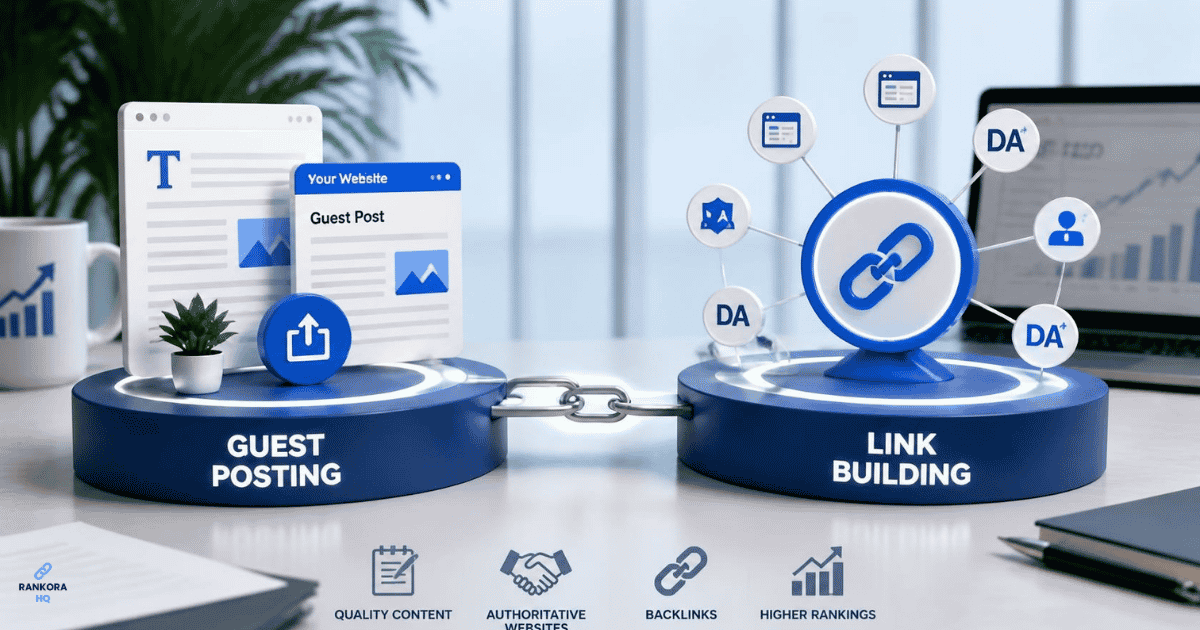
Many SEO professionals use guest posting vs link building as if they are two separate strategies, but they are closely connected. The main difference is that link building is a broad SEO practice focused on earning backlinks, while guest posting is one specific method used to gain editorial links through valuable content published on relevant websites.
Understanding guest posting vs link building helps businesses choose the right approach instead of chasing random backlinks. In this guide, I’ll explain how both strategies work, where guest blogging fits into link building, and how they can work together to build stronger online authority.
Guest Posting vs Link Building: Quick Answer
The simple difference between the two
Guest posting is one method of link building, not a replacement for it. Link building is the overall process of earning backlinks from other websites, while guest posting focuses on creating and publishing content on relevant websites to gain exposure and editorial links.
Think of link building as a large category that includes different strategies. Guest posting, niche edits, digital PR, and resource page links are all different ways to build authority through backlinks.
Why the confusion happens
The confusion happens because both strategies involve outreach, publishers, and backlinks. A business reaching out to websites for guest articles is technically doing link building, but the approach is more focused on content contribution and editorial value.
The main difference is the method used to earn the link. Guest posting earns links through contributed content, while other link-building methods may involve existing content, mentions, partnerships, or digital assets.
What Is Guest Posting?
How guest posting works
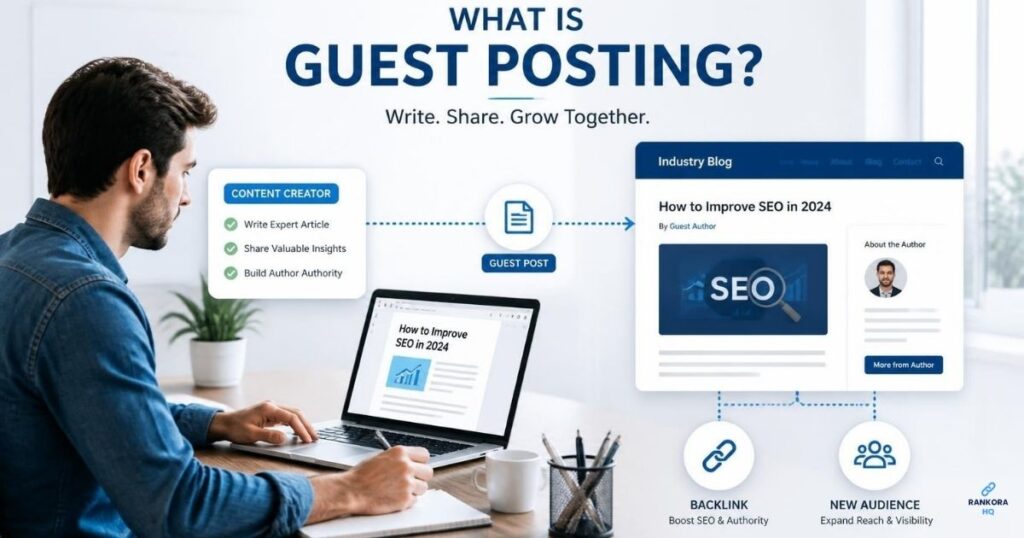
Guest posting is an SEO strategy where you create content for another website and publish it as a contributor. The goal is not only to earn a backlink but also to share expertise, reach a new audience, and build credibility within a specific industry.
The process usually starts with finding relevant publishers, pitching a useful topic, creating high-quality content, and getting editorial approval before publication. A natural link is then placed within the article where it provides value to readers.
Why businesses use guest blogging
Businesses use guest posting to improve brand visibility, build authority, and earn relevant editorial links from trusted websites. Unlike random backlink placements, a well-planned guest post connects the brand with an audience that already has an interest in the topic.
Guest blogging can also bring referral traffic and strengthen a website’s reputation when the content appears on respected industry publications.
What makes a guest post valuable
A valuable guest post depends on more than just getting a link. The publisher should be relevant to the niche, have real audience engagement, and maintain editorial standards.
The strongest guest posts focus on useful information, natural link placement, and content that supports both the reader and the publishing website. These factors make the backlink more meaningful as part of a wider link-building strategy.
What Is Link Building?
Link building is the broader SEO activity
Link building is the overall process of acquiring backlinks from external websites to improve a site’s authority and visibility in search engines. Unlike guest posting, link building includes many different strategies and methods.
The main goal is to earn links that show search engines a website is trusted, relevant, and worth ranking for specific topics.
Common link building methods
Link building includes several approaches beyond guest posting. Some common methods include:
- Guest posting — creating content for another website and earning an editorial link.
- Niche edits — adding a link naturally into existing relevant content.
- Digital PR — earning mentions and links through news, research, or brand stories.
- Broken link building — replacing outdated links with useful resources.
- Resource page link building — getting listed on curated industry pages.
Each method works differently, but the purpose remains the same: earning valuable backlinks from relevant sources.
The goal behind link building
Effective link building is not about collecting as many backlinks as possible. The focus should be on earning links from websites that are relevant, trustworthy, and connected to the target audience.
A strong link-building strategy combines different methods to create a natural backlink profile while improving brand authority and organic search visibility.
Is Guest Posting a Type of Link Building?
The relationship between guest posting and backlinks
Yes, guest posting is a type of link building. Link building is the broader SEO activity, while guest posting is one method used to earn backlinks by contributing useful content to relevant websites.
A simple way to understand the relationship is:
Link Building = Broad SEO Category
Guest Posting = One Method Within That Category
Where guest posting fits in modern SEO
Guest posting works best when the focus is on editorial value rather than simply placing a backlink. The content should match the publisher’s audience, provide useful information, and include links only where they make sense naturally.
This makes guest posting different from link-building methods that do not require creating new content. It combines content creation, SEO outreach, brand exposure, and editorial links within one approach.
Guest Posting vs Link Building: Key Differences
Strategy and scope
Guest posting has a narrow, content-led focus. You create an article for another website and earn a relevant backlink through that contribution.
Link building is much broader. It can include guest posting, niche edits, digital PR, broken link building, resource links, and other backlink acquisition methods.
Content requirements
Guest posting usually requires original content written specifically for the publisher. The topic, quality, and relevance of that content play a major role in whether the link is accepted.
Other link-building methods may not require a new article. For example, a niche edit places a link inside existing content, while digital PR may earn links through research, news, or expert commentary.
Outreach and publisher relationships
Guest posting often requires direct outreach and ongoing relationships with editors or publishers. Good placements usually come from understanding what the website publishes and what its audience actually wants.
Some link-building methods use outreach too, but the conversation may focus more on an existing page, resource, mention, or link opportunity.
Link quality and editorial control
Guest posting can produce strong editorial links when the website is relevant, the content is useful, and the link fits naturally within the article.
With broader link building, quality can vary depending on the method used. Relevance, real traffic, editorial standards, and natural placement matter more than chasing a high metric alone.
Time, resources, and scalability
Guest posting usually takes more work because it involves prospecting, pitching, content creation, approval, and publication.
Other link-building methods can sometimes be faster, but each has its own limits. In practice, the right approach depends on the campaign goals, available resources, and the type of links you need.
How Guest Posting and Other Link Building Methods Work Together
Building a balanced backlink strategy
Guest posting works best as part of a broader link-building strategy. Relying on one method alone can limit the types of backlinks a website earns.
A balanced approach may combine guest posts with niche edits, digital PR, resource links, and other relevant link building methods.
When guest posting is the better choice
Guest posting makes more sense when the goal is to build authority through useful content. It is especially effective when you want editorial links, brand exposure, referral traffic, and stronger visibility within a specific niche.
It also gives businesses more control over the topic and context surrounding the backlink.
When other link-building methods make more sense
Other methods may be better when creating a full article is unnecessary. For example, niche edits can work for relevant existing content, while digital PR can earn links through newsworthy data, expert insights, or original research.
The best choice depends on the campaign goal rather than treating guest blogging vs link building as an either-or decision.
A Practical Guide to Choosing the Right Approach
Step 1: Define your SEO goal
The right link-building approach starts with knowing what you want to achieve. If the goal is brand visibility, industry authority, and contextual backlinks, guest posting can be a strong option.
If the goal is earning different types of links, improving brand mentions, or promoting specific assets, other link-building methods may be more suitable.
Step 2: Evaluate your resources
Guest posting requires time for research, outreach, content creation, and publisher communication. Businesses need to consider whether they have the resources to manage these steps effectively.
Other link-building approaches may require different resources, such as digital PR skills, relationship building, or technical content creation.
Step 3: Measure link quality
A successful link-building campaign should focus on quality rather than volume. Important factors include website relevance, audience value, editorial standards, and natural placement.
A single relevant editorial link from a trusted website can often provide more value than multiple low-quality backlinks.
Common Mistakes When Comparing Guest Posting and Link Building
Treating guest posting as the entire link-building strategy
One common mistake is viewing guest posting as the only way to build backlinks. While guest posts can earn valuable editorial links, they are just one part of a complete link-building strategy.
A strong SEO campaign often combines multiple approaches based on the website’s goals, industry, and available resources.
Focusing only on metrics like DR
Many businesses judge backlink opportunities only by metrics such as Domain Rating (DR). While authority metrics can provide useful insights, they do not show the complete picture.
A relevant website with real readers and strong topical alignment can be more valuable than a high-metric site with little connection to your industry.
Chasing quantity instead of valuable links
Building hundreds of low-quality backlinks rarely creates long-term SEO value. The focus should be on earning links from trustworthy websites that provide relevance and authority.
Quality links help build a stronger backlink profile and reduce the risks associated with poor link-building practices.
Ignoring content quality
Content quality plays a major role in both guest posting and broader link-building efforts. Weak or generic content can damage credibility and reduce the chances of earning meaningful editorial links.
The best results come from content that helps readers, matches the publisher’s audience, and naturally supports the linked page.
Frequently Asked Questions
Is guest posting the same as link building?
No, guest posting is not the same as link building. Guest posting is one specific method used within link building to earn backlinks through published content on relevant websites.
What is the difference between guest blogging and link building?
Guest blogging focuses on creating and publishing content on another website, while link building includes all strategies used to earn backlinks. Guest blogging is one part of a larger link-building process.
Which is better: guest posting or other link-building methods?
Neither option is always better. The right choice depends on your goals, resources, and SEO strategy. Many successful campaigns combine guest posting with other link-building methods.
Are all guest post backlinks valuable?
No, not every guest post backlink provides the same value. A strong guest post link comes from a relevant website with quality content, real audience engagement, and proper editorial standards.
Conclusion
The main difference in guest posting vs link building is simple: link building is the broader SEO activity, while guest posting is one method used to earn relevant backlinks through contributed content.
Guest posting works best when it focuses on useful content, relevant publishers, and natural editorial links. Other link-building methods can support different goals, so the strongest strategy often uses more than one approach. The right choice depends on your resources, target audience, and the type of authority you want to build.
If you want a more structured approach to earning editorial placements, Rankora HQ’s guest posting service can help you plan and manage the process with full publisher approval before anything goes live.
Author Bio
Muhammad Awais is the founder of Rankora HQ, a white-label editorial content placement service based in Salalah, Oman. He helps SEO agencies and brands build topical authority through high-quality publishing partnerships on DR 40–90 editorial sites.
LinkedIn: linkedin.com/in/muhammad-awais-seo-outreach