Choosing between guest posting vs niche edits is not about finding one perfect link building tactic. It is about matching the placement type to the campaign goal, target page, timeline, and level of editorial control you need. I have seen campaigns perform better when this decision is made before outreach starts, not after a list of sites is already collected.
In this guide, I will break down guest posting vs niche edits in a practical way. You will see how guest posts work, how niche edits work, where each option fits best, and when a mixed campaign makes more sense. The goal is not to declare a winner. The goal is to help you choose the right editorial placement option for the right situation.
Guest posting vs niche edits: quick campaign fit summary
The simple answer is this: guest posting works best when you need new content and more editorial control, while niche edits work best when you need faster contextual placement inside existing content.
Both can be useful. The better choice depends on your campaign goal, not the tactic itself.
The simple difference in one sentence
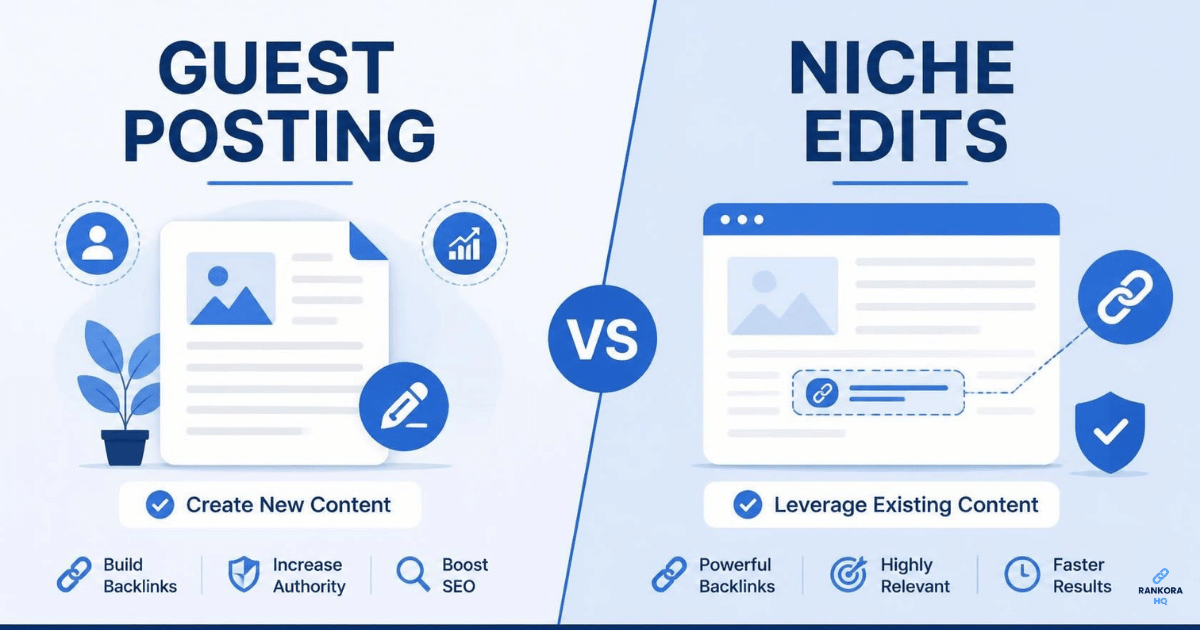
A guest post is a new article written and published on a relevant website, while a niche edit is a link added into an already published article.
That difference matters because each option solves a different problem according to need.
If the topic needs a fresh angle, guest posting usually fits better. If a strong existing article already covers the topic, a niche edit can make more sense.
Quick comparison table: guest posts vs link insertions
| Factor | Guest posts | Niche edits / link insertions |
| Content type | New contributed article | Existing published article |
| Speed | Usually slower | Usually faster |
| Editorial control | Higher | Lower |
| Context | Built from scratch | Depends on existing content |
| Best for | New topics, brand visibility, topical authority | Existing pages, faster placements, contextual support |
| Main risk | Weak content or poor publisher fit | Forced link placement or irrelevant surrounding text |
This is why I do not treat guest posting vs niche edits as a fixed winner-loser comparison.
One gives more control. The other often gives more speed.
Best-fit decision by campaign goal
Choose guest posting when the campaign needs a clear topic angle, fresh content, or stronger brand positioning.
Choose niche edits when the target page already has a clear purpose and only needs relevant link support from existing content.
What guest posting means in editorial link building

Guest posting means creating a new article for a relevant website and earning a link inside that fresh piece of content.
In a guest posting vs niche edits comparison, this is the option with more control. You are not trying to fit a link into old content. You are building the topic, angle, and context from the start.
How a guest post placement usually works
A guest post campaign usually starts with the target page and keyword goal.
From there, the topic is planned, the article is written, and a relevant publisher is selected. The link is placed naturally inside the new content.
In my experience, the best guest posts do not feel like link placements. They feel like useful editorial articles that happen to support the target page.
Where guest posts give more content control
Guest posts give more control over the article angle, headings, surrounding text, and anchor placement.
This matters when the target page needs a very specific context. For example, a SaaS landing page may need a comparison-style article, while a local service page may need a practical guide.
When new contributed content makes more sense
New contributed content makes sense when the campaign needs a fresh topic, a clear narrative, or stronger brand visibility.
It is also useful when existing articles on publisher sites do not match the target page well enough.
What niche edits mean in a link insertion campaign
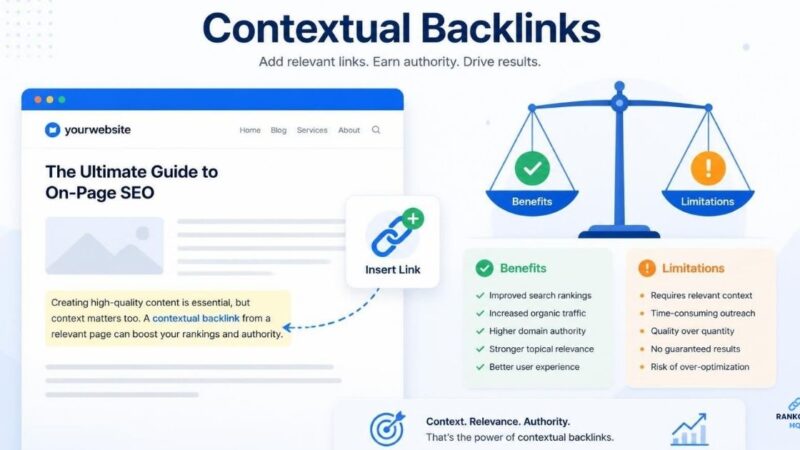
Niche edits are links added into existing articles that are already published and indexed.
In a guest posting vs niche edits comparison, this option is usually faster because the content already exists. The main job is to find a relevant article where the link genuinely fits.
How contextual link insertions usually work
A niche edit campaign starts by finding published content that matches the target page.
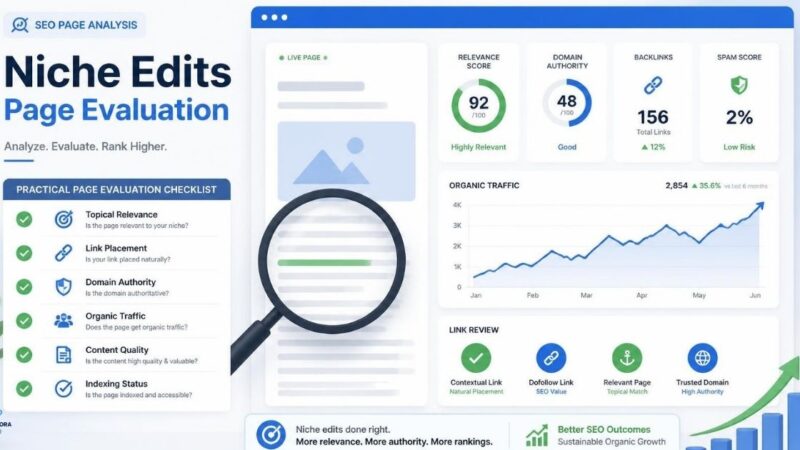
The article is reviewed for topic relevance, quality, traffic signals, and natural placement opportunity. If the link fits, it is inserted into the existing content with a suitable anchor.
Good niche edits should feel like they were always part of the article.
Why existing content can speed up placement
Niche edits can move faster because there is no full article to write from scratch.
The publisher does not need to review a complete new guest post. They only need to approve a contextual update inside an existing page.
When an existing article is not a good fit
An existing article is not a good fit if the topic is too broad, outdated, thin, or unrelated to the target page.
A forced link can hurt the quality of the placement. It may look unnatural to readers and search engines.
Guest posts vs link insertions: the main differences
The main difference is control versus speed.
Guest posts give you more control over the content you can write as you need. Link insertions often move faster because the article already exists. In a guest posting vs niche edits decision, this tradeoff matters most.
Content creation and editorial control
Guest posts require a new article, so you can shape the topic from the start.
You can choose the angle, headings, supporting points, and link context. This makes guest posting useful when the target page needs a very specific editorial setup.
Niche edits give less control because the article is already written. The link has to fit the existing content naturally.
Placement speed and approval time
Niche edits are usually faster because there is no full article production process.
The content is already live, so the approval process is often shorter. That can help when a campaign needs quicker link support.
Guest posts usually take longer because they involve topic approval, writing, editing, and publishing.
Contextual relevance and page history
Niche edits can be strong when the existing page is relevant, indexed, and already trusted by search engines.
But the surrounding content must match the target page. A link placed into a weak or unrelated article has little value.
Guest posts create fresh context. That is useful when no existing article gives the right fit.
Target-page fit and anchor flexibility
Guest posts usually offer more anchor flexibility because the content is planned around the target page.
This helps when the anchor needs to be natural, descriptive, and supported by the surrounding text.
Cost, reporting, and campaign management
Guest posts can cost more because they include content planning, writing, editing, and publisher coordination.
Niche edits may be more efficient, but they still require careful review. The article quality, link placement, and anchor text must be checked before approval.
When guest posting is the better campaign choice
Guest posting is the better choice when the campaign needs new content, stronger control, and a clear editorial angle.
It is useful when you do not just need a link. You need the right topic, the right context, and a placement that supports the target page properly.
Building topical authority around a new topic
Guest posting works well when a site wants to build authority around a fresh topic.
For example, if a SaaS company is entering a new keyword cluster, a guest post can introduce that topic on a relevant publisher site.
Supporting brand visibility and thought leadership
Guest posts are also stronger when brand visibility matters.
A well-written article can show expertise, explain a point of view, and position the brand in front of a relevant audience.
In this case, the value is not only the backlink. The content itself becomes part of the brand’s authority.
Targeting specific angles, keywords, or pages
Guest posting is useful when the campaign needs a specific angle.
You can shape the article around a comparison, guide, opinion piece, or problem-solving topic.
This matters when the target page needs careful context. In a guest posting vs niche edits decision, this is one of the biggest advantages of guest posts.
Creating a long-term editorial asset
A guest post can become a long-term editorial asset when the publisher is relevant and the content is useful.
It can keep sending topical signals, referral traffic, and brand exposure after the campaign is complete.
When niche edits are the better campaign choice
Niche edits are the better choice when the campaign needs faster contextual support for an existing page.
They work best when the target page is already strong, but needs relevant links from content that is already published and indexed.
Strengthening a page with faster contextual links
Niche edits can help when a page needs link support without waiting for a new article to be written.
This is useful for active SEO campaigns where timing matters.
In a guest posting vs niche edits decision, niche edits usually win on speed. But the link still has to fit the content naturally.
Adding links into already indexed content
One clear benefit of niche edits is that the article already exists in search results.
The page may already have history, backlinks, traffic, or topical relevance.
Supporting commercial or existing ranking pages
Niche edits can work well for pages that are already ranking but need more authority.
This may include service pages, comparison pages, or important blog assets.
The key is to avoid forcing the link. The surrounding content should support the target page, not just mention a keyword.
Filling topical gaps without creating new articles
Sometimes a campaign does not need another new guest post.
It only needs a relevant mention inside content that already covers the topic.
That is where niche edits can be efficient. They help fill topical gaps while keeping the campaign lean and focused.
Common mistakes when comparing editorial placement options
The biggest mistake is choosing the tactic before understanding the campaign.
Guest posts and niche edits are not automatically good or bad. Their value depends on relevance, placement quality, anchor use, and target-page fit.
Choosing based only on speed
Speed matters, but it should not be the only reason to choose niche edits.
A fast placement inside a weak or unrelated article will not help much.
I would rather wait longer for a strong placement than approve a quick link that does not fit the campaign.
Ignoring the quality of the surrounding content
A link is only as strong as the content around it.
If the article is thin, outdated, spammy, or off-topic, the placement loses value.
This applies to both guest posts and link insertions. The surrounding content must support the target page naturally.
Forcing exact-match anchors
Exact-match anchors can look unnatural when they are overused.
A safer approach is to mix branded, partial-match, and natural anchors.
In a guest posting vs niche edits campaign, anchor text should fit the sentence first. SEO value comes after natural placement.
Treating every guest post or niche edit as equal
Not every guest post is high quality. Not every niche edit is risky.
The quality depends on the publisher, article relevance, traffic signals, editorial standards, and link placement.
This is why I review each opportunity separately before recommending it.
How to choose between niche edits and guest posts
The best way to choose is to start with the target page, not the link type.
When the page goal is clear, the choice between niche edits and guest posts becomes much easier.
Step 1: Match the tactic to the target page
Look at the page you want to support.
If it needs a fresh topic around it, a guest post may fit better. If it already has strong content and only needs relevant authority, a niche edit may be enough.
The tactic should serve the page, not the other way around.
Step 2: Check whether the topic needs new content
Some topics need a full article to explain the angle properly.
This is where guest posting helps. It gives you space to build the context from zero.
If an existing article already covers the topic well, a niche edit can be a cleaner option.
Step 3: Review placement quality before approval
Never approve a placement just because the site looks strong.
Check the article topic, surrounding paragraph, outbound links, traffic signals, and anchor fit.
In a guest posting vs niche edits review, the actual placement matters more than the tactic name.
Step 4: Balance speed, control, and relevance
Niche edits usually offer speed. Guest posts usually offer control.
But relevance should come before both.
A fast link in the wrong article is weak. A controlled guest post on the wrong site is also weak.
Step 5: Decide whether a mixed campaign makes sense
Many campaigns do not need a single tactic.
Guest posts can build new topical assets, while niche edits can support existing ranking pages.
A mixed campaign works best when each placement has a clear reason behind it.
Frequently asked questions
Is guest posting better choice than niche edits?
Guest posting is better decision when you need new content, more editorial control, and stronger brand visibility. Niche edits are better when speed and existing content relevance matter more.
Are niche edits the same as link insertions?
Yes, niche edits are also called link insertions. Both mean adding a link into an article that is already published.
Which is faster, guest posting or niche edits?
Niche edits are usually faster because the article already exists. Guest posts take longer because they need topic approval, writing, editing, and publishing.
Which option gives more editorial control?
Guest posting gives more editorial control. You can shape the topic, article angle, anchor placement, and surrounding content from the start.
Can guest posts and niche edits be used together?
Yes, both can work well together. Guest posts can build new topical authority, while niche edits can support existing pages with contextual links.
Which option is safer for SEO?
Neither option is automatically safer. The safer choice is the one placed on a relevant site, inside quality content, with a natural anchor and clear editorial fit.
Conclusion: choose based on campaign fit, not hype
The right choice between guest posting vs niche edits depends on what the campaign needs most.
Use guest posting when you need fresh content, stronger control, and a clear editorial angle. Use niche edits when you need faster contextual support from an existing article that already fits the topic.
Neither option should be chosen only because it is popular, fast, or cheaper. The real value comes from relevance, publisher quality, natural anchor use, and how well the placement supports the target page.
In my experience, the strongest campaigns often use both. Guest posts build new topical assets. Niche edits strengthen existing pages. The best decision is the one that fits the page, the goal, and the timeline.
Author Bio:
Muhammad Awais is the founder of Rankora HQ, a white-label editorial content placement service based in Salalah, Oman. He helps SEO agencies and brands build topical authority through high-quality publishing partnerships on DR 40-90 editorial sites.