Most people ask how do niche edits work because the process sounds simple from the outside. Find an existing article, add a link, and move on. But in real campaigns, a clean niche edit process has more steps. The page needs to be relevant. The article needs to be indexed. The link must fit naturally. And the client should approve the placement before anything goes live.
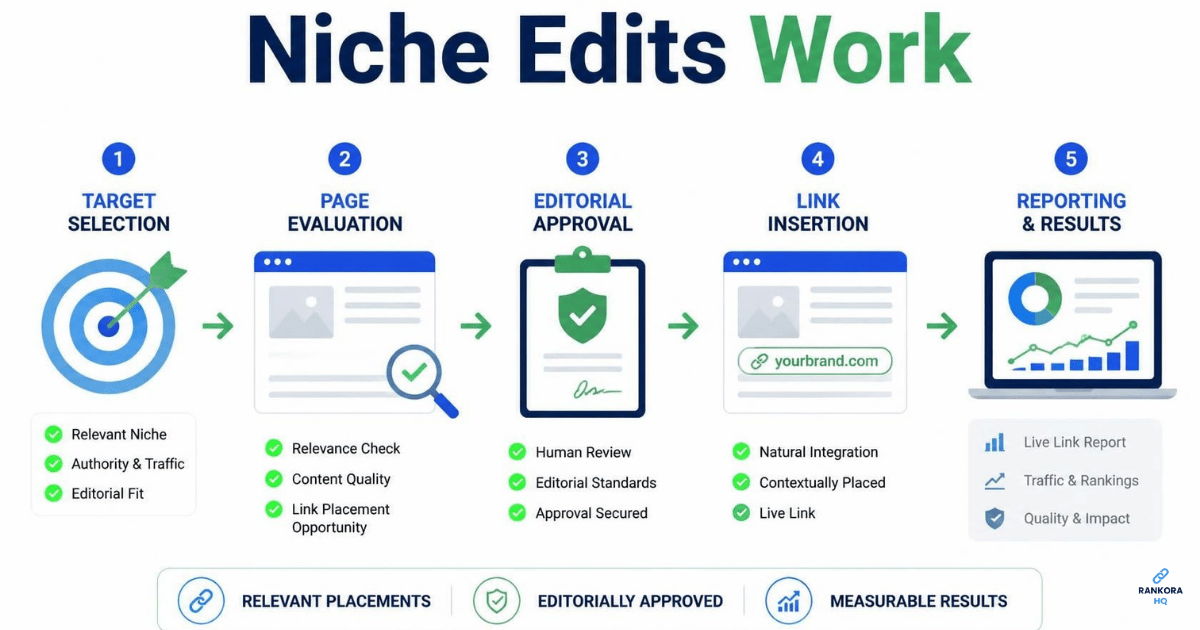
In this guide, I’ll explain how do niche edits work from start to finish. You’ll see the full workflow I use at Rankora HQ: target selection, page evaluation, editorial approval, link insertion, live checks, and final reporting. By the end, you’ll understand how do niche edits work without confusing them with broad link-building tactics or random backlink placements.
The niche edit process in simple terms
A niche edit works by placing a relevant link inside an article that is already live, indexed, and topically connected to the target page.
The goal is not to force a backlink into random content. The goal is to find an existing article where the link adds real context for the reader. That is why the niche edit process should always start with relevance, not just domain rating.
In my experience, the strongest placements usually come from pages that already cover a related topic. If the article matches the client’s page naturally, the link feels useful instead of inserted for SEO only.
What happens before a link is ever placed
Before any link goes live, the target page must be reviewed first. I check what the client wants to rank, what topic the page covers, and what type of anchor text would make sense.
Then I look for existing articles that can support that page. This is where the link insertion process becomes more strategic. A good placement should connect the article, anchor, and target URL in a natural way.
Why the workflow matters more than the backlink itself
The workflow matters because a backlink is only valuable if the full placement makes sense. A high-DR website does not help much if the article is weak, irrelevant, or filled with spammy outbound links.
That is why I prefer a controlled niche edit workflow. First, the page is selected. Then the article is reviewed. After that, approval happens before the link is inserted.
Step 1: Understanding the client’s target page and goal
A niche edit campaign should start with the target page, not the publisher list.
Before I look for placements, I need to understand what page the client wants to support. Is it a service page, a blog post, a comparison page, or a homepage? Each page needs a different approach.
This first step helps keep the whole niche edit workflow focused. It also prevents random links from being built to pages that are not ready to rank.
Choosing the page that actually deserves links
Not every page is ready for niche edits. A weak page with thin content will not get strong results just because it earns a backlink.
I usually check whether the page has clear search intent, useful content, and a natural reason to receive links. If the page does not answer the topic well, link building should wait.
A good target page should be:
- Relevant to the client’s main service
- Useful for readers
- Optimized for a clear keyword
- Strong enough to support a contextual backlink
Matching the target page with the right search intent
Search intent matters because the link should make sense inside the existing article.
For example, a guide about link building strategy should not randomly link to a pricing page unless the context supports it. The article, anchor text, and target URL should all connect naturally.
This is what makes the link insertion process clean. The link feels like an added resource, not a forced SEO placement.
Reviewing anchor text before outreach starts
Anchor text should be planned before outreach begins. This helps avoid over-optimized or repeated anchors across multiple placements.
I prefer anchors that sound natural in the sentence. Sometimes that means using a partial-match keyword. Other times, a branded or topical anchor is safer.
Step 2: Finding relevant existing articles
The next step is finding existing articles that already match the client’s topic.
This is where many niche edit campaigns go wrong. They search for websites first, then try to force the link somewhere later. I prefer to search for pages first because the article itself decides whether the placement makes sense.
A strong article should already discuss a topic close to the target page. That makes the link easier to add without changing the meaning of the content.
How target selection works in a niche edit campaign
Target selection starts with the client’s keyword, topic, and target URL.
For example, if the target page is about guest posting for agencies, I would look for articles about link building, SEO outsourcing, agency growth, or content placement. These topics create a natural bridge to the target page.
Why topical relevance matters more than raw DR
High DR can look attractive, but relevance is more important.
A DR 80 site with an unrelated article may not be useful. A DR 45 article with strong topical fit can often be a better placement.
Good contextual backlinks come from pages that make sense to readers. Search engines also understand context better when the article, anchor, and linked page are closely connected.
What makes an existing article worth reviewing
A good existing article should be indexed, readable, and connected to the target topic.
I also check whether the article has real content, clean formatting, and a natural place for the link. If the page is outdated, thin, or filled with unrelated outbound links, I usually skip it.
The best existing article link placement is one that improves the article instead of disrupting it.
Step 3: Evaluating the page before approval
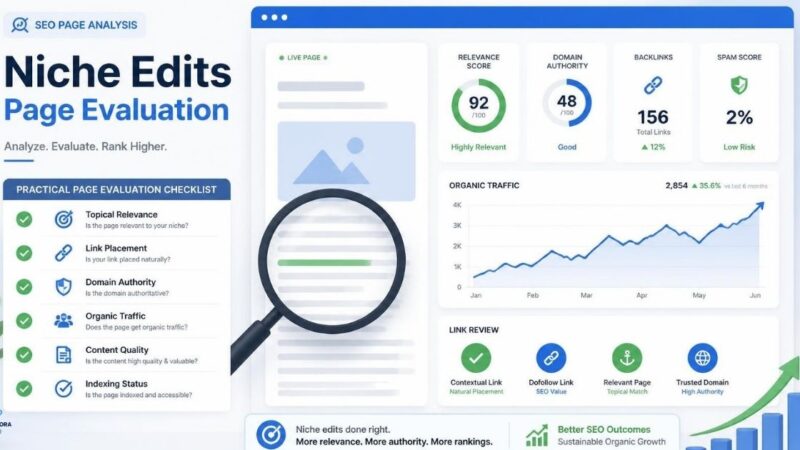
Page evaluation decides whether a niche edit is worth approving or rejecting.
At this stage, I do not look at DR alone. I check the actual page where the link may be placed. A strong website can still have weak pages, so the article itself needs a proper review.
This step protects the client from poor placements. It also makes the niche edit process more transparent before anything goes live.
Checking organic traffic, indexing, and content quality
The first thing I check is whether the article is indexed in Google.
If the page is not indexed, the placement may not give much value. Then I review whether the article has real organic traffic, clear formatting, and useful content.
Reviewing outbound links and link placement history
Next, I check the outbound links on the page.
If the article links to too many unrelated websites, that is a warning sign. It may mean the page has been used for low-quality link insertions before.
Avoiding pages that look expired, spammed, or irrelevant
Some pages look active on the surface but are not worth using.
A good existing article link placement should improve the article. If the link looks unnatural, it is better to reject the page and find a stronger option.
Step 4: Getting editorial approval
Editorial approval means the publisher or editor agrees to place the link inside the article.
This step is important because a niche edit should not be added without review. The editor needs to see whether the link fits the content, whether the anchor makes sense, and whether the article needs a small sentence adjustment.
Why real publisher approval protects link quality
Real approval keeps the placement clean and controlled.
When an editor reviews the link, the placement has a better chance of looking natural. It also reduces the risk of links being added in weak spots or inside unrelated text.
In a proper niche edit process, approval comes before publishing, not after the link is already live.
What editors usually check before accepting a link insertion
Editors usually check the article topic, anchor text, target URL, and link context.
They want to know whether the link adds value for the reader. If the target page does not match the article, the editor may reject it or suggest a better place.
This is why the link insertion process should be prepared clearly before submission.
Why approval should happen before payment or publishing
Approval should happen first because clients need control over the final placement.
At Rankora HQ, I prefer showing the page details before anything goes live. This includes the article URL, target URL, anchor text, and placement context.
That way, the client can accept, reject, or request changes before the link is published.
Step 5: Placing the link naturally inside the article
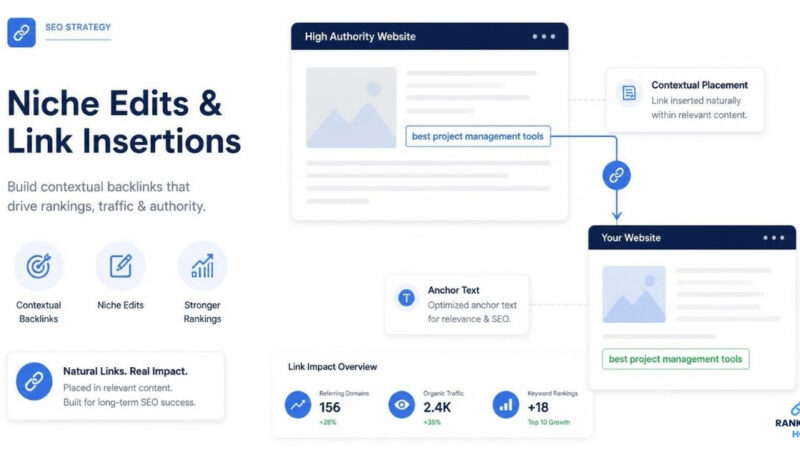
A niche edit should fit into the article like it belonged there from the start.
This is where the actual link insertion happens. The editor adds the link inside a relevant sentence or paragraph, not in a random spot. The surrounding content should support the anchor and make the target URL useful for the reader.
A clean placement should feel natural, simple, and helpful.
How contextual backlinks are inserted without forcing them
Good contextual backlinks are added where the topic already supports the link.
Sometimes the existing sentence is enough. Other times, the editor may add a short supporting sentence to make the link fit better.
Choosing the right sentence, paragraph, and anchor
The best placement is usually inside the main body of the article.
I avoid author bios, footers, sidebars, and unrelated sections. The link should sit inside a paragraph that talks about the same topic as the target page.
What a clean existing article link placement should look like
A clean existing article link placement is easy to understand.
The reader should know why the link is there. The anchor should describe the linked page clearly. The paragraph should flow without sounding edited.
Step 6: Reviewing the live placement and report
The final step is checking the live link and documenting the placement clearly.
A niche edit is not complete when the editor says it is done. The live article needs to be reviewed first. I check the URL, anchor text, target page, placement position, and whether the link is visible in the article.
This step confirms that the niche edit workflow was completed properly.
What should be checked after the link goes live
After the link is live, I check whether the article opens correctly and the link points to the right target URL.
I also review the anchor text again. It should match the approved version and sit inside the agreed paragraph.
If anything looks different from the approval details, it should be fixed before the final report is sent.
What a white-label niche edit report should include
A good report should make the placement easy to verify.
For agency clients, the report should be clean, simple, and ready to share under their own brand. It should not confuse the client with unnecessary details.
A proper report usually includes:
- Live article URL
- Target URL
- Anchor text
- Publisher details
- Placement date
- Screenshot of the live link
Why live URL, anchor, target URL, and placement screenshot matter
These details prove that the link was placed correctly.
The live URL shows where the link exists. The anchor shows how the target page was linked. The target URL confirms the link points to the right page.
A screenshot adds another layer of proof. It helps the client see the placement without searching through the article themselves.
Common mistakes in the niche edit workflow
Most niche edit problems happen when the process is rushed.
A niche edit can look simple, but each step matters. If the target page, article, anchor, or report is weak, the placement loses value. That is why a clear workflow protects both the agency and the client.
Here are the mistakes I see most often.
Choosing sites instead of relevant pages
Many people choose placements only by website metrics.
That is a mistake. A strong website can still have an unrelated article. The page itself must match the target URL.
Relevance should come first. DR, traffic, and price should come after the article passes the topic check.
Approving links without checking the article first
Some buyers approve a niche edit without reviewing the actual article.
This can lead to poor placements on thin, outdated, or spammed pages. It can also create links that feel forced inside the content.
The article should always be reviewed before approval. Once it is live, fixing the placement can take extra time.
Using exact-match anchors too aggressively
Exact-match anchors can help when used carefully.
But using them too often can make the backlink profile look unnatural. A safer approach is to mix branded, partial-match, topical, and natural anchors.
The anchor should fit the sentence first. SEO value comes after the placement reads cleanly.
Frequently Asked Questions
How do niche edits work step by step?
Niche edits work by choosing a target page, finding a relevant existing article, checking the page quality, getting approval, inserting the link, and reporting the live placement.
How long does the niche edit process take?
The timeline depends on publisher response and approval speed, but a clean niche edit process usually takes a few days when the page and anchor are already approved.
What is checked before a niche edit is approved?
The article is checked for topical relevance, indexing, organic traffic, content quality, outbound links, and whether the link can fit naturally.
Who approves a niche edit link placement?
The publisher or editor approves the placement first, and the client should also approve the article, anchor text, and target URL before it goes live.
What should a niche edit report include?
A niche edit report should include the live article URL, target URL, anchor text, placement date, publisher details, and a screenshot of the live link.
Can a niche edit be removed after placement?
Yes, a niche edit can sometimes be removed if the publisher edits the article later, which is why post-placement checks and reporting matter.
Conclusion
Niche edits work best when every step is controlled. The target page must be clear. The existing article must be relevant. The page needs to be checked before approval. Then the link should be placed naturally and verified after it goes live.
That is the difference between a random backlink and a clean niche edit workflow. When the process is transparent, agencies know exactly what they are getting before the placement is published. If you want help with safe, relevant, and white-label link insertions, explore our niche edit link insertion service at /niche-edits-link-insertions/.
Author Bio
Author: Muhammad Awais
Title: Founder, Rankora HQ
Muhammad Awais is the founder of Rankora HQ, a white-label editorial content placement service based in Salalah, Oman. He helps SEO agencies and brands build topical authority through high-quality publishing partnerships on DR 40-90 editorial sites.
LinkedIn: linkedin.com/in/muhammad-awais-seo-outreach