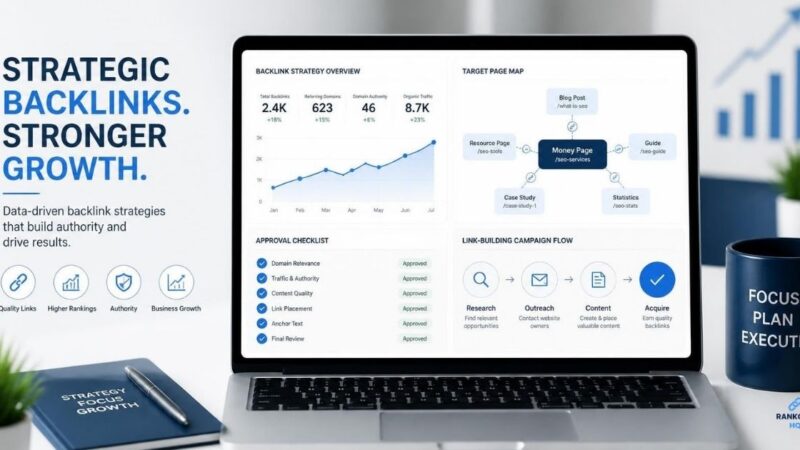
Most client problems in link building start before the first placement goes live. If link building client expectations are not clear from day one, clients may expect instant rankings, guaranteed traffic, or direct proof from one backlink.
In my experience running white-label placement campaigns, strong link building client expectations come from honest communication. Agencies need to explain what links can support, what they cannot control, and why link building client expectations should focus on quality, timelines, and steady authority building — not quick promises.
What clients should realistically expect from link building
Link building should be presented as an authority-building activity, not a magic ranking switch. A good backlink can support better visibility, but it does not control Google’s full decision-making process.
Link building supports authority, but does not control rankings alone
A backlink is one signal among many SEO signals. It can help a page look more trusted, especially when the link comes from a relevant publisher with real editorial value.
But rankings also depend on content quality, search intent, technical SEO, internal links, competition, and algorithm changes. That is why agencies should never explain link building as a standalone ranking solution.
Why agencies should explain outcomes before the campaign starts
Clients become frustrated when expectations are built around quick wins. That usually happens when the sales conversation sounds too confident and the delivery process feels slower than promised.
Before the first placement, agencies should explain what the client can realistically expect:
- A clear link-building strategy
- Relevant publisher selection
- Editorial content placement
- Approval before publication
- Transparent delivery reporting
This keeps the conversation focused on work quality and process, not unrealistic ranking promises.
The difference between link delivery and SEO impact
A link being published and a link creating measurable SEO movement are not the same thing. Delivery is when the placement goes live. Impact is when search engines discover, evaluate, and factor that link into the bigger ranking picture.
That second part takes time and depends on factors outside the agency’s direct control.
Why link building results are not instant
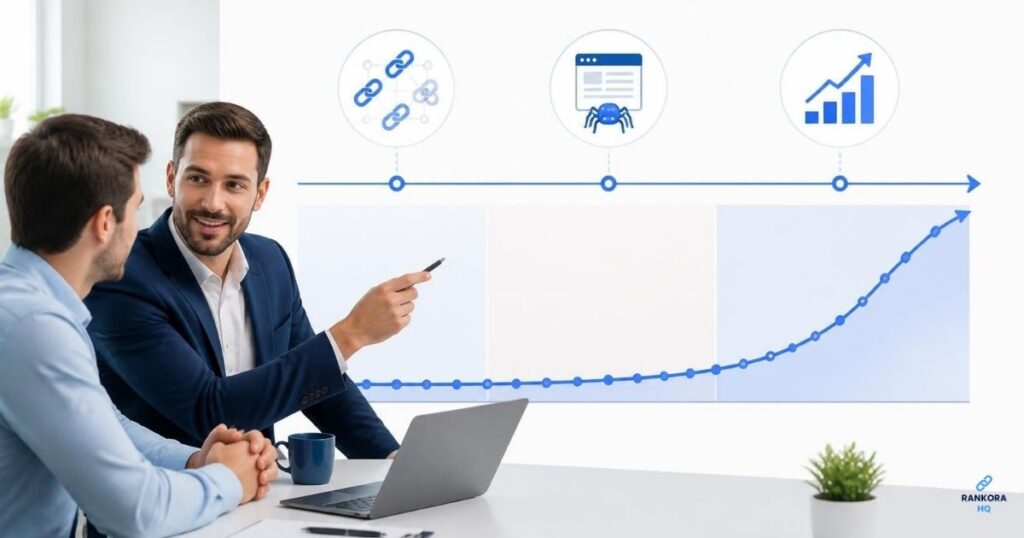
Link building takes time because search engines do not treat every new backlink as an immediate ranking signal. A placement may go live today, but its SEO value is usually evaluated gradually.
Backlinks need time to be discovered, crawled, and evaluated
After a backlink is published, Google still has to discover the page, crawl it, understand the context, and evaluate the link.
Why a published link and a ranking movement are not the same milestone
A published link means the placement has been delivered. It does not mean rankings will move immediately.
Ranking movement depends on how that link fits into the wider SEO picture. One link may support authority, but it works alongside content quality, keyword difficulty, internal linking, technical health, and competitor activity.
How competition, content quality, and site health affect timelines
Some clients expect the same timeline across every campaign, but SEO does not work that way.
A strong site with good content and clean technical SEO may benefit faster from quality links. A weak site, thin content, poor internal linking, or a highly competitive keyword set may take longer.
That is not a link-building failure. It means the backlink is only one part of the growth system.
What agencies can control versus what they cannot control
Agencies should separate controllable work from uncontrollable outcomes before the campaign starts. This makes the link-building conversation more honest and easier to manage.
Clients do not need a technical lecture. They need a clear line between what the agency is responsible for and what search engines decide over time.
What your agency can control
Your agency can control the quality of the link-building process.
That includes:
- Choosing relevant target pages
- Finding suitable publishers
- Checking editorial quality
- Writing useful content
- Getting client approval before publishing
- Delivering clear placement reports
What your agency cannot control
Your agency cannot control exact ranking jumps, traffic numbers, or the date when SEO movement will happen.
Search results change for many reasons. Competitors publish new content, Google updates its systems, websites gain or lose authority, and search intent can shift over time.
How to explain backlinks to clients in simple terms
Backlinks should be explained as trust signals from relevant websites. When another quality website links to your client’s page, it can help search engines understand that the page is useful and worth considering.
A simple explanation non-SEO clients can understand
I usually explain backlinks like professional recommendations.
If a respected website in your industry links to your page, that link acts like a public recommendation. It tells search engines that your content has value in that topic area.
Why relevance matters more than raw link volume
Clients often ask for “more links” because quantity feels easy to measure. But more links are not always better.
A smaller number of relevant links from real publishers can be more useful than a large number of weak, unrelated links.
How to explain editorial placement quality without using too much SEO jargon
Editorial quality means the link is placed inside useful content on a real publisher site. It should look natural, make sense in context, and point to a relevant page.
Clients do not need to hear every technical detail about metrics. They need to see why the placement is valuable.
How to discuss link building timelines without making promises
Agencies should talk about timelines in stages, not fixed ranking dates. This keeps the conversation realistic and avoids promises that search engines may not support.
The goal is to help clients understand what happens after a campaign starts and why SEO impact may take time.
The realistic stages of a link-building campaign
A link-building campaign usually moves through a few clear stages.
First, the agency reviews the client’s goals and target pages. Then it researches keywords, finds relevant publishers, prepares content, gets approval, and publishes the placement.
After that, the link still needs time to be discovered and evaluated by search engines.
This is why I separate the delivery timeline from the results timeline when speaking with clients.
Why agencies should avoid exact-date ranking promises
Exact-date ranking promises create risk. No agency can honestly say that a specific link will move a page by a certain date.
Too many factors are outside the agency’s control. Competitors may build links too. Google may update results. The client’s content may need improvement before links can help properly.
A better approach is to explain the process clearly and avoid language like “you will rank in 30 days.”
How to set timeline ranges without creating false certainty
Timeline ranges are safer than exact promises, but they still need careful wording.
Instead of saying, “You will see results in three months,” say, “We usually review early movement after the campaign has had time to settle, but rankings depend on the wider SEO condition of the site.”
This keeps the client informed without creating false certainty.
The best timeline conversation is simple: we can control campaign delivery, placement quality, and reporting. We cannot control the exact day rankings move.
Why link building guarantees create the wrong expectations
Link building guarantees are risky because they make clients expect outcomes that no agency fully controls. A quality backlink can support SEO growth, but it cannot force Google to rank a page in a specific position.
Agencies should be careful with guarantee language. The promise should be about the quality of the work, not the exact ranking result.
Why guaranteed rankings are not honest or useful
Guaranteed rankings sound attractive, but they create weak client relationships.
No agency controls Google’s algorithm, competitor activity, search intent changes, or the client’s full website condition. Because of that, promising a fixed ranking result is not realistic.
It may help close a deal quickly, but it can damage trust later when the result does not match the promise.
The difference between guaranteeing work quality and guaranteeing SEO outcomes
Agencies can guarantee parts of the process.
For example, they can guarantee that publishers will be reviewed, content will be checked, links will be placed naturally, and clients will approve placements before publication.
That is different from guaranteeing rankings, traffic, or conversions. Those are SEO outcomes, not direct deliverables.
A stronger promise is: “We will deliver relevant, editorial placements that support your SEO strategy.”
Safer language agencies can use instead of guarantees
The best language is clear, confident, and honest.
Instead of saying, “This link will improve your rankings,” say, “This link is designed to support your site’s authority and improve its ability to compete over time.”
Instead of saying, “We guarantee results,” say, “We guarantee a transparent process, relevant publisher selection, and quality-controlled placements.”
How to report link building value without turning it into a KPI guide
Agencies should report link building value clearly, but they should not turn every placement into a ranking promise. The report should help clients understand what was delivered, why it matters, and how it supports the wider SEO strategy.
The goal is simple: show the value of the work without pretending one link can explain every SEO result.
What clients should see after each placement
After each placement, clients should see the basic facts clearly.
That usually includes:
- Publisher URL
- Live article URL
- Target page linked
- Anchor text used
- Article topic
- Placement context
- Approval status
How to explain progress when rankings have not moved yet
If rankings have not moved, do not hide from the conversation. Explain that link building often supports authority before visible ranking changes appear.
A simple update works best: “The placement is live, relevant, and aligned with the target page. We are now giving search engines time to discover and evaluate it alongside the rest of the site.”
This keeps the client focused on the process instead of expecting instant movement.
Why one backlink should not be credited for every traffic change
One backlink should not be treated as the only reason traffic or rankings change.
SEO results come from many signals working together. Content updates, technical fixes, internal links, competitor changes, algorithm updates, and search demand can all affect performance.
Common expectation-setting mistakes agencies should avoid
Most link-building problems come from poor communication, not poor placements. If the client expects the wrong thing, even a good campaign can feel disappointing.
Agencies should fix this before delivery starts. Clear expectations protect both the client relationship and the agency’s credibility.
Selling links as a quick ranking fix
The biggest mistake is presenting backlinks as a fast ranking solution.
This creates pressure later because the client starts looking for instant movement after every placement. When rankings do not jump quickly, the campaign feels weak even if the work is solid.
Overpromising timelines to close the deal
Some agencies promise fast results because it makes the sale easier.
That usually creates problems later. If the timeline is too aggressive, the client may lose trust before the links have enough time to show value.
It is better to win the client with honesty than to close the deal with a promise that cannot be controlled.
Reporting only link numbers instead of explaining placement quality
Clients may ask, “How many links did we get?” That number matters, but it should not be the whole story.
Agencies should also explain why each placement was chosen. Relevance, topic fit, publisher quality, anchor context, and target page alignment all matter.
Waiting until results stall before resetting expectations
Expectation-setting should not happen only when rankings stop moving.
By that point, the client may already feel frustrated. Agencies should explain the process early, repeat the key points during reporting, and keep the conversation realistic throughout the campaign.
The best time to reset expectations is before there is a problem.
Frequently Asked Questions
How long does link building take to show results?
Link delivery can happen quickly, but SEO impact usually takes longer. Search engines need time to discover, evaluate, and connect links with the wider site authority.
Can agencies guarantee link building results?
Agencies should not guarantee rankings, traffic, or conversions from link building. They can guarantee process quality, relevant publisher selection, and transparent delivery.
How should I explain backlinks to clients?
Explain backlinks as recommendations from relevant websites. A strong backlink can help build trust, but it does not force rankings by itself.
What should clients expect after the first backlink goes live?
Clients should expect a live placement report, not instant rankings. The link has to be crawled and evaluated before any SEO impact may appear.
How do I report link building value without overpromising?
Report what was delivered, why the publisher was relevant, and how the placement supports the strategy. Avoid connecting every ranking or traffic change to one backlink.
What should I say when rankings have not improved yet?
Say that the placement is live and aligned with the strategy, but SEO movement depends on more than one link. Review content quality, competition, and site health before blaming the link.
Conclusion
Setting realistic client expectations for link building is not about lowering confidence. It is about protecting trust.
Clients should understand that backlinks can support authority, relevance, and long-term SEO growth, but they cannot guarantee exact rankings or instant traffic. Agencies need to explain the process clearly, separate delivery from impact, and report value honestly.
Author Bio:
Muhammad Awais is the founder of Rankora HQ, a white-label editorial content placement service based in Salalah, Oman. He helps SEO agencies and brands build topical authority through high-quality publishing partnerships on DR 40-90 editorial sites.