A link building quality control checklist helps an agency review every backlink before it is delivered to a client. It is not just about checking DR or seeing if the link is live. The real job is to confirm that the publisher, content, relevance, anchor text, link attribute, and documentation all meet a clear quality standard.
In my experience, most link problems happen when agencies rush the final review. A simple link building quality control checklist can prevent weak placements, unnatural anchors, missing proof, and client complaints. In this guide, I’ll show you how to use a practical link building quality control checklist to verify each placement before it goes into your client report.
What Is Link-Building Quality Control?
Link-building quality control is the final review process an agency uses before delivering a backlink to a client. It checks whether the placement is safe, relevant, natural, and properly documented.
This step comes after prospecting, outreach, content creation, and publishing. The goal is simple: make sure the link meets agency and client standards before it appears in the final report.
Simple Meaning of Link-Building QA
Link-building QA means checking the live placement with a clear checklist. It is not based on guesswork or quick approval.
In my workflow, I review the publisher, page topic, content quality, anchor text, link attribute, and proof of placement. If one area looks weak, the placement needs another review before delivery.
What Agencies Should Check Before Delivery
Agencies should check more than whether the link is live. A live link can still be low quality if the page is irrelevant, the anchor is forced, or the publisher looks risky.
Before sending a report, the agency should confirm:
- The publisher is real and active
- The topic matches the client page
- The content reads naturally
- The anchor text makes sense
- The link attribute is correct
- The page is indexable
- The placement proof is saved
These checks help avoid client complaints and protect campaign quality.
Difference Between QA, Strategy, and Publisher Vetting
Link-building strategy decides what type of links the campaign needs. Publisher vetting checks whether a site is worth considering before placement.
Quality control is different. It reviews the final live placement before the client sees it.
That means QA is the last safety step. It confirms that the work promised during the campaign was actually delivered in a clean and professional way.
Why Agencies Need a Link-Building QA Process
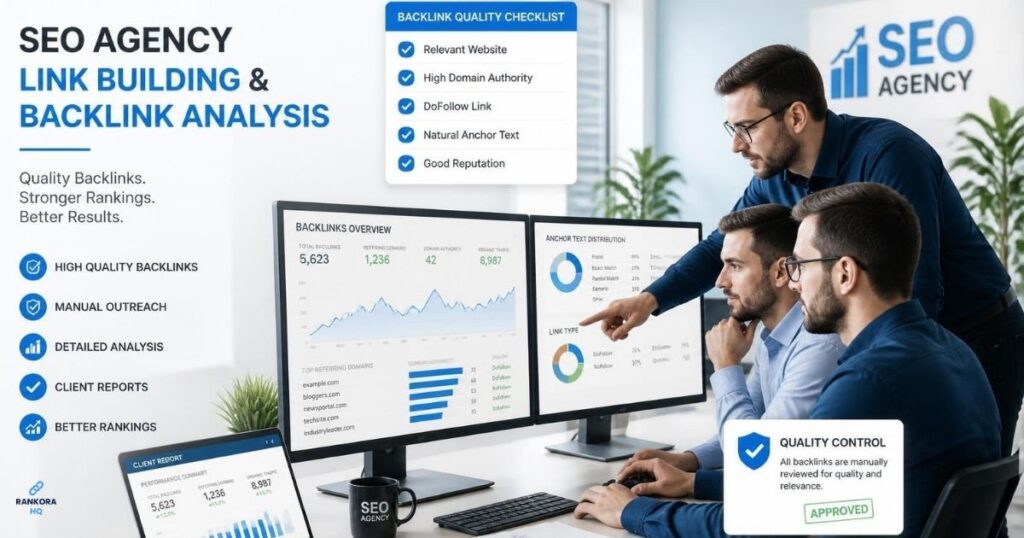
Agencies need a link-building QA process because every delivered link represents their work, judgment, and brand. One weak placement can damage client trust, even if the rest of the campaign is strong.
A simple QA process keeps delivery clean. It helps the team review each placement the same way before it reaches the client.
Protects Client Relationships
Clients do not only look at the number of links. They also check where the links are placed and how natural they look.
When an agency reviews each placement before delivery, it reduces awkward client questions. It also shows that the agency cares about quality, not just volume.
Prevents Low-Quality Link Delivery
A backlink can pass basic checks and still be weak. The site may look spammy. The content may feel thin. The anchor may look forced.
QA helps catch these issues before the client sees them. This gives the agency time to fix, replace, or reject the placement.
Creates a Repeatable Agency Workflow
Without a checklist, every team member may judge link quality differently. That creates inconsistent delivery.
A repeatable QA workflow makes the process clear. Everyone knows what to check, what to reject, and what proof to save before sending the final report.
Publisher Quality Check
Publisher quality check is the first QA step before approving a link placement. This does not need to become a full site-vetting process, but the agency should still confirm that the publisher looks real, active, and safe enough for client delivery.
The goal is to catch obvious risks before the link goes into the final report.
Check Real Traffic and Organic Visibility
A publisher should have signs of real organic visibility. Should not approve a placement only because the site has a high DR.
Review Publishing Activity
A quality publisher should publish content consistently. It should not look abandoned or filled with random posts from unrelated industries.
Avoid Spammy Outbound Link Patterns
Outbound links can reveal the real quality of a publisher. If every article links to commercial pages with exact-match anchors, the site may be selling links without editorial control.
Confirm the Site Looks Editorial, Not Link-Only
A good publisher should look like a real content site. It should have useful articles, clear categories, an about page, and a normal editorial structure.
Topical Relevance Check
Topical relevance check confirms that the publisher, article, and client page fit together. A backlink should not feel random just because the publisher has strong metrics.
For agency link quality, relevance is one of the most important checks before delivery.
Match the Site Niche with the Client Industry
The publisher should have a clear connection to the client’s industry or audience. It does not always need to be an exact match, but the link should make sense.
Match the Article Topic with the Target Page
The article topic should support the page being linked to. If the client page is about SEO reporting, the article should discuss SEO, reporting, agency workflows, or marketing operations.
Avoid Links Placed Only Because the Site Has High DR
High DR does not fix poor relevance. A powerful site can still be a bad placement if the article and link context do not match the client’s page.
Content Quality Check
Content quality check makes sure the page around the backlink is useful, readable, and safe to show a client. A strong publisher still needs strong content.
The backlink should sit inside content that feels natural, helpful, and written for real readers.
Check Originality and Readability
The article should not look copied, spun, or AI-padded. It should explain the topic clearly and stay easy to read.
Remove Thin or Generic Writing
Thin content weakens the value of the placement. It usually says a lot without helping the reader.
Avoid articles that repeat basic points, use vague claims, or add filler just to reach a word count.
Make Sure the Link Fits the Paragraph Naturally
The backlink should match the sentence and paragraph around it. It should not look added at the last minute.
Confirm the Article Is Not Over-Promotional
The content should not read like an ad for the client. It should educate first and mention the linked page only where it makes sense.
Link Placement and Context Check
Link placement and context check means reviewing the exact spot where the backlink appears. A link can be on a good site and inside decent content, but still look weak if the placement feels forced.
The link should support the sentence, help the reader, and fit naturally into the article.
Check the Sentence Around the Link
The sentence around the backlink should make sense on its own. It should not look like the link was inserted only for SEO.
Avoid Forced or Random Placements
A forced link breaks the flow of the content. It may point to a page that has no clear connection with the paragraph.
Make Sure the Link Helps the Reader
A good backlink should give the reader a useful next step. It should add context, support a point, or lead to a relevant resource.
Review Nearby Internal and External Links
The links around your client’s backlink also matter. If the page links to spammy, unrelated, or low-quality sites, the placement becomes weaker.
Anchor Text and Link Attribute Check
Anchor text and link attributes should be reviewed before every client delivery. These small details can change how natural, safe, and useful a backlink looks.
A placement should not only be live. It should also use the right anchor and the correct link attribute.
Use Natural Anchor Text
Anchor text should read like a normal part of the sentence. It should not feel forced or written only for search engines.
Avoid Repeated Exact-Match Anchors
Exact-match anchors can look risky when they are repeated too often. One or two may be fine in a larger campaign, but overuse can make the backlink profile look unnatural.
Confirm Dofollow, Nofollow, Sponsored, or UGC Status
The final report should show the correct link attribute. Do not assume the link is dofollow just because the publisher promised it.
Check the Live Page HTML
Screenshots are useful, but they are not enough. The live HTML shows the real link status.
Technical and Indexing Check
Technical and indexing checks confirm that the backlink can be accessed, crawled, and reviewed properly. A placement is not ready for delivery just because the article is published.
Confirm the Live URL Opens Correctly
The live placement URL should open without errors. It should not return a 404 page, redirect loop, server error, or broken layout.
Check Noindex and Canonical Tags
The page should not be blocked from indexing. Check for a noindex tag or a canonical tag pointing to another URL.
Test the Backlink Destination
The backlink should point to the correct client URL. Even a small URL mistake can send users and search engines to the wrong page.
Make Sure the Link Is Not Hidden or Redirected
The backlink should be visible in the content and easy for a reader to find. It should not be hidden in code, placed in a strange section, or changed through redirects.
A clean placement uses a visible link, natural anchor text, and a direct destination. That is the standard I use before approving a link for delivery.
Pre-Delivery Link-Building QA Checklist
A pre-delivery link-building QA checklist helps agencies review every placement before it goes into the client report. It keeps the process simple, consistent, and easy to repeat.
Use this checklist as the final review step after the link is live.
Publisher Check
Confirm that the publisher looks real, active, and safe for client delivery.
Check traffic signs, recent posts, content quality, and outbound link patterns. If the site looks built only for selling links, do not approve it.
Relevance Check
Make sure the publisher, article topic, and client page fit together.
The link should make sense for the reader. If the connection feels weak or forced, the placement needs revision.
Content Check
Review the article for originality, readability, and usefulness.
The content should not feel thin, copied, or overly promotional. The backlink should appear inside a paragraph that supports the topic naturally.
Anchor and Attribute Check
Check the anchor text and the link attribute before reporting the placement.
The anchor should read naturally. The link attribute should match what was agreed, whether it is dofollow, nofollow, sponsored, or UGC.
Technical Check
Open the live page and test the backlink.
Confirm the URL works, the page is indexable, and the link points to the correct client page. Also check that the link is visible and not hidden.
Documentation Check
Save clear proof before sending the report.
Include the live URL, target URL, anchor text, link attribute, publisher name, publish date, and screenshot. This makes the final report easier for the client to review.
Common Link-Building QA Mistakes
Common link-building QA mistakes happen when agencies rush delivery or check only surface-level details. These mistakes can make a placement look weak, even when the link is live.
A good QA process should catch these issues before the client sees the final report.
Checking DR Only
DR is useful, but it is not enough. A site can have a high DR and still have poor traffic, weak content, or spammy outbound links.
Agencies should check relevance, organic visibility, publishing quality, and link context before approving a placement.
Ignoring Topical Relevance
A link should make sense between the publisher, article, and client page. If the topic connection is weak, the placement can look random.
Relevance should always come before metrics. A lower-metric but highly relevant site can be stronger than an unrelated high-DR site.
Approving Unnatural Anchors
Keyword-heavy anchors can make a backlink look forced. This is especially risky when the same anchor is used across many placements.
Before delivery, review the anchor in the full sentence. It should read naturally and fit the content.
Sending Reports Without Live Verification
Some agencies report links based on publisher confirmation only. That creates problems if the page is not live, the link is wrong, or the attribute has changed.
Always check the live URL yourself before adding it to the client report.
Missing Screenshots or Placement Proof
Clients need proof that the placement was delivered correctly. A report without screenshots, anchor details, or link attributes can feel incomplete.
Save the live URL, screenshot, anchor text, target URL, publish date, and link attribute. This makes the delivery clear and professional.
Frequently Asked Questions
What is a link building quality control checklist?
A link building quality control checklist is a review process agencies use before delivering backlinks to clients. It checks publisher quality, relevance, content, anchor text, link attributes, and proof.
Why is link-building QA important for agencies?
Link-building QA helps agencies avoid weak placements, client complaints, and inconsistent delivery. It keeps every backlink aligned with agreed quality standards.
What should agencies check before reporting a backlink?
Agencies should check the live URL, publisher quality, article relevance, anchor text, link attribute, indexability, and placement documentation before sending the report.
Is DR enough to judge backlink quality?
No. DR is only one metric. Agencies should also check traffic, topical relevance, content quality, outbound links, and the final link context.
How do I know if a link placement is relevant?
A link placement is relevant when the publisher niche, article topic, and client target page fit naturally together. The link should help the reader, not feel forced.
What is link placement review?
Link placement review means checking the exact sentence and paragraph where the backlink appears. The link should be visible, natural, and useful in context.
Should agencies check link attributes manually?
Yes. Agencies should check the live page HTML to confirm whether the link is dofollow, nofollow, sponsored, or UGC before client delivery.
What proof should be included in a link-building report?
A clean report should include the publisher name, live URL, target URL, anchor text, link attribute, publish date, and screenshot proof.
Conclusion
A link-building quality control checklist gives agencies a clear way to review every placement before client delivery. It helps you check the publisher, relevance, content, anchor text, link attribute, indexing status, and documentation without relying on guesswork.
In my experience, the best link-building campaigns are not just built on strong placements. They are built on clean review systems. Before sending any backlink to a client, run it through a simple QA workflow and save the proof properly. If your agency needs cleaner delivery, a structured white-label reporting process can make every placement easier to review and approve.
Author Bio
Author: Muhammad Awais
Title: Founder, Rankora HQ
Muhammad Awais is the founder of Rankora HQ, a white-label editorial content placement service based in Salalah, Oman. He helps SEO agencies and brands build topical authority through high-quality publishing partnerships on DR 40-90 editorial sites.
LinkedIn: linkedin.com/in/muhammad-awais-seo-outreach