Niche edits can work well when the link feels like it belongs in the article. That starts with the anchor text. In simple terms, anchor text is the clickable wording used for a link. For agencies, choosing niche edit anchor text is not about forcing the same keyword into every placement. It is about matching the anchor with the sentence, the page topic, and the reader’s next step.
In my experience reviewing placements for clients, the best niche edit anchor text usually sounds natural before it sounds optimized. It helps the reader understand why the link is there and what they will find after clicking. This guide explains how to choose niche edit anchor text based on relevance, context, and editorial quality instead of fixed ratios or keyword repetition.
What Is Niche Edit Anchor Text?
Niche edit anchor text is the clickable text used when a link is added inside an existing article. It tells the reader what the linked page is about before they click.
In a niche edit, the anchor text matters because the content already exists. The link has to fit naturally into the sentence, not look like it was added only for SEO.
Simple definition of anchor text
Anchor text is the visible wording attached to a hyperlink. For example, if a sentence links to a guide using the words “SEO content writing service,” that phrase is the anchor text.
Good anchor text gives a clear signal. It should explain the linked page in plain language. It should not confuse the reader or promise something the destination page does not cover.
Why niche edits need careful anchor wording
Niche edits are different from writing a fresh guest post. You are working inside an article that already has its own topic, tone, and sentence flow.
That means the anchor should match three things:
- The surrounding paragraph
- The page being linked to
- The reason a reader would click
A natural mention feels like part of the article. A forced link placement feels added after the fact. That is why agencies should choose anchor text after reading the paragraph, not before.
Why Natural Anchor Text Matters
Natural anchor text matters because it makes the link feel useful, not forced. In niche edits, the link is being added to content that already exists, so the wording must support the original paragraph.
When the anchor sounds natural, readers trust the link more. When it sounds stuffed with keywords, the placement can feel promotional and out of place.
It improves reader experience
The first job of anchor text is to help the reader. A good anchor tells them what they will find after clicking.
For example, an anchor like “this guide to editorial placements” is clearer than a random keyword dropped into a sentence. It gives context and keeps the sentence easy to read.
It gives better context
Search engines do not look at anchor text alone. They also consider the surrounding words, paragraph topic, and destination page.
That is why niche edit anchor text should match the full context of the article. A relevant anchor inside a relevant paragraph is stronger than an exact keyword placed in the wrong sentence.
It supports editorial approval
Editors usually reject links that feel unnatural or overly promotional. They want links that add value to the article.
Natural anchor text makes the placement easier to approve because it respects the existing content. It also shows that the link was added for relevance, not just keyword control.
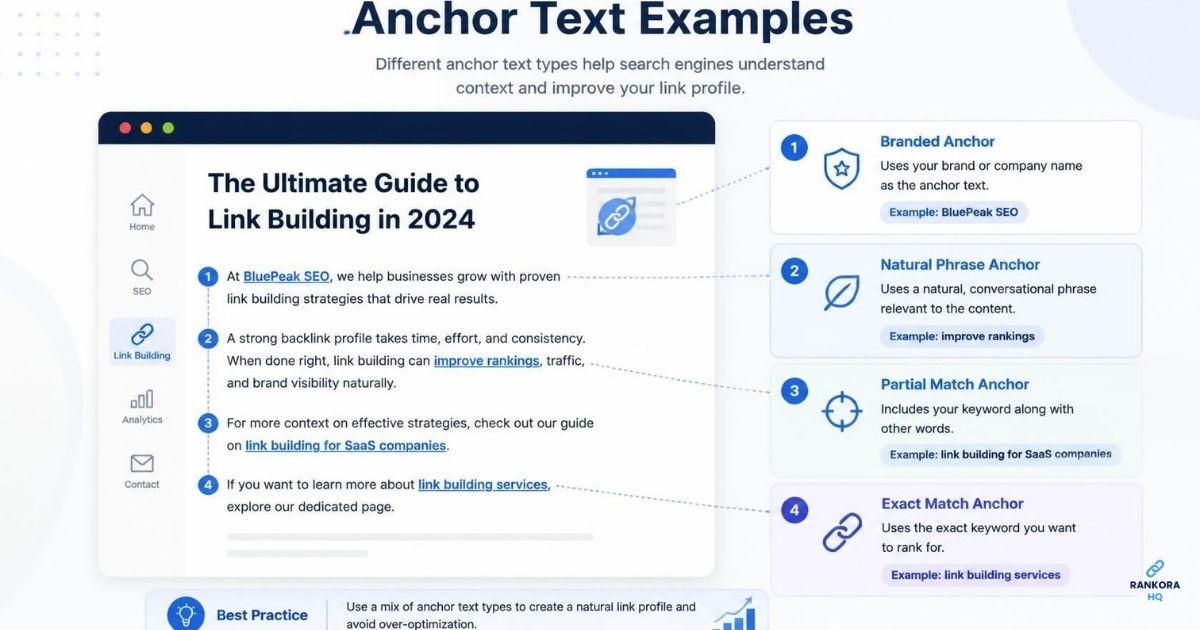
Main Types of Anchor Text Used in Niche Edits

Different anchor types can work in niche edits, but the best choice depends on context. The goal is not to use every type in one campaign. The goal is to choose wording that fits the article naturally.
Branded anchors
Branded anchors use a company name, product name, website name, or founder name as the clickable text.
For example, “Rankora HQ” is a branded anchor. This works well when the article already mentions the brand or when the link points to a homepage, about page, or branded service page.
Branded anchors often feel natural because they do not force a keyword into the sentence.
Natural phrase anchors
Natural phrase anchors use normal wording that already fits the sentence. These anchors are usually descriptive but not heavily optimized.
Examples include:
- “this editorial placement guide”
- “a practical explanation of link insertions”
- “the full process behind content placement”
These anchors work well when the reader needs more detail on the same topic.
Partial match anchors
Partial match anchors include part of the keyword inside a natural phrase. They give relevance without sounding too exact.
For example, instead of using “niche edit anchor text” every time, a partial match could be “choosing anchor text for niche edits” or “natural anchor wording for link insertions.”
This type is often useful because it keeps the anchor relevant while still sounding human.
Exact match anchors
Exact match anchors use the exact target keyword as the clickable text. In this article, “niche edit anchor text” is an exact match anchor.
Exact match anchors are not always wrong. They can make sense when the sentence supports them naturally. The problem starts when the same exact phrase is repeated across many placements or forced into sentences where it does not belong.
For niche edits, context should decide whether an exact match anchor is appropriate.
How to Choose the Right Anchor Text for a Niche Edit
The right anchor text starts with context. Before choosing any keyword, read the sentence, paragraph, and section where the link will be added.
Good niche edit anchor text should feel like it was always part of the article. It should not change the tone or make the sentence sound unnatural.
Read the surrounding paragraph first
Never choose anchor text before reading the content around the placement. The paragraph tells you what the anchor should say.
If the paragraph explains content quality, the anchor should relate to content quality. If the paragraph discusses editorial links, the anchor should support that idea. The anchor must follow the existing topic.
Match the anchor with the linked page
The anchor should describe the destination page honestly. If the link points to a service page, the anchor can describe the service. If it points to a blog post, the anchor should sound informational.
Follow user intent
Ask what the reader expects when they click the link. The anchor should create a clear and accurate expectation.
If the reader is looking for a guide, use guide-style wording. If they are comparing services, use wording that matches that decision stage. This keeps the link useful.
Keep the sentence natural
Read the full sentence out loud. If the anchor sounds awkward, rewrite it.
A natural sentence is more important than forcing an exact keyword. Editors notice when a keyword is added only for SEO. Readers notice it too.
Use the least forced keyword version
Use the version of the keyword that fits the sentence best. Sometimes that will be a partial match. Sometimes it will be a branded anchor. Sometimes the exact keyword will work.
The goal is not to use the strongest keyword every time. The goal is to choose anchor text that makes sense in the paragraph and helps the reader move to the next useful page.
Natural vs. Forced Anchor Text Examples
Examples make anchor text easier to judge. A small wording change can make a niche edit feel more natural and editorial.
The goal is not to hide the link. The goal is to make the anchor useful inside the sentence.
Weak anchor example
A forced anchor usually sounds like it was added after the article was written.
Example:
“Many agencies use outreach to grow authority, and best niche edit anchor text service can help improve rankings.”
This sounds unnatural because the anchor does not fit the sentence. It is too commercial, too keyword-heavy, and not useful for the reader.
Better natural version
A better version keeps the same topic but improves the sentence flow.
Example:
“Many agencies use outreach to grow authority, but choosing natural anchor text for niche edits helps the placement feel more relevant.”
This version sounds smoother. The anchor explains the topic clearly and fits the sentence without forcing a sales phrase.
Branded anchor example
Sometimes a branded anchor is better than a keyword anchor.
Example:
“Agencies that want hands-on editorial placement support can work with Rankora HQ for niche edit link insertions.”
This works because the brand name fits naturally in the sentence. It also avoids repeating the same keyword when a branded mention feels more appropriate.
Anchor Text Mistakes Agencies Should Avoid
Anchor text mistakes usually happen when agencies focus too much on keywords and not enough on context. A niche edit should feel useful inside the article, not added only to control rankings.
Small wording choices can affect how natural the placement looks.
Repeating the same keyword too often
Using the same exact anchor across many placements can create an unnatural pattern. It also makes the links feel less editorial.
Instead of repeating one phrase, use natural variations. Mix branded anchors, partial match anchors, and clear phrase-based anchors when they fit the content.
Linking to the wrong page
The anchor must match the page it points to. If the anchor says “content writing service,” the linked page should clearly cover that service.
When the destination page does not match the anchor, the reader feels misled. Editors may also see the placement as low quality.
Forcing commercial keywords
Commercial keywords can work when the context supports them. The problem is forcing them into informational articles where they do not belong.
For example, a paragraph explaining research methods may not be the right place for a heavy service-based anchor. A softer, contextual anchor may fit better.
Ignoring the paragraph context
Even a good keyword can be wrong in the wrong paragraph. The anchor should support the sentence around it.
Before approving any niche edit anchor text, check whether the link adds value to that exact section. If it feels disconnected, the anchor needs to be changed.
Niche Edit Anchor Text Checklist
A simple checklist can help agencies approve anchor text before a placement goes live. The goal is to check relevance, sentence flow, and reader value.
Use this before sending a niche edit for review.
Relevance checklist
Ask these questions first:
- Does the anchor match the surrounding paragraph?
- Does it clearly describe the linked page?
- Does the link add value to that section?
- Would the anchor make sense without thinking about SEO?
If the answer is no, the anchor needs to be changed.
Natural language checklist
Read the sentence out loud. The anchor should sound like normal writing.
Check whether the anchor fits grammatically. It should not make the sentence feel stiff, broken, or keyword-stuffed.
Editorial review checklist
Think like an editor before approving the placement.
Would this link improve the article for the reader? Would the anchor feel useful, clear, and relevant? If yes, it is likely a stronger choice.
Good niche edit anchor text should pass all three checks: relevance, natural language, and editorial value.
Frequently Asked Questions
What is niche edit anchor text?
Niche edit anchor text is the clickable text used when a link is added inside an existing article. It helps readers and search engines understand the linked page.
What makes anchor text natural?
Anchor text feels natural when it fits the sentence, matches the paragraph topic, and clearly describes the linked page without sounding forced.
Should I use exact match anchor text in niche edits?
Exact match anchors can be used when the sentence supports them naturally. The problem starts when they are repeated too often or forced into unrelated content.
Are branded anchors good for niche edits?
Yes, branded anchors are useful when the brand name fits the context. They often feel cleaner and less promotional than keyword-heavy anchors.
How do I avoid over-optimized anchor text?
Use varied, relevant wording instead of repeating the same keyword. Choose anchors based on paragraph context, destination page, and reader value.
What is the best niche edit anchor strategy?
The best niche edit anchor strategy is to choose anchors that are relevant, natural, and editorially acceptable. Focus on context before keywords.
Conclusion
Choosing natural anchor text for niche edits is not about chasing a fixed ratio or repeating the same keyword across every placement. The better approach is simple: read the paragraph, understand the page being linked to, and choose wording that helps the reader.
Strong anchor text should feel relevant, clear, and editorially acceptable. It should match the sentence, support the article topic, and create the right expectation before someone clicks. In my experience, the best placements are the ones that look useful first and optimized second.
If your agency needs clean, relevant link insertions, Rankora HQ’s niche edit link insertion service can help you build placements that fit naturally inside real editorial content.
Author Bio:
Muhammad Awais is the founder of Rankora HQ, a white-label editorial content placement service based in Salalah, Oman. He helps SEO agencies and brands build topical authority through high-quality publishing partnerships on DR 40-90 editorial sites.