Niche edits can be a valuable link-building method, but the cost behind them is not always clear. A placement on an established website may cost more than a simple link insertion because it involves page quality checks, relevance analysis, and editorial considerations. Understanding the niche edit cost helps SEO agencies make smarter decisions before investing in campaigns.
The niche edit cost can vary widely depending on factors like website authority, organic traffic, content quality, and placement context. Instead of looking only at the price tag, agencies should understand what they are paying for and how different factors influence niche edit pricing. This guide explains the main elements that determine costs and how to evaluate whether a placement offers real value.
What Is a Niche Edit and Why Does It Have a Cost?
A niche edit is a link placement added to an existing article that is already published on a website. Instead of creating new content, the link is inserted naturally into a relevant section of an existing page.
The cost of a niche edit comes from the research, evaluation, and effort required to find suitable pages. A quality placement requires checking whether the website, article, and surrounding content are relevant and valuable for the target link.
How Niche Edits Work
The process usually starts by identifying relevant websites and existing articles that match the target topic. The placement should fit naturally within the content instead of appearing as an unrelated addition.
After finding a potential page, agencies evaluate factors like traffic, authority, content quality, and existing links. This helps determine whether the placement is worth the investment.
Why Existing Article Placements Require Evaluation
Not every published article is suitable for a niche edit. A page may have strong metrics but still lack relevance, traffic, or proper content context.
Evaluating these factors takes time and expertise, which is why niche edit cost is influenced by more than just adding a link. The value comes from securing a placement that fits naturally and supports long-term SEO goals.
Niche Edit Pricing Models Explained
Niche edit pricing usually depends on the type of placement, the quality of the publisher, and the scale of the campaign. Different providers use different pricing models based on the level of research, outreach, and editorial work involved.
Per-Placement Pricing
The most common model is paying for each individual niche edit placement. The price can vary depending on the website quality, traffic levels, topical relevance, and the strength of the existing article.
A placement on a trusted website with relevant content usually costs more because it requires finding a suitable page and securing a natural link addition.
Package and Campaign Pricing
Many agencies choose package-based pricing when they need multiple niche edits. These packages may include a specific number of placements across different websites.
Campaign pricing can offer better planning and consistency, but agencies should still evaluate each placement individually. A larger quantity does not always mean better link quality.
White-Label Agency Pricing Models
SEO agencies often use white-label providers to manage niche edit campaigns for their clients. In this model, pricing may include publisher research, quality checks, communication, and reporting.
The final niche edit cost depends on the level of service included. Agencies should compare the quality control process instead of choosing a provider based only on the lowest price.
Key Factors That Affect Niche Edit Cost
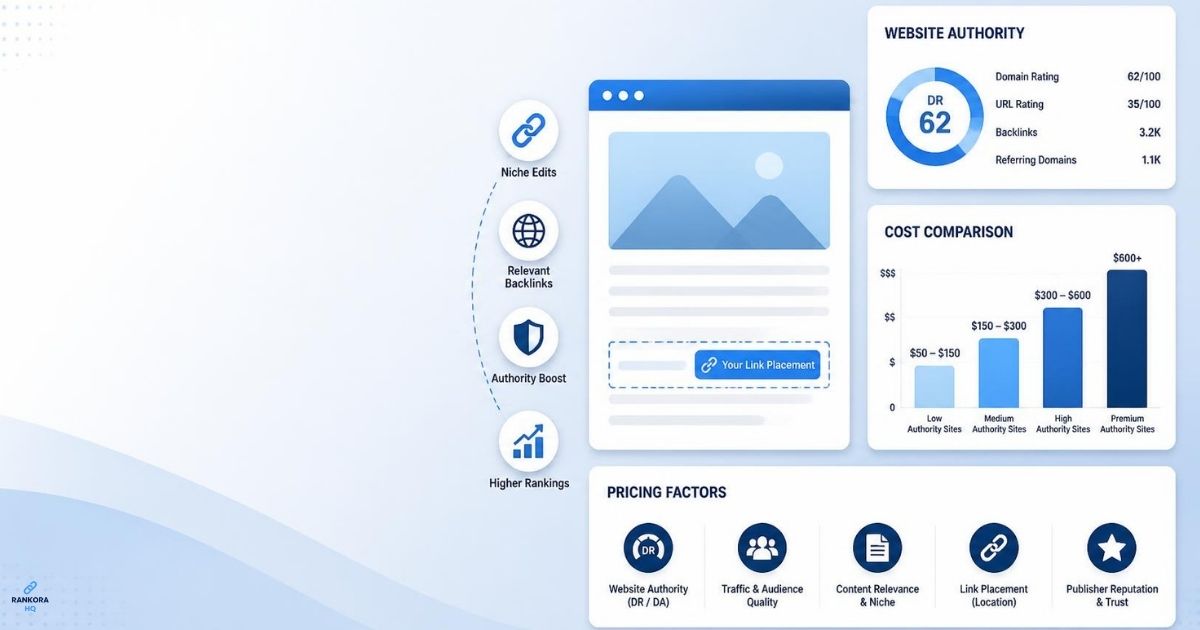
The niche edit cost depends on several quality factors, not just the act of adding a link. A placement on a strong, relevant page usually requires more research and evaluation, which increases the overall value.
Website Authority and Organic Traffic
The quality of the publishing website is one of the biggest factors affecting pricing. Websites with stronger authority, consistent traffic, and stable rankings usually have higher placement costs.
However, agencies should look beyond domain metrics. A website with real visitors and relevant content often provides more value than one with high numbers but poor quality signals.
Topical Relevance and Content Quality
A niche edit works best when the link is placed inside content that closely matches the target topic. Relevant pages provide better context and create a more natural user experience.
The quality of the existing article also matters. Well-written, useful content with strong engagement is generally more valuable than outdated or thin pages.
Page Age, Performance, and Link Placement
Older pages that have earned visibility and search traffic may have higher placement value. A link added to a page that already performs well can require more careful evaluation.
The position of the link inside the article also affects pricing. A natural contextual placement within the main content is usually more valuable than a link added in a less visible area.
Industry Competition and Publisher Demand
Some industries have higher competition and fewer quality publishing opportunities. In these cases, relevant placements may cost more because demand is higher.
Publishers may also charge more when their website receives frequent requests or has strong authority within a specific niche.
Cheap vs Premium Niche Edits: What Is the Difference?
The difference between cheap and premium niche edits usually comes down to quality control, relevance, and the strength of the placement. A lower price does not always mean better value, especially when the placement lacks long-term SEO value.
Risks of Low-Cost Placements
Cheap niche edits may involve websites with poor traffic, unrelated content, or too many outbound links. These placements can provide limited value and may create risks if the website quality is questionable.
Some low-cost providers focus on quantity instead of proper evaluation. This can result in links placed on weak pages that do not support your SEO goals.
What Quality Niche Edits Usually Include
Higher-quality placements usually involve detailed website research, relevant page selection, and natural link integration. The focus is on finding pages where the link makes sense for readers.
Premium placements are not only about higher metrics. They are about stronger relevance, better content context, and a more reliable publishing environment. A higher niche edit cost often reflects the additional effort required to secure these factors.
How Agencies Should Evaluate Niche Edit Pricing
Agencies should evaluate niche edit pricing based on the overall quality of the placement, not just the upfront cost. A reliable evaluation process helps avoid paying for links that provide little long-term value.
Check the Publisher and Page Quality
Before paying for a niche edit, agencies should review the publishing website and the specific page where the link will appear. Important factors include organic traffic, content quality, website reputation, and page relevance.
A strong publisher with useful content and real visibility is usually more valuable than a website chosen only because of high third-party metrics.
Review Link Context and Existing Outbound Links
The placement should appear naturally within the article and support the surrounding content. Agencies should check whether the page already contains too many external links or unrelated placements.
A page filled with paid links can reduce the overall value of the placement and affect how users perceive the content.
Avoid Paying Only for Metrics
Domain Rating, authority scores, and similar metrics can help during evaluation, but they should not be the only deciding factors. A high-metric website with poor relevance may not justify the price.
The best niche edit cost decisions come from balancing authority, relevance, traffic, and placement quality together.
Niche Edit Cost Compared With Other Link Building Methods
Niche edits are only one option in a broader link-building strategy. Understanding how their cost compares with other methods helps agencies choose the right approach based on their goals and budget.
Niche Edits vs Guest Posts
Niche edits use existing articles, while guest posts require creating new content for publication. Because guest posts involve content creation, editing, and publishing from scratch, they often require more resources.
Niche edits can be a faster option when a suitable existing page is available. However, the value of both methods depends on the quality and relevance of the placement.
Niche Edits vs Full Link-Building Campaigns
A full link-building campaign usually includes multiple activities such as prospecting, outreach, content creation, and ongoing reporting. Niche edits focus mainly on securing contextual placements within existing content.
For agencies, the choice depends on campaign objectives. Some projects may benefit from targeted niche edits, while others may require a wider link-building approach for broader authority growth.
How to Budget for a Niche Edit Campaign
Planning a niche edit budget requires understanding your SEO goals, target websites, and the quality level you need. A clear budget helps agencies focus on valuable placements instead of chasing the highest number of links.
Define SEO Goals First
Before investing in niche edits, agencies should decide what they want to achieve. The goal may be improving topical authority, supporting important pages, or building a stronger backlink profile.
Clear goals help determine the type of placements needed and prevent unnecessary spending on irrelevant links.
Focus on Quality Over Link Volume
Buying more placements does not always create better results. A few highly relevant links from quality pages can be more valuable than many low-quality placements.
Agencies should consider relevance, traffic, and content quality when planning their niche edit cost rather than focusing only on the number of links.
Track Placement Quality After Publishing
Budget planning should also include reviewing the performance and stability of placements after they go live. Agencies should monitor whether links remain indexed and whether the pages continue to provide value.
Tracking helps identify which types of placements deliver better returns for future campaigns.
Common Mistakes When Paying for Niche Edits
Agencies often make pricing decisions based only on cost, but cheap placements can create problems when important quality factors are ignored. Understanding common mistakes helps avoid wasting budget on weak link opportunities.
Choosing the Cheapest Option
The lowest niche edit cost does not always mean the best deal. Extremely cheap placements may come from low-quality websites, irrelevant pages, or platforms with poor editorial standards.
Agencies should compare what is included in the placement instead of selecting a provider only because of price.
Ignoring Page-Level Relevance
A common mistake is focusing on website metrics while ignoring the actual page where the link will be placed. A relevant article with strong context is often more valuable than a powerful website with unrelated content.
The link should support the topic naturally and provide value to readers.
Expecting Guaranteed Rankings
Niche edits can support a broader SEO strategy, but no placement can guarantee specific ranking improvements. Search performance depends on many factors, including content quality, competition, technical SEO, and overall website authority.
Agencies should view niche edits as one part of a long-term link-building approach rather than a guaranteed shortcut.
Frequently Asked Questions About Niche Edit Costs
What is the average niche edit cost?
The cost varies based on website quality, relevance, traffic, and placement conditions. There is no single fixed price for all niche edits.
Why do niche edit prices vary?
Niche edit pricing changes because each placement has different factors, including publisher authority, page quality, and industry demand.
Are expensive niche edits always better?
Not always. A higher price should reflect better relevance, quality control, and placement value rather than just higher metrics.
Are cheap niche edits safe?
Cheap placements can be risky if they come from low-quality websites or irrelevant pages. Quality evaluation is important before investing.
How should agencies choose a niche edit provider?
Agencies should review the provider’s quality process, publisher standards, transparency, and ability to secure relevant contextual placements.
Conclusion: Understanding the Real Value of Niche Edit Pricing
Niche edit costs depend on much more than adding a link to an existing article. Website quality, page relevance, traffic, content strength, and placement context all influence the final value of a placement.
For agencies, the right approach is to evaluate quality before price. A well-researched niche edit campaign focuses on relevant, trustworthy placements that support long-term SEO goals instead of chasing the cheapest options.
Author Bio
Muhammad Awais is the founder of Rankora HQ, a white-label editorial content placement service based in Salalah, Oman. He helps SEO agencies and brands build topical authority through high-quality publishing partnerships on DR 40-90 editorial sites.
LinkedIn: linkedin.com/in/muhammad-awais-seo-outreach