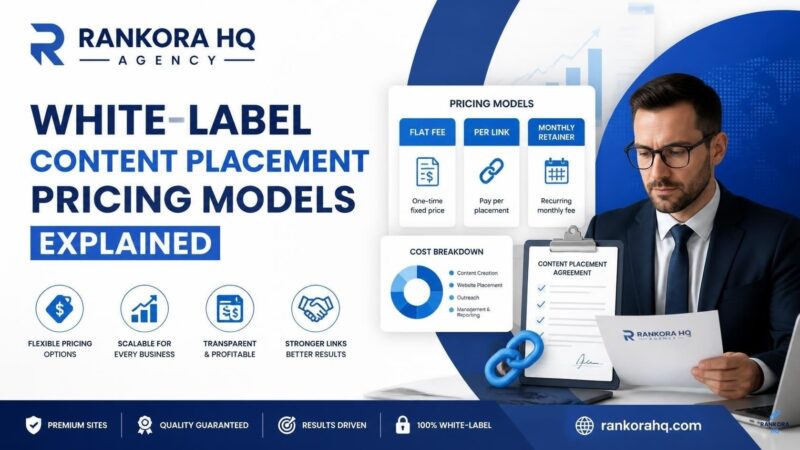
Most agencies do not need to build a full outreach team to offer content placements. They need a clear service structure, a reliable fulfillment process, and simple client approvals. When you resell content placement services, you are packaging publishing, content, quality checks, and reporting under your agency brand.
In my experience, the agencies that do this well do not sell random links or vague SEO promises. They define what the client gets, how approval works, and what the report includes before anything goes live. This article explains how to resell content placement services with clear deliverables, clean packages, safe margins, and a process clients can trust.
What It Means to Resell Content Placement Services
To resell content placement services means your agency sells editorial placements to clients under your own brand while a fulfillment partner handles the research, content, outreach, publishing, and reporting.
The client sees your agency as the service provider. Behind the scenes, you work with a specialist who manages the placement process. This keeps your offer simple, even if you do not have an in-house outreach team.
The Simple Definition for Agencies
For agencies, content placement reselling is a way to add publishing support to SEO campaigns without building the whole delivery system from scratch.
You define the offer, communicate with the client, collect approvals, and deliver the final report. The fulfillment partner helps complete the work in the background.
This model works best when the process is clear. The agency should know what is included, what needs client approval, and what quality standards must be met before any placement goes live.
How Content Placement Differs From General SEO Reselling
General SEO reselling can include many services, such as audits, technical fixes, local SEO, content writing, and reporting. Content placement is more specific.
It focuses on getting client content published on relevant third-party websites. The goal is to support authority, trust, referral visibility, and stronger SEO campaigns.
What Clients Are Really Buying
Clients are not only buying a live link. They are buying a managed process that saves them time and reduces risk.
A strong content placement offer usually includes:
- Relevant publisher research
- Content writing or editorial support
- Client approval before publishing
- Placement on a suitable website
- A clear white-label report after publication
This is why agencies should package the service around clarity and control. The more clearly you explain the process, the easier it becomes for clients to trust the offer.
Why Agencies Add Content Placement to Their Service Stack

Agencies add content placement because it makes their SEO offer more complete without forcing them to build an outreach department.
Most clients already need content, links, authority, and reporting. A well-packaged placement service helps the agency cover that need inside one clear offer.
It Strengthens Existing SEO Retainers
Content placement supports SEO retainers by adding authority-building to the monthly plan.
If an agency is already handling keyword research, content strategy, or on-page SEO, placements can help support those efforts. The service fits naturally because it gives the client’s best pages more visibility from relevant external sites.
This makes the retainer feel more active and valuable.
It Creates a Cleaner Recurring Service Offer
A content placement package is easier to sell when it is tied to a monthly workflow.
For example, the agency can offer a fixed number of approved placements each month, with content and reporting included. This gives the client a clear process instead of a one-time order with no long-term direction.
It also helps the agency turn content placement into part of its recurring SEO services.
It Helps Agencies Serve Clients Without Building an Outreach Team
Building an outreach team takes time, training, tools, and constant quality control.
Many agencies do not want to manage publisher research, negotiations, content edits, follow-ups, and live link checks in-house. A white-label partner makes the service easier to deliver while the agency keeps the client relationship.
This is the main reason many agencies use a white label SEO reseller model for content placement.
Where This Service Fits Beside Content, Technical SEO, and Strategy
Content placement should not replace technical SEO, content planning, or site improvements.
It works best as a support layer. The agency builds the strategy, improves the website, creates useful content, and then uses placements to support authority and visibility.
That is why agency service packaging matters. When the role of each service is clear, the client understands what they are paying for and why it belongs in the campaign.
Define the Deliverables Before You Package the Offer
Before an agency can package a content placement service, it needs to define exactly what the client will receive.
This protects both sides. The client knows what is included, and the agency avoids vague promises that create confusion later.
Publisher Relevance and Quality Standards
The first deliverable is publisher quality.
Agencies should explain what type of websites they will consider. This may include niche relevance, real traffic, editorial standards, clean content, and suitable domain metrics.
The goal is not to place content anywhere. The goal is to find publishers that make sense for the client’s niche and campaign.
Content Writing and Editorial Review
A strong package should clearly state whether content writing is included.
Some clients already have content. Others need the agency to handle the full article. In both cases, the content should match the publisher’s style and support the client’s target page naturally.
Editorial review is also important. It helps avoid thin, generic, or forced content that weakens the placement.
Client Approval Checkpoints
Client approval should be part of the deliverables, not an extra step added later.
Before publishing, the agency should confirm key details such as:
- Target URL
- Anchor text
- Publisher option
- Topic direction
- Final content, when required
This gives the client control and reduces revision problems after publication.
Live Link Confirmation and Final Reporting
Once the content is published, the agency should deliver proof.
A simple white-label report can include the live URL, publisher details, anchor text, target page, publication date, and any agreed metrics.
What Not to Promise in the Deliverables
Agencies should avoid promises they cannot fully control.
Do not guarantee rankings, traffic, leads, or revenue from a single placement. Content placement supports authority and visibility, but SEO results depend on many other factors.
A better promise is process-based: clear research, approval, publishing, and reporting.
How to Package Link Building Services Without Overcomplicating the Offer
The easiest way to package link building services is to keep the offer simple, clear, and tied to client goals.
For content placement, agencies do not need ten different plans. They need a few clean options that explain volume, quality standards, approval steps, and reporting.
Starter Package for Small or Cautious Clients
A starter package works well for clients who are new to content placement.
This package can include a small number of placements, basic content support, approval before publishing, and a simple white-label report.
The goal is to help the client test the process without feeling locked into a large campaign.
Growth Package for Active SEO Campaigns
A growth package is better for clients already investing in SEO.
This package can include more monthly placements, stronger niche matching, content writing, anchor planning, and regular reporting.
It works best when the client has target pages, keyword priorities, and a clear SEO direction.
Authority Package for Competitive Niches
An authority package is useful for clients in harder markets.
These clients often need stronger publishers, more careful topic planning, and better coordination with their SEO strategy.
The agency should position this as a higher-control package, not a guaranteed ranking package.
Custom Package for Complex Agency Accounts
Some clients do not fit into a fixed plan.
A custom package works when the campaign has multiple websites, several target pages, strict niche rules, or special approval needs.
In this case, the agency should build the offer around scope, workload, and publishing standards.
How to Keep Packages Flexible Without Making Them Vague
Flexibility is helpful, but vague offers create problems.
Each package should still define:
- Number of placements
- Content responsibility
- Publisher quality range
- Approval process
- Reporting format
- Expected workflow
This keeps the offer easy to sell and easier to deliver.
How to Build a Clear Content Placement Offer
A clear content placement offer explains what the agency will deliver, how the process works, and where the client has control.
The offer should feel easy to understand. If the client needs too much explanation, the package is probably too complicated.
Position the Offer Around Outcomes, Not Hype
Agencies should avoid selling content placement with big claims.
A better approach is to explain the real value: better authority signals, stronger publishing presence, and support for existing SEO campaigns.
Clients trust the offer more when the agency explains what content placement can do and what it cannot guarantee.
Explain the Workflow in Simple Client Language
The workflow should be easy enough for the client to follow.
A simple version can look like this:
- Client shares target pages and requirements
- Publisher options are researched
- Client approves the publisher and topic
- Content is written or reviewed
- Placement goes live
- White-label report is delivered
This gives the client confidence before the work starts.
Include Approval, Content, Placement, and Reporting in One Offer
A strong package should not feel like separate disconnected services.
The client should understand that content, placement, approval, and reporting are part of one managed process.
In my experience, this makes the service easier to sell because the client sees the full value, not just the final live link.
Use Boundaries to Protect Quality and Expectations
Every offer needs clear boundaries.
Agencies should explain what is included, what is not included, and what requires extra discussion. This can include niche restrictions, revision limits, publisher requirements, turnaround expectations, and content guidelines.
Clear boundaries prevent confusion and protect the agency from rushed or unrealistic client requests.
How to Structure Client Approvals and Communication
Client approvals should be built into the process before any content placement work begins.
This keeps the agency in control, protects the client from unwanted placements, and prevents confusion after publishing.
Get Requirements Before Research Starts
The first step is to collect clear requirements from the client.
This should include the target URL, preferred anchor text, niche, country, content topic, and any publisher restrictions.
Without this, the agency may waste time researching sites that do not match the client’s expectations.
Share Publisher Options Before Publishing
Agencies should not publish content without client approval.
A better process is to share the publisher option first, along with key details such as niche, site quality, topic fit, and placement type.
This gives the client confidence and keeps the process transparent.
Confirm Anchor Text and Target Pages
Anchor text and target pages should be confirmed before content is written or placed.
This matters because small mistakes can affect the value of the placement. The wrong anchor or page can make the final result less useful for the campaign.
I always prefer to confirm these details early instead of fixing them after publication.
Set a Simple Approval Timeline
Approval delays can slow down the whole campaign.
Agencies should set a clear timeline for client feedback. For example, the client may need to approve publisher options or content within a set number of business days.
This keeps the workflow moving and helps avoid missed publishing opportunities.
Keep the Agency in Control of the Client Relationship
In a white-label setup, the agency should remain the main point of contact.
The fulfillment partner works in the background, while the agency manages communication, approvals, and final delivery.
This protects the agency’s brand and keeps the client experience smooth.
How to Include Reporting in a White Label SEO Reseller Offer
Reporting should be part of the offer, not something added after the placement goes live.
For agencies, a strong report makes the service easier to explain, easier to prove, and easier to renew.
What a Useful Placement Report Should Include
A useful placement report should show the client exactly what was delivered.
At minimum, it should include:
- Live placement URL
- Publisher name
- Target page
- Anchor text
- Publication date
- Content title
- Key site metrics, if agreed
This keeps the report clear and avoids back-and-forth questions.
How White-Label Reporting Protects the Agency Brand
In a white label SEO reseller setup, the report should carry the agency’s brand, not the fulfillment partner’s brand.
This helps the agency own the client relationship. The client sees one clean process, from approval to delivery.
At Rankora HQ, this is important because agencies often want fulfillment support without exposing their backend process.
Why Screenshots, URLs, Metrics, and Dates Matter
Small reporting details build trust.
Screenshots show that the placement is live. URLs let the client verify the work. Metrics help them understand publisher quality. Dates make the delivery timeline clear.
These details also help account managers answer client questions quickly.
How Reporting Supports Renewals and Recurring SEO Services
Good reporting helps turn a one-time placement into an ongoing service.
When clients can see what was published, where it went live, and how it supports the campaign, renewals become easier to discuss.
This is why reporting should be included inside recurring SEO services, especially when content placement is part of a monthly SEO package.
How Agencies Should Think About Margins Without Making Unsupported Claims
Agencies should structure margins around real delivery costs, client value, and account workload.
Content placement can be profitable, but it should not be sold with random markup claims or guaranteed returns. A safer approach is to price the offer based on what it takes to deliver the work properly.
Start With Fulfillment Cost, Client Value, and Account Complexity
The first step is to understand the real cost of fulfillment.
This includes publisher research, content writing, edits, communication, placement checks, and reporting. Some client accounts are simple. Others need more approval rounds, stricter niche matching, or custom reporting.
The margin should reflect that workload.
Price Based on Service Structure, Not Random Markup
Agencies should avoid choosing prices only because they “sound profitable.”
A better method is to price based on the package structure. For example, a starter package may need less strategy and fewer placements. A custom package may need more planning, communication, and quality control.
This makes the pricing easier to explain and defend.
Leave Room for Content, Revisions, Communication, and Reporting
Many agencies only think about the placement cost.
That is a mistake. The full service also includes writing, editorial review, client approvals, follow-ups, screenshots, and final reports.
If these tasks are not included in the pricing, the agency may lose margin even when the placement itself looks profitable.
Avoid Guaranteed ROI, Ranking Promises, and Fabricated Profit Claims
Agencies should not promise guaranteed rankings, traffic, leads, or revenue from content placement.
Those results depend on many factors, including website quality, technical SEO, content quality, search demand, competition, and time.
The safer promise is a clear process: relevant research, client approval, quality publishing, and transparent reporting.
Frequently Asked Questions
What are content placement services?
Content placement services help brands publish useful content on relevant third-party websites to support authority, visibility, and SEO campaigns.
Can agencies resell content placement under their own brand?
Yes. Agencies can resell content placement services under their own brand by using a white-label fulfillment partner for research, content, publishing, and reporting.
How should an agency package content placement services?
An agency should package the service by defining placement volume, content support, publisher standards, client approvals, and reporting.
What should be included in a content placement report?
A report should include the live URL, publisher name, target page, anchor text, publication date, content title, and agreed site metrics.
How do agencies price content placement services safely?
Agencies should price based on fulfillment cost, client workload, content needs, reporting time, and account complexity. They should avoid unsupported profit or ROI claims.
Is content placement better as a one-time service or recurring SEO service?
Content placement works best as a recurring SEO service when the client has ongoing authority-building, content, and ranking goals.
Author Bio
Author: Muhammad Awais
Title: Founder, Rankora HQ
Muhammad Awais is the founder of Rankora HQ, a white-label editorial content placement service based in Salalah, Oman. He helps SEO agencies and brands build topical authority through high-quality publishing partnerships on DR 40-90 editorial sites.
LinkedIn: linkedin.com/in/muhammad-awais-seo-outreach