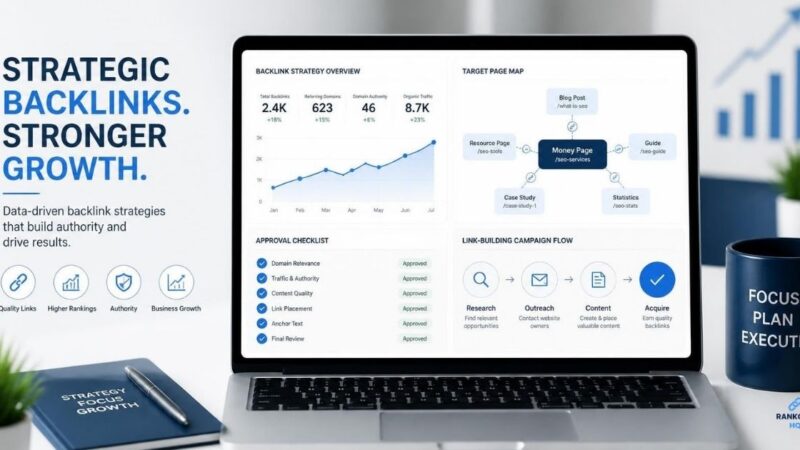
Most SEO agencies reach a point where clients ask for backlinks, but building an in-house outreach team is expensive, slow, and hard to manage. That is why many agency owners choose to resell link building services through a trusted white-label partner while keeping the strategy, communication, and client relationship under their own brand.
In this guide, I’ll show you how to resell link building services without losing control of quality, margins, approvals, or reporting. We’ll cover packaging, client communication, pricing, documentation, and the white-label boundaries that help your agency resell link building services professionally.
What link-building resale means for SEO agencies
Link-building resale means your agency sells the strategy and client-facing service, while a white-label partner handles outreach, placement, and delivery behind the scenes.
The client works with your agency. They see your brand, your communication, your reports, and your process. The fulfillment partner stays in the background.
This model helps agencies resell link building services without hiring outreach staff, building publisher relationships from zero, or managing every placement manually.
The difference between reselling links and selling random backlinks
Reselling link building is not the same as selling random backlinks from a list.
A proper resale model is built around relevance, quality checks, client approval, and documented delivery. The goal is to help the client build authority safely, not just add links for the sake of numbers.
A serious agency should never sell links like a commodity. It should sell a controlled link-building process.
Where your agency sits between the client and fulfillment partner
Your agency is the bridge between the client and the white-label fulfillment team.
The client brings the goal. Your agency turns that goal into a link-building plan. The fulfillment partner then helps execute that plan through outreach, publisher selection, content, placement, and reporting.
Why white-label boundaries protect your client relationship
White-label boundaries keep your agency in control.
Your client should not be pushed toward the fulfillment provider. They should not receive mixed messages, separate reports, or direct communication from someone outside your brand.
Strong boundaries protect trust. They also make the service feel smoother for the client.
What you should include in a link-building resale offer
A strong link-building resale offer should include clear deliverables, quality standards, approval steps, and reporting.
Clients should know exactly what they are buying before the campaign starts. This avoids confusion later when links, publishers, anchors, or timelines need approval.
Guest posts, niche edits, editorial placements, and link insertions
Most agencies can build resale offers around a few core link-building deliverables.
These usually include guest posts, niche edits, editorial placements, and link insertions. Each one works differently, so it should not be sold as the same thing.
Guest posts involve new content published on a relevant site. Niche edits or link insertions place the client’s link inside an existing article.
For agencies that want to resell link building services, these deliverables are easier to package because they are clear, measurable, and simple to report.
Link quality standards clients need to understand
Clients do not need every technical detail, but they should understand what makes a link worth approving.
The main quality checks should include:
- Relevance to the client’s niche
- Real organic traffic
- Clean website history
- Natural content quality
- Sensible anchor text
- Publisher strength and placement context
What not to include in your offer unless you can control it
Do not include promises you cannot control.
That includes guaranteed rankings, fixed traffic growth, exact ranking timelines, or “permanent” links with no conditions. Search results can change, and publishers can update their own websites.
You should also avoid offering unlimited revisions, unlimited publisher replacements, or guaranteed approval from every site.
A clean offer protects your agency. It sets honest expectations and keeps the link-building process manageable from the first month.
How to package link building for agency clients
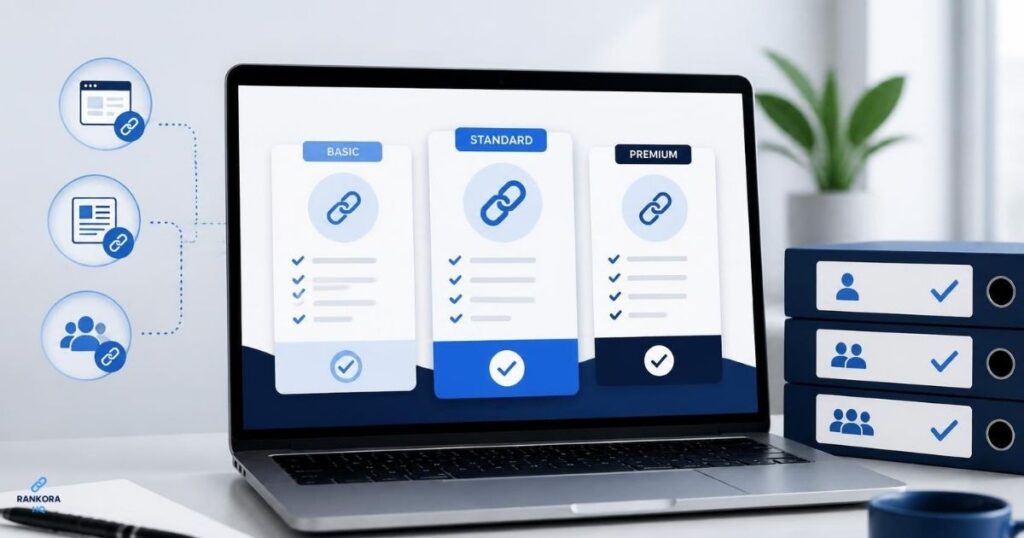
The best way to package link building is to make the offer simple, controlled, and easy for the client to approve.
Clients do not want a confusing menu of links. They want to know what they get, why it matters, and how it supports their SEO goals.
Starter package for testing link velocity
A starter package works best for new clients or smaller campaigns.
This package can include a small number of quality links each month, usually focused on low-risk pages, supporting content, or keywords already close to ranking.
The goal is not aggressive growth. The goal is to test relevance, approval flow, reporting, and early movement.
This is useful when a client is unsure about budget or wants proof before committing to a bigger campaign.
Growth package for competitive keyword movement
A growth package is better for clients who already have SEO foundations in place.
These clients usually have published content, target keywords, and pages sitting on page two or lower page one. They need authority to push those pages higher.
This package should include more consistent link volume, better publisher standards, and tighter anchor text planning.
For agencies that want to package link building as a monthly service, this is often the easiest offer to sell and renew.
Authority package for aggressive topical authority building
An authority package is for clients in competitive niches.
This can include higher-quality publishers, stronger topical relevance, more placements, and a deeper strategy across multiple URLs.
The focus should be on building authority across a topic cluster, not sending every link to one money page.
This package needs more planning. It also needs stronger approval steps because the budget and client expectations are higher.
Custom packages by niche, DR range, traffic, and approval level
Some clients will not fit into fixed packages.
A SaaS company, local business, e-commerce brand, and legal client may all need different link types, publisher standards, and risk controls.
Custom packages can be built around:
- Monthly link volume
- DR or authority range
- Organic traffic minimums
- Niche relevance
- Target URLs
- Anchor text plan
- Client approval requirements
Custom pricing also protects agency service margins. The harder the niche, the stricter the approval process, and the higher the fulfillment cost, the more carefully the package should be priced.
How to resell link building services profitably
To resell link building services profitably, your agency needs to price for delivery cost, management time, quality control, and client communication.
The mistake many agencies make is simple. They look at what the client can pay, then try to find links that fit that budget.
That usually leads to weak publishers, thin margins, and delivery stress.
Start with fulfillment cost, not client budget
Start by knowing your real fulfillment cost.
This includes the cost of outreach, publisher placement, content writing, editing, reporting, and revisions. If your provider charges separately for content or replacements, include that too.
Your price should come after that calculation, not before it.
If one link costs your agency $250 to fulfill, selling it for $300 leaves almost no room for strategy, communication, or profit.
Build margins around risk, communication, and strategy
Link building is not only a fulfillment task.
Your agency also handles client calls, expectations, approvals, anchor planning, URL selection, and reporting. That time has value.
Strong agency service margins should cover:
- Fulfillment cost
- Account management
- Strategy time
- Revision requests
- Reporting
- Risk buffer
- Profit
A healthy margin gives your agency room to manage the campaign properly without rushing decisions or accepting weak placements.
Pricing examples for small, mid-size, and competitive campaigns
A small campaign may only need a few links per month for supporting pages or local SEO growth.
A mid-size campaign may need consistent monthly links to improve commercial pages, blog assets, and topic clusters.
A competitive campaign needs stronger publishers, tighter relevance, better content, and more detailed approvals.
The price should rise with the difficulty of the niche, the quality of publishers, and the amount of management required.
Why cheap links usually destroy agency service margins
Cheap links often look profitable at first, but they create problems later.
They usually need more checking, more replacements, more client explanation, and more risk management. That extra time eats your margin.
How to communicate link building to clients
Clients understand link building better when you connect it to authority, trust, and rankings instead of only talking about backlinks.
Most clients do not care about outreach steps. They care about whether the campaign helps important pages become stronger in search.
Your job is to explain the value clearly without making link building sound like a shortcut or guaranteed ranking fix.
Explain business value instead of link metrics only
Metrics matter, but they should not lead the conversation.
Instead of saying, “We will build DR 50 links,” explain how stronger editorial links can support pages that need more authority.
Simple language works better:
- “This helps Google trust the page more.”
- “This supports keywords that already have ranking potential.”
- “This gives your important pages stronger external signals.”
Clients buy outcomes. Metrics only help prove the quality behind the work.
Set expectations around timelines, rankings, and approvals
Link building takes time to show results.
Some links may be indexed quickly. Some may take longer. Rankings can move slowly because content quality, competition, technical SEO, and search intent also matter.
Set this expectation before the first link is approved.
Also explain that approvals can affect delivery speed. If a client takes five days to approve a publisher or anchor, the campaign timeline naturally moves forward.
Clear expectations protect both sides.
Handle common client objections before they delay delivery
Clients often ask the same questions before approving links.
They may ask why a site was selected, why a link costs more, why the content topic matters, or why rankings have not moved yet.
Do not wait for confusion to build.
Prepare simple answers in advance. Explain relevance, traffic, publisher quality, anchor safety, and approval steps before the client feels unsure.
Good communication removes friction from the resale process.
Position link building as authority building, not quick SEO tricks
The safest way to sell backlinks as an agency is to position the service as authority building.
You are not selling magic rankings. You are helping the client earn stronger signals from relevant editorial websites.
This framing is more honest and easier to defend.
It also attracts better clients. Serious clients understand that SEO growth needs content, technical health, and authority working together.
How approvals should work before links go live
Approvals should happen before any link is published, not after the placement is already live.
This protects your agency, your client, and the fulfillment partner. It also keeps the campaign transparent and avoids difficult conversations later.
When agencies resell link building services, approval control is one of the biggest trust builders.
What clients should review before publication
Clients should not need to review every outreach detail.
They should review the parts that affect their brand, SEO risk, and campaign goals.
Before anything goes live, show them the publisher, target URL, anchor text, topic idea, and placement type. This gives them enough information to make a clear decision.
How to approve publishers, topics, anchors, and URLs
A clean approval process usually starts with the publisher.
Check if the site is relevant, has real traffic, and publishes content that fits the client’s niche. Then review the topic, anchor text, and target URL together.
The anchor should look natural. The target URL should match the intent of the article. The topic should make sense for both the publisher and the client.
If all four areas fit, the placement is usually safe to move forward.
When to reject a placement even if the metrics look strong
Strong metrics do not always mean a strong placement.
I would reject a site if it has irrelevant content, thin articles, suspicious outbound links, fake traffic patterns, or no real editorial standards.
A DR 70 site can still be a bad fit if it publishes every topic under the sun.
Relevance and quality should come before vanity metrics.
Why nothing should be published without written approval
Written approval creates a clear record.
It shows that the client accepted the publisher, topic, anchor, and target URL before publication. This helps avoid confusion if the client changes their mind later.
For agency workflows, written approval also keeps fulfillment organized.
A simple approval email, shared sheet, or project management update is enough. The goal is to make sure every link has a documented “yes” before it goes live.
White-label fulfillment boundaries your agency must protect
White-label fulfillment works best when your agency stays client-facing and your provider stays behind the scenes.
The client should feel like the whole process is managed by your agency. That includes strategy, updates, approvals, reporting, and delivery communication.
Clear boundaries make the service look professional and protect your client relationship.
What your provider should never reveal to your client
Your fulfillment provider should never contact your client directly.
They should not share their own brand name, pricing, publisher lists, internal outreach emails, or backend process unless your agency has approved it.
This keeps the relationship clean. The client hired your agency, so all communication should come through your agency.
How branded fulfillment keeps your agency in control
Branded fulfillment means every client-facing asset uses your agency name.
Reports, updates, approval sheets, and delivery summaries should look like they came from your team.
This gives your agency control over the client experience. It also helps you position the service as part of your own SEO system, not a third-party add-on.
What to include in reports under your agency brand
A white-label report should be simple and useful.
Include the live URL, publisher name, target URL, anchor text, placement type, content title, approval date, and key metrics.
You can also add notes about relevance and why the placement was selected.
The goal is not to overwhelm the client. The goal is to document the work clearly and make the value easy to understand.
When transparency matters and when over-sharing creates confusion
Transparency is important, but too much backend detail can confuse clients.
Clients should know what links are being built, where they are placed, and why they were approved. They do not need every outreach message, publisher negotiation, or internal fulfillment note.
Share what helps the client make decisions. Keep the rest inside your agency workflow.
That balance protects trust without making the process harder than it needs to be.
Common mistakes agencies make when reselling link building
Most link-building resale problems come from unclear expectations, weak quality control, or poor documentation.
The model can work well, but only when the agency controls the offer, approval process, margins, and reporting from the start.
Small mistakes become expensive when clients are paying monthly and expecting visible SEO progress.
Selling fixed DR numbers without checking relevance
Many agencies sell links by DR range only.
That is risky because DR does not prove relevance, traffic quality, or editorial standards. A high-DR site can still be a poor fit for the client’s niche.
Relevance should come first. Metrics should support the decision, not replace it.
Promising ranking results too early
Link building can support rankings, but it cannot guarantee fast movement.
Rankings depend on content quality, search intent, technical SEO, competition, and how strong the client’s site already is.
When agencies promise results too early, they create pressure they cannot control.
It is better to explain link building as one part of a longer SEO growth system.
Ignoring anchor text risk
Anchor text can help or hurt a campaign.
Using too many exact-match anchors can make the link profile look unnatural. That risk increases when agencies try to push rankings too aggressively.
A safer plan uses a mix of branded, partial-match, natural, and URL-based anchors.
Anchor planning should be part of every campaign before links are ordered.
Using one package for every client
One package does not fit every client.
A local service business, SaaS company, affiliate site, and e-commerce brand all need different link strategies.
The niche, competition level, target pages, and current authority should shape the package.
This is why agencies should customize link volume, publisher standards, and approval steps when needed.
Skipping documentation after links are delivered
Documentation is not optional.
Every delivered link should be recorded with the live URL, publisher, anchor text, target page, placement type, and approval date.
This protects your agency if questions come up later.
Good documentation also makes renewals easier because clients can clearly see what was approved, delivered, and reported under your brand.
Frequently Asked Questions
What are resell link building services?
Resell link building services let your agency sell link building under your own brand while a white-label partner handles fulfillment in the background.
Is it safe to sell backlinks as an agency?
Yes, if you focus on relevant editorial placements, client approvals, natural anchors, and clear reporting instead of cheap random backlinks.
How much margin should an agency add to link building?
Most agencies should price beyond fulfillment cost and include margin for strategy, communication, revisions, reporting, and risk management.
What should be included in a white-label link building report?
A good report should include the live URL, publisher, anchor text, target page, placement type, approval date, and key quality metrics.
Should clients approve backlinks before they go live?
Yes. Clients should approve the publisher, topic, anchor text, and target URL before anything is published.
What is the difference between white-label link building and link selling?
White-label link building is a managed agency service with strategy, quality checks, and reporting. Link selling often treats backlinks like simple one-off products.
Conclusion
Reselling link building works best when your agency controls the offer, communication, approvals, margins, and reporting.
Do not sell backlinks like a loose product. Build a clear process around link quality, relevance, branded fulfillment, and client approval. That is what makes the service easier to trust and easier to renew.
If your agency wants to resell link building services without managing outreach, publisher negotiations, and delivery from scratch, Rankora HQ can help you build a white-label workflow that stays under your brand.
Author Bio
Author: Muhammad Awais
Title: Founder, Rankora HQ
Muhammad Awais is the founder of Rankora HQ, a white-label editorial content placement service based in Salalah, Oman. He helps SEO agencies and brands build topical authority through high-quality publishing partnerships on DR 40-90 editorial sites.