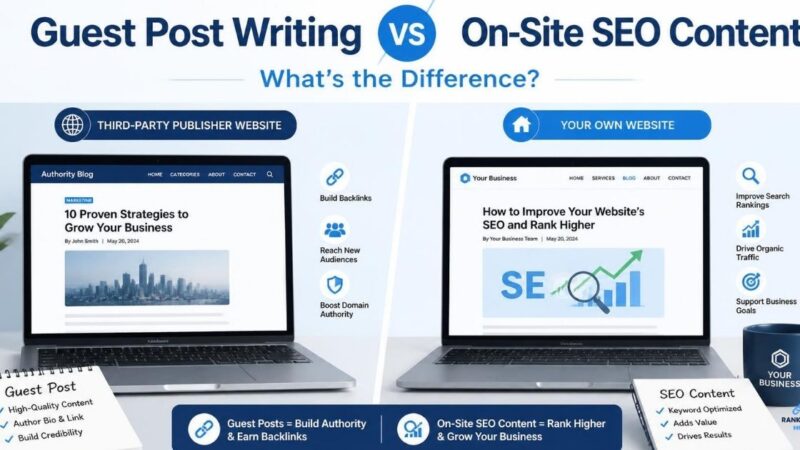
Most agency content fails because it starts with keywords, not strategy. SEO content writing is the process of creating content that answers search intent, helps readers solve a real problem, and gives search engines a clear reason to rank the page.
For agencies, SEO content writing is not just blog writing. It includes research, content briefs, outlines, optimization, brand voice, internal links, quality checks, and performance tracking. In this guide, I’ll explain how I approach SEO content writing for agency clients who need content that is useful, search-focused, and ready to support long-term organic growth.
What is SEO content writing?

SEO content writing is the process of creating helpful content that matches search intent and gives search engines clear signals about the topic. It is not just adding keywords to a blog post. That is where many agencies get it wrong.
In my experience, good SEO content starts before the first sentence is written. The writer needs to understand the audience, the keyword, the search result page, the client’s offer, and the action the reader should take next.
For agencies, this matters even more. You are not only writing to rank. You are writing to support a client’s brand, build trust, and move the reader closer to a business goal.
Simple definition for agencies and clients
For agencies and clients, SEO content writing means writing content that helps the right people find the right page through search.
A good SEO article should answer the main question quickly. Then it should explain the topic in a clear, useful, and organized way. The reader should not feel lost. Google should not feel confused about the page either.
This is why I never treat SEO content as “just words.” A strong article needs:
- A clear primary keyword
- Search intent alignment
- Helpful subheadings
- Natural keyword use
- Internal links
- Original examples
- A clear next step
When these parts work together, the article becomes easier to rank, easier to read, and easier for the client to use in their wider SEO strategy.
How SEO content writing supports search visibility
SEO content writing supports search visibility by helping search engines understand what a page is about and why it deserves to appear for a search query.
But search visibility does not come from keywords alone. It comes from relevance, depth, structure, and usefulness. If a page answers the user’s question better than competing pages, it has a stronger chance of earning rankings over time.
For example, when I work on agency content, I do not only ask, “What keyword are we targeting?” I also ask:
- What does the searcher want to know?
- What stage of awareness are they in?
- What objections might they have?
- What should they understand before contacting the business?
That approach creates content that feels useful instead of forced. It also helps agencies build long-term topical authority, not just one-off blog posts.
Where SEO content fits in the wider content strategy
SEO content sits between keyword research, brand positioning, and conversion strategy.
A blog post may bring in traffic. A service page may turn that traffic into leads. A content hub may build authority around a topic. Each page has a different role, but the writing still needs to support the same business goal.
For agencies, this is why content planning matters. One article alone rarely changes everything. But a planned group of search optimized content pieces can support client growth month after month.
That is the real value of SEO content writing. It gives agencies a repeatable way to turn search demand into useful content, stronger authority, and better organic visibility.
Why SEO content writing matters for agencies

SEO content writing matters for agencies because it turns client expertise into pages that can attract, educate, and convert search traffic. Without strong content, even the best SEO strategy stays incomplete.
Agencies need content that does more than fill a blog calendar. Each article should support rankings, answer search intent, strengthen topical authority, and guide readers toward the next step.
When I write for agency clients, I always look at content as a business asset. A good article can support outreach, internal linking, service pages, lead generation, and long-term organic growth.
It helps clients attract qualified organic traffic
Qualified traffic matters more than random traffic.
A blog post that ranks for the wrong keyword may bring visitors, but those visitors may never become leads. Good SEO content targets searchers who already have a clear problem, question, or need.
For example, an agency client may not need broad traffic from people searching “what is marketing.” They may need business owners searching for “SEO content writing service for agencies” or “content writing for SEO.”
That is why keyword choice and search intent matter. Strong content brings the right reader to the right page at the right stage.
It builds topical authority over time
Topical authority grows when a website covers a subject deeply and consistently.
One article can answer one question. A group of connected articles can show search engines and readers that the brand understands the full topic. This helps agencies build stronger content hubs for their clients.
For example, an SEO agency could create articles around content briefs, SEO blog writing, keyword research, internal linking, content refreshes, and content performance. Together, those pages build a stronger topical footprint.
This is where planned search optimized content becomes powerful. It gives clients more chances to rank and more ways to earn trust.
It supports link building, service pages, and content hubs
SEO content does not work alone. It supports the whole SEO system.
A strong blog post can send internal links to service pages. A useful guide can support guest posting campaigns. A content hub can help agencies organize related topics under one clear theme.
For Rankora HQ, this connects naturally with services like editorial content placement and SEO content writing for agencies. Content gives those pages more context, more support, and more authority.
When agencies plan content this way, every article has a job. It does not just exist because the client asked for “more blogs.”
Why agencies need a repeatable SEO writing process
Agencies need a repeatable process because content quality becomes harder to control as volume grows.
Without a process, every writer works differently. One article may follow search intent. Another may miss the point. One brief may include internal links. Another may leave them out.
A clear process fixes that problem. It helps agencies control:
- Keyword research
- Search intent
- Content briefs
- Outlines
- Writing quality
- Internal links
- Editorial review
- Final optimization
This saves time and reduces mistakes. More importantly, it helps agencies deliver consistent content that clients can trust.
SEO content writing vs SEO copywriting
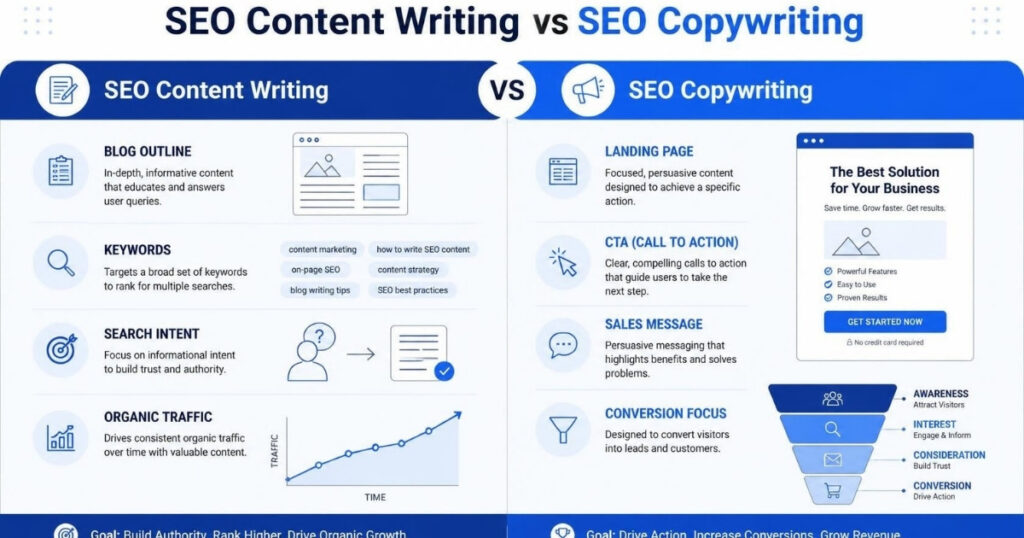
SEO content writing educates the reader, while SEO copywriting persuades the reader to take action. Agencies often need both, but they do not serve the same purpose.
In my experience, confusion starts when teams call every piece of writing “copy.” A blog guide, a service page, and a sales email all need clear writing, but each one has a different job.
SEO content writing usually focuses on search intent, topic depth, rankings, and helpful information. SEO copywriting focuses more on conversion, positioning, benefits, offers, and calls to action.
What SEO content writing focuses on
SEO content writing focuses on helping people find useful answers through search.
This includes blog posts, guides, content hubs, comparison articles, FAQs, and educational pages. The goal is to match what the searcher wants and explain the topic better than competing pages.
Good SEO content writing usually includes:
- Keyword research
- Search intent analysis
- Clear headings
- Helpful examples
- Internal links
- Natural keyword placement
- Strong readability
For agencies, this type of content helps clients build organic visibility and topical authority over time.
What SEO copywriting focuses on
SEO copywriting focuses on action.
It still uses search data, but the main goal is to move the reader closer to a lead, sale, booking, signup, or inquiry. This matters most on service pages, landing pages, product pages, and homepage sections.
A good SEO copywriter asks different questions:
- Why should the reader trust this offer?
- What pain point does the service solve?
- What makes this business different?
- What objection may stop the reader?
- What action should the reader take next?
That is why SEO copywriting needs stronger positioning. It does not only explain the topic. It sells the value clearly.
When agencies need blog content, landing pages, or sales copy
Agencies need SEO blog content when a client wants to attract search traffic and answer informational queries.
They need landing pages when a client wants to target service, location, or commercial keywords. They need sales copy when the page must convert readers into leads or customers.
For example, a blog post about “what is SEO content writing” should educate the reader. A service page for SEO content writing for agencies should explain the offer, build trust, and guide the reader toward contact.
Both pages can support search. But they should not sound the same.
Why both skills work better together
SEO content writing and SEO copywriting work best when agencies use them together.
Content brings the right audience in. Copy moves that audience toward a business result. If the content ranks but does not build trust, traffic may leave. If the copy is strong but the page has no visibility, few people will see it.
That is why I treat content and copy as connected parts of the same strategy. One earns attention. The other helps turn that attention into action.
How agencies plan search optimized content
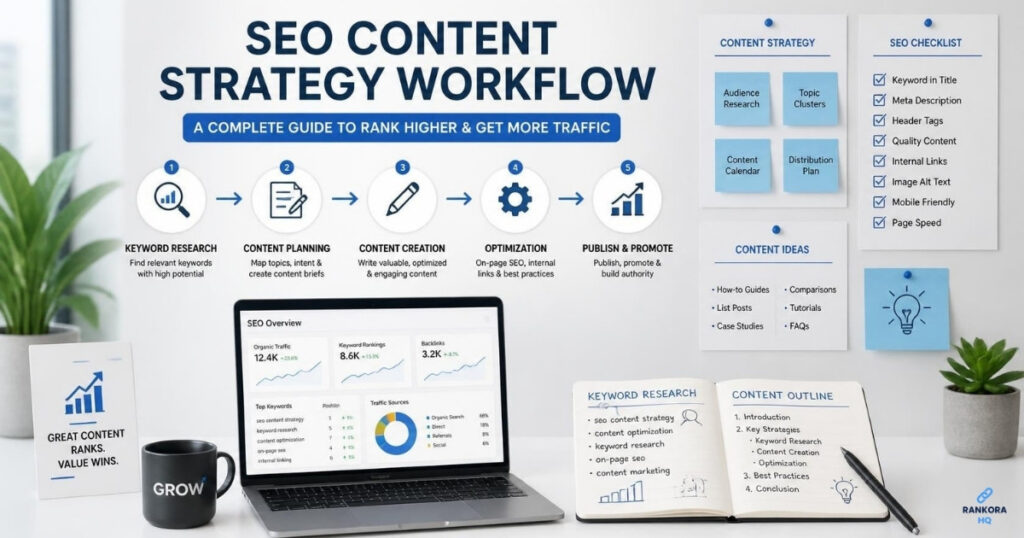
Agencies plan search optimized content by connecting business goals, keyword research, and search intent before writing begins. A strong plan prevents wasted effort and helps writers create content that has a clear purpose.
In my experience, the biggest content mistakes happen before the first draft. When agencies skip research, writers often create content that sounds good but does not match what users are actually searching for.
A proper planning process creates a clear path from keyword selection to final publication.
Start with the business goal
Every piece of content should support a business objective.
Before choosing a keyword, agencies should understand what the content needs to achieve. The goal could be increasing organic traffic, generating leads, supporting a service page, or building authority around a topic.
For example, a SaaS company may need educational content to attract users at the research stage. A local business may need content that supports location-based searches and customer inquiries.
The business goal decides the content direction.
Choose the primary keyword
The primary keyword is the main search term a page targets.
Agencies should choose keywords based on relevance, search demand, and business value. A keyword with high traffic is not always the best choice if it does not attract the right audience.
I usually look at:
- What the user is trying to find
- How competitive the keyword is
- Whether the keyword matches the client’s offer
- What type of content currently ranks
The right keyword gives the writer a clear topic focus.
Find secondary keywords naturally
Secondary keywords help cover related questions and topics around the main keyword.
They are not added just to increase keyword numbers. They help create a more complete article that answers different parts of the reader’s problem.
For example, an article about SEO content writing may naturally include related terms like SEO copywriting, search optimized content, and SEO blog writing.
These supporting terms help search engines understand the broader topic.
Analyze search intent before outlining
Search intent explains why someone is searching for a keyword.
Before creating an outline, agencies should study the current search results and understand what users expect to see. Are they looking for a guide, comparison, service, or solution?
A page can have the right keyword but still fail if it answers the wrong question.
That is why I analyze ranking pages, common questions, and content gaps before building an outline. It helps create content that matches user expectations and provides real value.
How to create a strong SEO content brief
A strong SEO content brief gives the writer clear direction before the first draft begins. It removes guesswork and helps agencies keep content quality consistent across different clients, writers, and campaigns.
In my experience, weak briefs create weak content. If the writer only gets a keyword and word count, they have to make too many decisions alone. That usually leads to missed search intent, shallow examples, poor internal links, and a draft that needs heavy editing.
A good brief makes the goal, structure, audience, and SEO requirements clear from the start.
What every agency content brief should include
Every agency content brief should explain what the page needs to achieve.
The brief should include the primary keyword, secondary keywords, search intent, target audience, suggested headings, internal links, external source ideas, brand voice notes, and the main CTA.
For agency content writing, I also like to include competitor notes. Not to copy them, but to understand what the search results already cover and where the client can add something better.
A useful brief should answer these questions:
- Who is this content for?
- What problem should it solve?
- What keyword is the page targeting?
- What should the reader do next?
- What internal pages should this content support?
How briefs help writers avoid guesswork
Briefs help writers avoid guesswork by turning strategy into clear instructions.
Without a brief, the writer may choose the wrong angle. They may write for beginners when the audience is advanced. They may create a general article when the page needs to support a service offer.
This is one reason I treat briefs as part of the SEO process, not admin work. A good brief saves time during editing and helps the first draft get closer to the final version.
For agencies, this matters because clients expect consistency. They do not want one article to feel strategic and the next one to feel random.
How to define audience, tone, angle, and CTA
The audience tells the writer who they are speaking to.
The tone tells the writer how the content should sound. The angle gives the article a clear point of view. The CTA explains what the reader should do after reading.
For example, an article for SEO agency owners should sound different from an article for small business beginners. The agency owner may care more about scale, reporting, quality control, and client delivery.
That is why I define these points before writing. It keeps the content focused and makes the final article more useful.
How to include internal links, external sources, and examples
A strong brief should include internal links before the draft starts.
Internal links help connect the article to service pages, related blog posts, and content hubs. For example, an article about SEO briefs could naturally link to SEO content writing for agencies or white-label reporting when those services are relevant.
External sources also matter. They help support claims, especially when the article mentions data, search guidelines, or industry research.
Examples are just as important. Real examples make the content easier to understand and less generic. For agency work, they also show the client that the writer understands how SEO content works in a real business setting.
How to write SEO blog content that ranks
SEO blog content ranks when it answers the searcher’s question clearly, covers the topic with useful depth, and stays easy to read from start to finish. Good writing is not about forcing keywords into every paragraph.
When I write SEO blog content for agencies, I focus on structure first. A clear structure helps the reader move through the article without confusion. It also helps search engines understand the main topic and supporting points.
Build a clear outline before writing
A strong outline keeps the article focused.
Before writing, I organize the main points into a logical order. The first sections should answer the most important questions. Later sections can explain details, examples, mistakes, and next steps.
For agency content writing, the outline also helps clients approve the direction before the draft begins. This saves time and reduces major edits later.
A good outline should include:
- Main H2 sections
- Supporting H3 points
- Search intent notes
- Internal link opportunities
- A clear CTA direction
Answer the main question early
Readers should not wait too long for the answer.
If someone searches “what is SEO content writing,” the article should define it near the top. After that, the content can explain the process, examples, benefits, and common mistakes.
This matters for both users and AI search. Clear answers are easier to understand, easier to quote, and easier to turn into featured snippets or AI-generated summaries.
Use headings to guide readers and search engines
Headings should make the article easy to scan.
Each H2 should cover one main idea. Each H3 should support that idea with a clear subtopic. This keeps the article organized and prevents the content from feeling random.
I avoid clever headings that sound nice but say little. A heading should tell the reader exactly what they will learn in that section.
For example, “How to create a strong SEO content brief” is clearer than “Building the foundation.”
Add keywords without stuffing
Keywords should fit naturally into the content.
The primary keyword should appear in important places like the title, introduction, one H2, and a few natural spots in the body. Secondary keywords should appear only where they make sense.
Keyword stuffing makes content harder to read. It also makes the article feel low quality. Instead, I use related terms, examples, and natural phrases to build topical relevance.
Good SEO content writing should sound like a helpful expert, not a keyword checklist.
Keep sentences, paragraphs, and examples easy to follow
Simple writing performs better because people can understand it faster.
Short paragraphs help readers stay engaged. Clear examples help them connect the advice to real work. This is especially important for agency audiences because they want practical guidance, not theory.
I also avoid long introductions before making a point. Each section should start with the answer, then explain it with enough detail to be useful.
Add internal links, external links, and useful visuals
Links help connect the article to a larger SEO strategy.
Internal links guide readers to related service pages, blog posts, and resources. For example, an article about SEO blog writing can naturally link to SEO content writing for agencies or editorial content placement.
External links support claims when data, search guidelines, or industry research are mentioned. Visuals can also help when a process, comparison, or checklist needs to be explained quickly.
The goal is simple: make the article more useful, more connected, and easier to trust.
How to optimize content for SEO and AI search
Content is optimized for SEO and AI search when it gives clear answers, uses strong structure, and makes key information easy to extract. Search engines and AI tools both need clarity.
In my experience, the best SEO content writing now serves two readers at once: the human reader and the systems that summarize, rank, and recommend content. That does not mean writing for robots. It means making the page clear, useful, and well organized.
Write clear definitions that AI tools can extract
Clear definitions help both readers and AI systems understand the topic fast.
If a section explains a key term, I define it in the first sentence. Then I add context, examples, and practical details after that. This keeps the answer easy to understand and easy to reuse in search results.
For example, instead of writing a long opening before defining SEO content writing, I would start with a direct definition. Then I would explain how it works for agencies, clients, and search performance.
Clear definitions also reduce confusion. They make the article more helpful for beginners and more useful for AI-powered search summaries.
Use direct answers under important headings
Every important heading should answer the reader’s question quickly.
I avoid slow introductions under H2s. If the heading asks or implies a question, the first sentence should answer it directly. After that, the section can explain the idea in more detail.
This is useful for SEO blog writing because many readers scan before they read. They want the answer first, then the details.
For agencies, this also improves content quality. Clients can quickly see that each section has a purpose and is not filled with generic writing.
Add comparison tables, steps, bullets, and FAQs
Structured content is easier to read and easier for search systems to understand.
Bullets work well for checklists. Numbered lists work well for processes. Tables work well for comparisons. FAQs work well for direct search questions.
For example, an agency guide could use a table to compare SEO content writing and SEO copywriting. It could use steps to explain the content brief process. It could use FAQs to answer common client questions near the end.
The goal is not to decorate the article. The goal is to make important information easier to find.
Optimize title tags, meta descriptions, URLs, and image alt text
On-page details help search engines understand the page before users even click.
The SEO title should include the main keyword and give the reader a reason to open the page. The meta description should explain the benefit in a short, clear way. The URL should be simple and keyword-focused.
Image alt text also matters when visuals support the article. It should describe the image clearly, not stuff keywords into the description.
For agency content, these details are small but important. They help make the page cleaner, stronger, and easier to publish.
Keep content fresh with updates and evergreen checks
SEO content should not be treated as finished forever.
Search results change. Competitors update their pages. Client offers change. New questions appear in the market. That is why agencies should review important content regularly.
I usually look for outdated examples, weak sections, missing internal links, old statistics, and new search intent patterns. A small update can often improve a page without rewriting the whole article.
Fresh content is not about changing words for no reason. It is about keeping the article accurate, useful, and aligned with what searchers need today.
How agencies review and improve content quality
Agencies improve content quality by reviewing the draft against search intent, accuracy, structure, brand voice, and business goals. Writing the draft is only one part of the process.
In my experience, the review stage is where average content becomes useful content. A draft may be readable, but that does not always mean it is ready to publish.
Good review work checks whether the article answers the right question, supports the client’s offer, and gives readers something better than a generic search result.
Check search intent match
Search intent should be checked before the content is approved.
The reviewer should ask one simple question: does this article give the searcher what they expected when they typed the keyword?
If the keyword is informational, the article should educate. If the keyword is commercial, the article should help the reader compare options or take action. If the article misses that intent, small edits will not fix the problem.
For agencies, this check prevents content from ranking for the wrong reason or failing to rank at all.
Review accuracy, originality, and source quality
Accurate content builds trust. Weak claims damage it.
Every important claim should be checked before publishing, especially if the article includes statistics, search trends, or technical SEO advice. Sources should come from trusted websites, not random blogs repeating the same point.
Originality also matters. The article should not feel like a rewritten version of the top-ranking pages. It needs a fresh angle, clearer examples, or practical insight from real work.
That is what separates useful agency content from thin SEO blog writing.
Improve flow, structure, and readability
A good article should feel easy to move through.
During review, I look for long paragraphs, repeated points, weak headings, and sections that do not add value. If a paragraph does not help the reader understand the topic better, it should be cut or rewritten.
Clear structure also matters. Each H2 should cover one main idea. Each H3 should support that section without going off-topic.
This keeps the article focused, readable, and easier to scan.
Adapt content to the client’s brand voice
SEO content should not sound the same for every client.
An agency writing for a SaaS company may need a sharper, product-focused tone. A local business may need a more simple and trust-building voice. A B2B service provider may need a direct, expert tone.
That is why brand voice review matters. The article should sound like it belongs on the client’s website, not like it came from a generic content template.
Good SEO content writing balances optimization with personality.
Use AI carefully without losing human expertise
AI can help with outlines, research organization, and draft support, but it should not replace expert judgment.
The problem is not using AI. The problem is publishing content that has no real experience, no fact-checking, and no original thinking.
For agency work, AI-assisted content still needs human review. Someone must check accuracy, improve examples, adjust voice, add real insight, and make sure the content supports the client’s goals.
AI can speed up the process, but human expertise is what makes the content trustworthy.
Frequently Asked Questions
What is SEO in content writing?
SEO in content writing means creating content that answers search intent, uses relevant keywords naturally, and helps search engines understand the page topic.
How to start SEO content writing?
Start SEO content writing by choosing a clear keyword, studying search intent, creating an outline, and writing useful content that answers the reader’s main question.
Can ChatGPT write SEO content?
ChatGPT can help draft SEO content, but the final content still needs human editing, fact-checking, brand voice, and real experience to make it trustworthy.
How to start SEO writing?
Start SEO writing by learning keyword research, search intent, heading structure, internal linking, and simple on-page optimization before writing the first draft.
How to create a content strategy?
Create a content strategy by defining the business goal, target audience, keyword topics, content types, publishing schedule, internal links, and performance metrics.
Conclusion
SEO content writing works best when agencies treat it as a complete process, not just a writing task. The real work starts with search intent, keyword research, content briefs, outlines, and clear planning. Then the writing needs to answer questions directly, support the client’s goals, and guide readers with simple structure.
For agencies, strong content can support rankings, internal links, topical authority, service pages, and client growth. But it only works when the content is useful, accurate, and written with real understanding.
If your agency needs reliable support with search-focused articles, briefs, and editorial content, Rankora HQ can help you build content that is ready to publish and built for long-term SEO value.
Author Bio
Author: Muhammad Awais
Title: Founder, Rankora HQ
Muhammad Awais is the founder of Rankora HQ, a white-label editorial content placement service based in Salalah, Oman. He helps SEO agencies and brands build topical authority through high-quality publishing partnerships on DR 40-90 editorial sites.