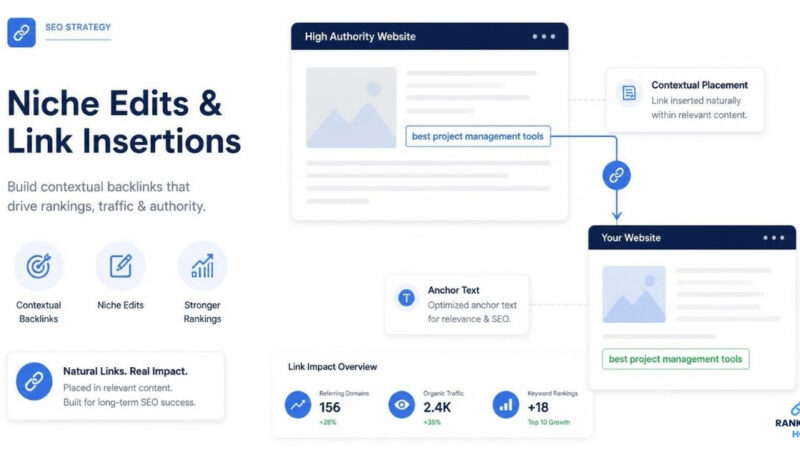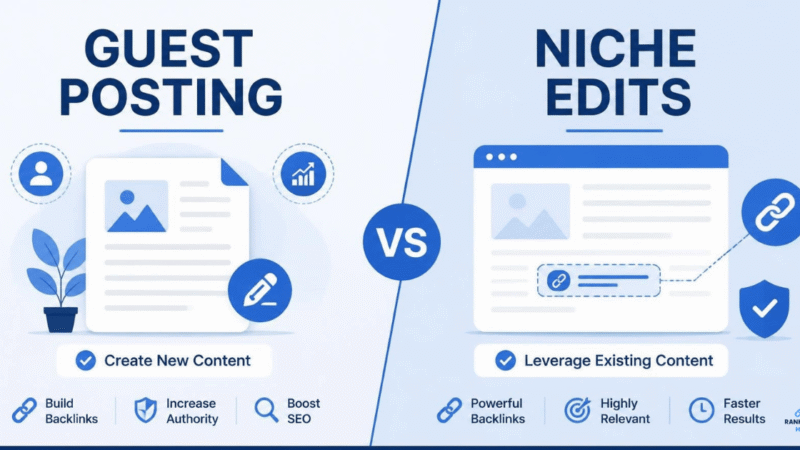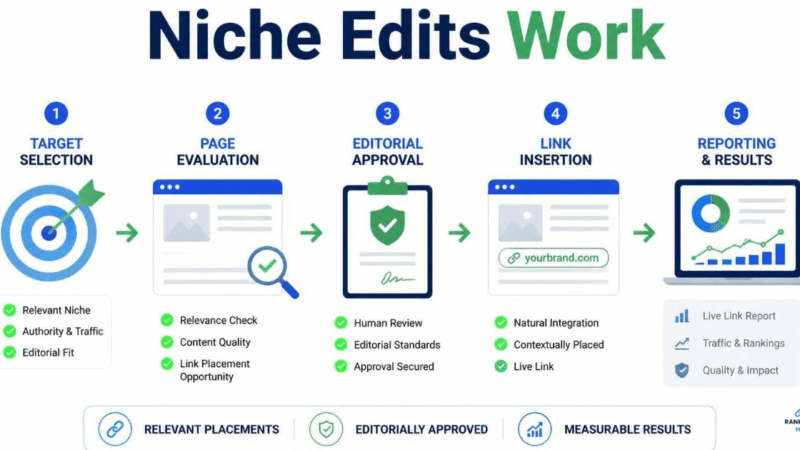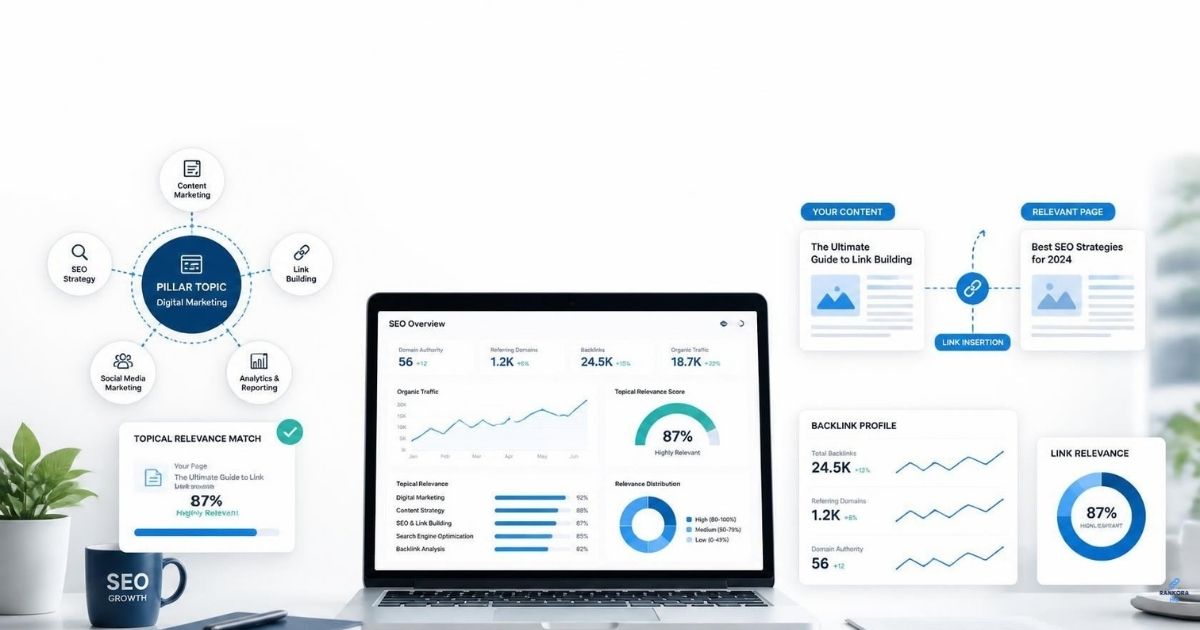
Many agencies evaluate niche edits by looking at metrics like DR, traffic, and domain authority. But a strong backlink is not only about where the link is placed. It is about whether the link makes sense within the existing content and helps the reader. This is where topical relevance for niche edits becomes important.
In my experience building editorial placements, the biggest difference between a valuable niche edit and a weak one comes down to context. Checking topical relevance for niche edits requires looking beyond the website level and analyzing the section, page, paragraph, target page, and anchor text. This guide explains how to evaluate each layer to find link insertions that feel natural and provide real SEO value.
1. Website-Level Relevance: Does the Site Match Your Topic?
Website-level relevance is the first step when evaluating a niche edit opportunity. Before checking the specific page, you need to confirm that the publisher covers topics related to your industry.
A relevant website creates a natural environment for your link. The audience should already have an interest in the subject, making the backlink placement more useful and trustworthy.
Check the Website’s Main Topic and Content Focus
Start by reviewing what the website regularly publishes. Look at its main categories, recent articles, and overall content direction.
Ask:
- Does the website consistently cover your niche?
- Are related topics already published?
- Does the audience match your target customers?
Look Beyond Domain Metrics
Domain authority and traffic can help evaluate a publisher, but they should not be the first deciding factor.
A high-authority website with no connection to your topic may not provide the same contextual value as a smaller but highly relevant publisher.
The goal is not just to find a powerful website. The goal is to find a website where the link naturally belongs. This is the foundation of topical relevance for niche edits and sets the direction for the next relevance checks.
2. Section-Level Relevance: Is the Category a Good Fit?
A relevant website can still contain irrelevant sections. Before approving a niche edit, check whether the article is placed inside a category that matches the topic of your link.
Section-level relevance helps you understand whether the content area supports the backlink naturally or if the placement feels forced.
Review Categories and Content Clusters
Look at the website’s main categories and topic clusters before choosing a page.
A marketing website may cover SEO, social media, and business news. A link related to technical SEO would fit better inside the SEO category rather than a general business section.
Check:
- Does the category regularly publish related content?
- Does the section attract the right audience?
- Does the topic match the purpose of your link?
Avoid Random Section Placements
A common mistake is choosing a website because the domain looks relevant but ignoring where the article exists.
For example, a health website may have sections about fitness, recipes, and personal stories. A supplement-related link would fit better in a nutrition or wellness section than an unrelated category.
The right section strengthens link insertion relevance by keeping the backlink connected to the surrounding content theme. A good niche edit should appear in the correct part of the website, not just anywhere on the domain.
3. Page-Level Relevance: Does the Article Match the Link?
Page-level relevance focuses on the exact article where the niche edit will be placed. A relevant website and category are not enough if the individual page does not match the topic of the inserted link.
The article should already discuss a related subject and provide a natural reason for the backlink to exist.
Check the Article Topic and Search Intent
Review the page content before approving a link insertion. The article should connect with the destination page and match what readers expect to find.
Ask:
- Does the article discuss a related topic?
- Would the link provide additional value?
- Does the page attract the right audience?
For example, an article about SEO strategies can naturally link to a guide about keyword research. However, inserting that same link into an unrelated social media trends article creates a weak topical fit.
Evaluate the Existing Content Context
Do not judge relevance only from the title. Read the article and understand its main purpose.
A strong niche edit should support the existing content instead of changing its direction. The link should feel like a useful resource that improves the article.
Checking page-level relevance helps maintain contextual link relevance and ensures the backlink is placed where it makes sense for both users and search engines.
4. Paragraph-Level Relevance: Is the Placement Natural?
Paragraph-level relevance is where many niche edits succeed or fail. A link can be placed on a relevant page but still feel unnatural if the surrounding paragraph does not support it.
The link should fit into the conversation already happening in the content. Readers should understand why the resource is mentioned without feeling that it was added only for SEO purposes.
Analyze the Context Around the Link
Review the sentences before and after the link placement.
A strong contextual placement usually:
- Expands on the existing point
- Provides additional information
- Helps readers solve a related problem
For example, an article discussing link building strategies can naturally reference a detailed guide about backlink analysis within a paragraph about measuring link performance.
Avoid Forced Link Insertions
A common mistake is adding a link into a paragraph where it does not belong. Even if the article topic is related, poor placement can reduce the overall contextual value.
Avoid:
- Random keyword insertion
- Changing the paragraph meaning to include a link
- Adding links where readers have no reason to click
The goal of paragraph-level evaluation is to ensure contextual link relevance. A good niche edit should feel like a natural recommendation that improves the reader’s experience.
5. Target Page Relevance: Does the Destination Match User Intent?
Target page relevance focuses on where the inserted link sends users. Even if the publisher page is highly relevant, the niche edit can lose value if the destination page does not match the reader’s expectations.
The target page should provide additional information that naturally continues the topic discussed in the original article.
Check the Topic and Purpose of the Destination Page
Review whether the linked page matches the context of the article and the user’s intent.
Ask:
- Does the destination page cover the same or a closely related topic?
- Does it provide useful information for the reader?
- Does it support the point where the link is placed?
Match the Link With the Reader’s Next Step
A strong niche edit guides users toward relevant information. The destination page should solve the next question a reader may have after reading the content.
Avoid linking to pages that are:
- Too broad
- Unrelated to the article topic
- Focused only on sales without supporting information
Evaluating the target page helps improve niche edit topical fit and ensures the backlink creates value beyond simply passing authority.
6. Anchor Text Relevance: Does the Link Phrase Fit Naturally?
Anchor text relevance focuses on the words used to link to the target page. The anchor should clearly describe the destination while fitting naturally within the existing sentence.
A relevant anchor improves the connection between the article topic and the linked resource. It should help readers understand what they will find after clicking.
Use Natural and Contextual Anchor Text
The best anchor text matches the surrounding content instead of forcing exact-match keywords.
Common anchor types include:
- Branded anchors — using a company or brand name
- Partial-match anchors — including part of the target keyword naturally
- Descriptive anchors — explaining what the linked page covers
For example, “SEO link building strategies” can work naturally inside an article about improving search rankings, while a long keyword-heavy phrase may feel unnatural.
Avoid Over-Optimized Anchor Placement
A common mistake in niche edits is forcing keywords into sentences where they do not fit.
Avoid:
- Exact-match keywords in every placement
- Anchors that interrupt the sentence flow
- Phrases that do not describe the destination page
The goal is to create a smooth connection between the content and the link. Proper anchor selection strengthens relevant backlink placement and keeps the niche edit natural for both users and search engines.
7. A Practical Checklist for Evaluating Niche Edit Relevance
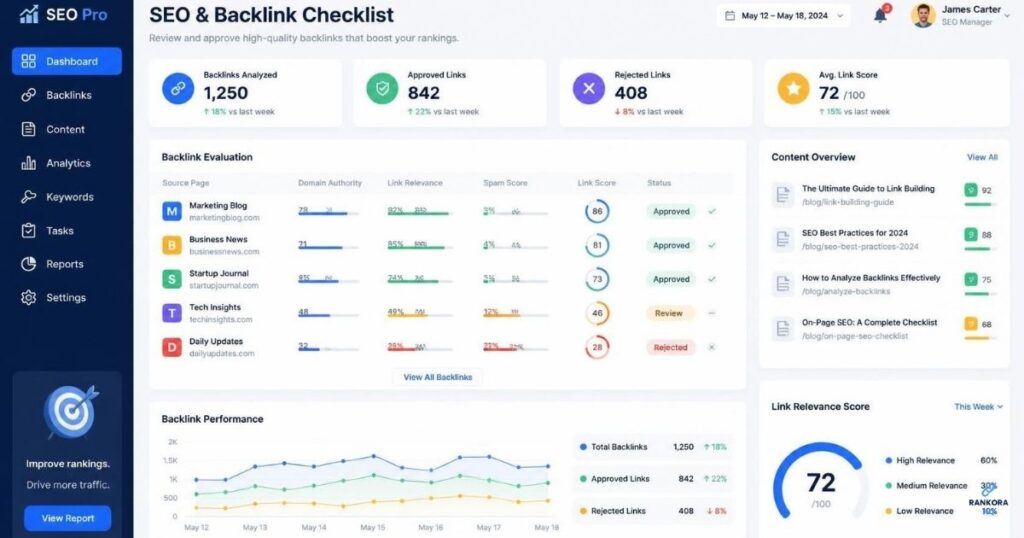
A structured checklist helps agencies review niche edit opportunities consistently. Instead of relying on one metric, evaluate every placement across multiple relevance factors.
This process helps identify whether a link insertion provides real contextual value or simply exists to manipulate rankings.
Step 1: Review the Website and Section
Start by checking if the publisher covers topics related to your niche. Then review the specific category where the article is published.
Confirm that both the website and section attract the right audience for your link.
Step 2: Analyze the Page and Paragraph Context
Read the full article instead of judging only from the title. Check whether the page topic supports your link and whether the paragraph placement feels natural.
Ask:
- Does the link add value to the discussion?
- Would readers find it useful?
- Does it fit without forcing changes?
Step 3: Verify the Target Page and Anchor Text
Review the destination page to make sure it matches the reader’s intent. The anchor text should also describe the linked resource naturally.
A relevant target page combined with natural anchor text creates stronger niche edit topical fit and improves the overall quality of the placement.
Common Mistakes Agencies Make When Checking Niche Edit Relevance
Many poor niche edit placements happen because agencies focus on single metrics instead of evaluating the full context. Avoiding these mistakes helps maintain stronger and more natural link placements.
Choosing DR Over Topical Fit
A high-authority website does not automatically mean a valuable niche edit. If the website, page, or paragraph has no connection to your topic, the link may lack contextual value.
Relevance should come before metrics. A lower-DR website with strong topical alignment can often be a better fit than a powerful but unrelated publisher.
Checking Only the Website Level
Another common mistake is judging relevance only by the domain. A website may cover multiple topics, but not every section or article will be suitable for your link.
Using Forced Anchor Text
Over-optimized anchor text can make a link placement look unnatural. Agencies often try to insert exact-match keywords even when they do not fit the sentence.
Choose anchor text that supports the content and clearly explains the linked resource.
Ignoring the Target Page
A relevant placement can still fail if the destination page does not match the reader’s intent. Always make sure the linked page provides the information users expect after clicking.
Frequently Asked Questions
What is topical relevance for niche edits?
Topical relevance for niche edits means the link placement matches the website, page, and content context where it appears.
How do you check if a niche edit is relevant?
Review the website, section, page, paragraph, target page, and anchor text to confirm the link fits naturally.
Is topical relevance more important than DR for niche edits?
Yes. A relevant placement on a suitable page can provide more value than a high-DR link from an unrelated website.
What makes a niche edit link contextual?
A contextual niche edit supports the existing content and provides useful information that matches the reader’s intent.
Should niche edits always come from the same industry?
Not always, but the website and content should have a clear connection to your topic and target audience.
How important is anchor text in niche edits?
Anchor text helps connect the source content with the destination page, so it should be natural and relevant.
Conclusion
A successful niche edit is not just about placing a link on a powerful website. The real value comes from making sure every part of the placement connects naturally — from the website and section to the page, paragraph, target page, and anchor text.
By following this relevance framework, agencies can avoid weak placements and focus on backlinks that provide genuine value to users and search engines. At Rankora HQ, I focus on editorial placements where context comes first, ensuring every link has a clear reason to exist. If you want to build niche edits with a relevance-first approach, our team can help you find and secure quality placements.
Author Bio
Muhammad Awais is the founder of Rankora HQ, a white-label editorial content placement service based in Salalah, Oman. He helps SEO agencies and brands build topical authority through high-quality publishing partnerships on DR 40-90 editorial sites.
LinkedIn: linkedin.com/in/muhammad-awais-seo-outreach