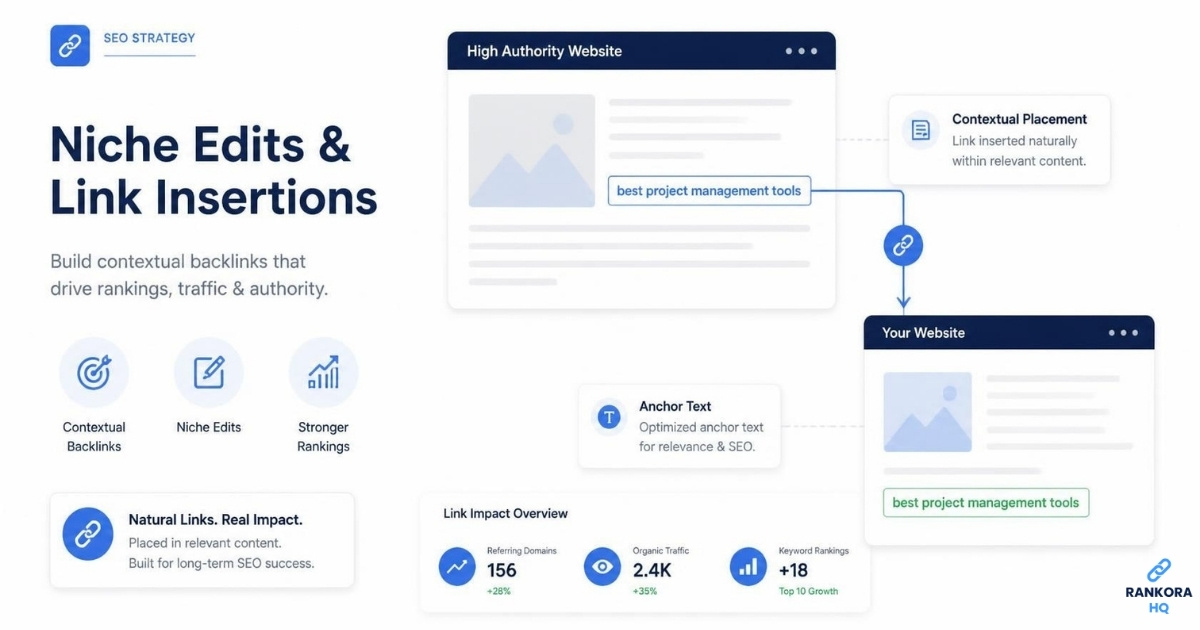
If you are asking what are niche edits, the simple answer is this: they are backlinks added into existing content on relevant websites. Instead of publishing a brand-new guest post, a niche edit places your link inside a page that is already live, indexed, and often already trusted by Google.
In my experience running link placement campaigns, the real value is not just getting a link. It is finding a page where the link actually belongs. This guide explains what are niche edits, how link insertions work, how to judge page quality, how to choose anchor text, what risks to avoid, and how to track placements after they go live.
What Are Niche Edits in SEO?
Niche edits are backlinks added to existing content on another website. The link is placed inside a relevant article, guide, list, or resource page where it adds context for the reader.
In SEO, this matters because the page is already live. It may already have age, traffic, rankings, internal links, and topical history. That is different from creating a new page from zero.
Simple definition of niche edits
A niche edit is a link inserted into an existing page that is already published and indexed.
For example, if a website has an article about “local SEO for dentists,” and your page explains dental SEO pricing, your link could be added where pricing, agency selection, or SEO planning is already discussed.
The link should feel natural. It should help the reader understand the topic better, not look like it was forced into the paragraph only for SEO value.
Why they are also called link insertions
Niche edits are also called link insertions because the process is exactly that: a link is inserted into existing content.
Some people use both terms in the same way. In agency work, I usually hear “niche edits” when people talk about the link building method, and “link insertions” when they talk about the actual placement.
The goal is the same in both cases. You want a relevant backlink placed inside content that already makes sense for your target page.
How niche edit links use existing content backlinks
Niche edit links work by using the value of an existing page instead of waiting for a new page to build trust over time.
A good existing page may already have:
- Search visibility
- Relevant keywords
- Internal links
- Reader engagement
- A clean backlink profile
- A clear topic match
That is why page evaluation matters so much. A link from an old page is not automatically valuable. The page still needs to be relevant, indexed, readable, and editorially clean.
When niche edits make sense in a link building strategy
Niche edits make sense when you want contextual backlinks from pages that already discuss a related topic.
They are useful for supporting blog posts, resource pages, comparison pages, and sometimes commercial pages when the context is natural. They also work well when a brand needs steady authority building without publishing a guest post for every link.
In my experience, niche edits work best when they are used as part of a balanced strategy. They should support strong content, not replace it.
How Niche Edits and Link Insertions Work
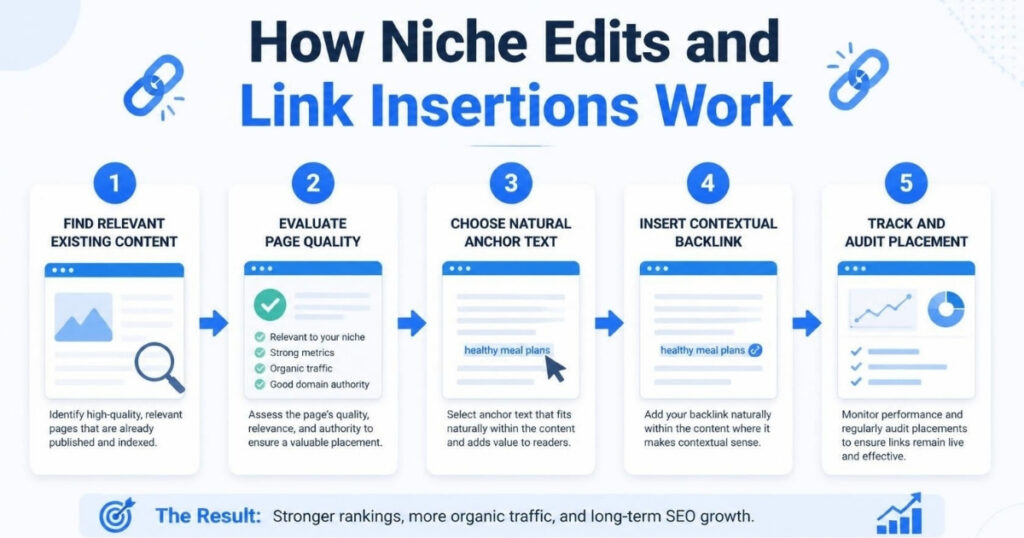
Niche edits work by placing a backlink inside an existing page after the page has been reviewed for relevance, quality, and fit. The process sounds simple, but the quality depends on how carefully the page is selected.
A good link insertion should not disturb the article. It should fit the paragraph naturally and give the reader a useful next step.
Step 1: Find an existing page with topical relevance
The first step is finding a page that already covers a topic close to your target URL.
For example, if your page is about SaaS onboarding, the host page should discuss SaaS growth, customer success, product adoption, or onboarding strategy. A random marketing article is not enough.
Topical relevance is the first filter. If the page topic does not match, the link will feel forced.
Step 2: Review the page before outreach or approval
Before asking for a placement, the page needs a manual review.
I usually check whether the page is indexed, has real content, receives organic traffic, and has a clean outbound link profile. I also look at whether the article was written for readers or only created to sell links.
Metrics help, but they do not explain the overall review. A page can have strong DR and still be a poor placement if the content is thin or full of unrelated outbound links.
Step 3: Insert the link naturally inside the existing content
The link should be added where it supports the existing point.
This may mean adding one short sentence, improving an existing paragraph, or placing the link on a natural anchor that already fits the topic. The goal is to make the edit look editorial, not promotional.
A strong niche edit reads like it was always meant to be there.
Step 4: Confirm the placement is live and crawlable
Once the link is added, the live page should be checked carefully.
The link should point to the correct URL, use the approved anchor text, and appear inside visible body content. It should not be hidden, blocked, placed in a comment section, or added to a page that cannot be crawled.
This step protects both the client and the campaign.
Step 5: Track the link after publication
A niche edit should not be forgotten after it goes live.
The placement needs to be recorded with the live URL, anchor text, target URL, publish date, and publisher details. It should also be checked over time to make sure the link stays active.
In my experience, tracking is where many campaigns become messy. A clean report makes it easier to audit links, explain value to clients, and catch removed placements early.
Niche Edits vs Guest Posts vs Digital PR
Niche edits, guest posts, and digital PR all build backlinks, but they work in different ways. The right option depends on your goal, the type of page you want to support, and how much control you need over the placement.
Niche edits use existing content. Guest posts create new content. Digital PR earns coverage through newsworthy stories, data, or expert commentary.
How niche edits differ from guest posts
A niche edit places your link inside an article that is already published. A guest post is a new article that is written and published on another website it’s about overall new article not existing.
The biggest difference is speed and page history. With a niche edit, the page may already be indexed, ranking, and receiving traffic. With a guest post, the new page usually needs time to get crawled, indexed, and trusted.
Guest posts can still be useful when you want more control over the topic. Niche edits are better when a strong existing page already matches your target page.
How niche edits differ from digital PR links
Digital PR links usually come from media coverage, data campaigns, expert quotes, or news-style mentions.
These links can be powerful, but they are less controlled. You may not choose the exact anchor text, landing page, or placement context. The journalist or editor decides how the brand is mentioned.
Niche edits give more placement control. Digital PR gives more brand exposure and authority when the campaign earns real coverage.
When link insertions SEO is the better option
Link insertions SEO is often better when you need a relevant backlink from a page that already fits your topic.
This works well for supporting blog posts, service pages, comparison pages, and resource pages. It is also useful when you want links placed inside content that already has search visibility.
In my experience, niche edits are strongest when the link adds value to the page instead of changing the purpose of the article.
When a guest post or PR mention may be better
A guest post may be better when you need to cover a topic that does not already exist on the publisher’s site. It also works well when you want to shape the full article around a specific angle.
Digital PR may be better when the goal is brand visibility, authority, or earning mentions from high-profile publications.
Niche edits are not the answer for every campaign. They work best when there is already a strong page where your link naturally belongs.
How to Evaluate a Page Before a Niche Edit
A niche edit is only as strong as the page it is placed on. Before approving any placement, the page should be reviewed for relevance, traffic, quality, and link behavior.
I never judge a page by DR alone. A high-authority domain can still have weak pages, thin content, or an unnatural outbound link pattern.
Topical match between the page and your target URL
The page should match the topic of your target URL closely.
For example, if your target page is about email marketing software, a placement on a page about SaaS tools, email automation, or lead nurturing makes sense. A general business article with no real connection is weaker.
The closer the topic match, the more natural the link feels.
Organic traffic and ranking history
A good page should have some sign of organic visibility.
It does not always need huge traffic, but it should show that search engines understand and trust the page. If the page has rankings for relevant keywords, that is usually a better sign than a page with no visibility at all.
Traffic also shows that real users may actually see the link.
Page age, freshness, and content depth
Older pages can be useful because they already have history, but age alone is not enough.
The content should still be accurate, readable, and useful. If the article has outdated advice, broken formatting, or thin paragraphs, the placement may not add much value.
A strong page usually has enough depth to support the link naturally.
Domain quality beyond DR or DA
DR and DA can help with quick filtering, but they should never be the final decision.
I also check whether the site has real traffic, clear authorship, normal publishing patterns, and a clean content mix. A real editorial site usually has a clear audience and consistent topics.
A site built only to sell links is easy to spot when you review it manually.
Outbound link profile and spam patterns
The page should not be filled with random outbound links.
Too many unrelated links can make the page look like a link-selling page. I also check whether the linked sites are relevant, trusted, and natural for the topic.
If a page links to casinos, adult sites, crypto spam, or unrelated commercial pages, I usually reject it.
Indexing, crawlability, and page visibility
The page should be indexed and accessible to search engines.
If the page is blocked, noindexed, hidden, or hard to crawl, the link may not carry much SEO value. The link should also appear in visible body content, not in a footer, sidebar, comment section, or hidden block.
A good niche edit should be easy for both readers and search engines to find.
Why Contextual Relevance Matters Most
Contextual relevance is what makes a niche edit look natural and useful. The link should support the topic of the page, the paragraph, and the reader’s next question.
A backlink placed on a high-DR site can still be weak if the context is wrong. Relevance is what connects the host page, anchor text, and target URL into one clear reason for the link to exist.
What contextual link insertions should look like
A contextual link insertion should sit inside the main body of the article.
It should appear in a sentence where the linked page adds more detail, support, data, or explanation. The link should not feel like a random promotion dropped into the content.
A good test is simple: would the sentence still make sense to a reader if SEO did not exist? If yes, the placement is usually more natural.
Page-level relevance vs sentence-level relevance
Page-level relevance means the full article matches your target topic.
Sentence-level relevance means the exact sentence around the link also makes sense. Both matter.
For example, a marketing article may be broadly relevant to an SEO tool. But if the link is placed inside a paragraph about social media captions, the sentence-level relevance is weak.
The best niche edits have both: a relevant page and a relevant paragraph.
How topical relevance improves link value
Topical relevance helps search engines understand why one page is linking to another.
If a SaaS marketing guide links to a SaaS content strategy page, the connection is clear. The link supports the topic instead of confusing it.
In my experience, relevant placements are also easier to approve, easier to report, and easier to defend during a link audit.
Why irrelevant placements create SEO risk
Irrelevant placements can make a link look manipulative.
When a page about home gardening links to a fintech software page with no clear reason, the link does not help the reader. It only looks like it was added for ranking purposes.
Too many links like this can weaken trust and make a backlink profile look unnatural.
Real example of a natural vs forced insertion
A natural insertion would look like this:
A guide about “technical SEO audits” mentions crawl errors, indexation issues, and internal linking. A link to a detailed SEO audit checklist fits because it helps the reader take the next step.
A forced insertion would be different.
The same technical SEO article suddenly links to a payday loan page, online casino page, or unrelated local service page. The topic does not match, the sentence feels awkward, and the link looks placed for SEO only.
That is why I treat relevance as the first quality filter, not an optional detail.
Anchor Text Selection for Niche Edit SEO
Anchor text selection matters because it tells readers and search engines what the linked page is about. A good anchor should feel natural inside the sentence and match the page it points to.
In niche edit SEO, the safest anchor is usually the one that fits the context first. If the anchor looks forced, the whole placement becomes weaker.
What anchor text does in a niche edit
Anchor text is the clickable text used for the backlink.
For example, in the phrase SEO audit checklist, the words “SEO audit checklist” could link to a page that explains how to audit a website.
The anchor gives context. It helps the reader understand what they will find after clicking the link.
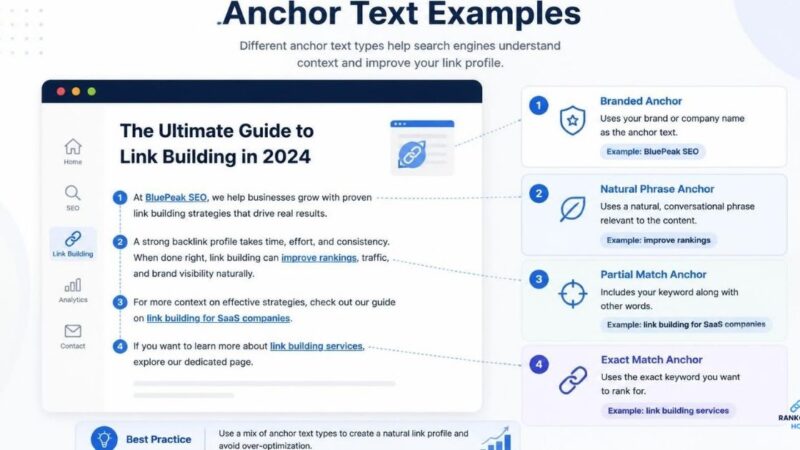
Branded, partial-match, exact-match, and natural anchors
Most niche edit links use one of four anchor types.
Branded anchors use the company or website name, such as Rankora HQ.
Partial-match anchors include part of the target keyword in a natural phrase.
Exact-match anchors use the exact keyword you want to rank for.
Natural anchors use simple phrases like “this guide,” “the report,” or “this resource.”
A healthy backlink profile usually uses a mix. It should not rely too heavily on exact-match anchors.
How to choose anchors without over-optimization
The best anchor is the one that fits the existing sentence without sounding awkward.
I usually look at three things:
- The topic of the host page
- The target URL being linked
- The anchor history of the client’s backlink profile
If a site already has many keyword-heavy anchors, I avoid adding more. A branded or partial-match anchor is often safer.
Anchor text mistakes that make links look manipulative
The most common mistake is forcing an exact-match keyword into a sentence where it does not belong.
For example, using “best CRM software cheap pricing 2026” as an anchor looks unnatural. It reads like it was written for rankings, not people.
Other mistakes include repeating the same anchor too often, linking commercial anchors from unrelated pages, and using anchors that do not match the target page.
How agencies should document anchor decisions
Agencies should record every anchor text decision before and after placement.
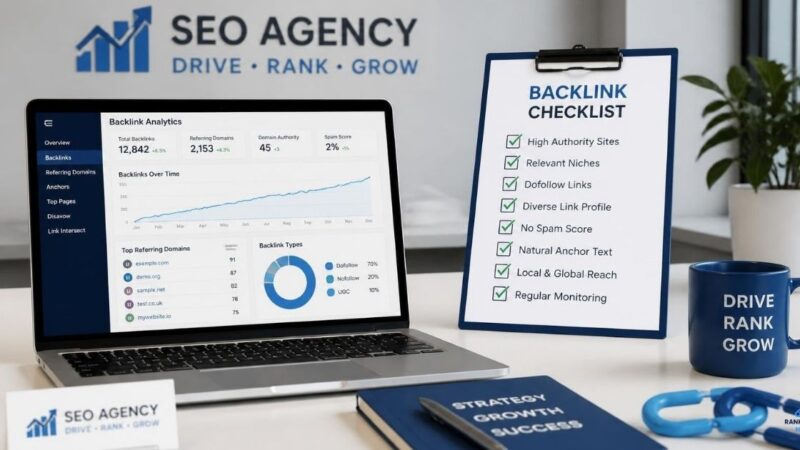
A simple report should include the live URL, target URL, anchor text, placement date, and reason for choosing that anchor. This keeps the campaign transparent and easier to audit later.
For white-label work, this is especially important. The client should know exactly what was placed, where it was placed, and why that anchor was selected.
Quality Standards, Risks, and Spam Concerns
A niche edit is only safe when the placement is relevant, editorial, and visible to real users. The risk usually comes from poor-quality sites, forced links, hidden placements, or sellers who care more about volume than quality.
In my experience, the safest niche edits are the ones that can pass a simple manual review. If the page looks useful, the link fits naturally, and the publisher has real standards, the placement is much easier to trust.
What separates a quality niche edit from a cheap placement
A quality niche edit is placed on a relevant page with real content, real visibility, and a clean link profile.
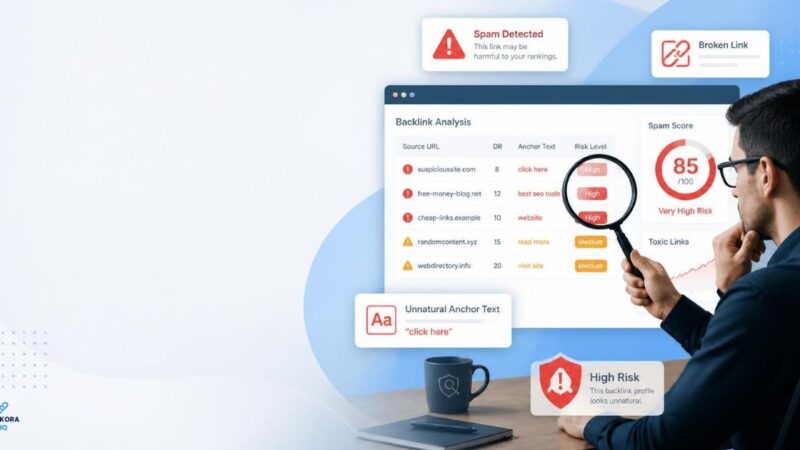
A cheap placement often looks different. The page may have thin content, no traffic, too many outbound links, or links to unrelated industries.
Price alone does not define quality, but extremely cheap links usually come with shortcuts.
Editorial control and publisher approval
A proper niche edit should involve editorial approval.
The publisher should understand where the link is being added and why it makes sense. The edit should improve or support the content, not damage the article just to place a backlink.
When there is no review process, quality drops fast.
Low-quality domains, link farms, and PBN-style sites
Some sites exist mainly to sell links. These are the placements I avoid.
Common warning signs include random topics, weak content, fake author profiles, no clear audience, and too many commercial outbound links. A site that covers every niche with no focus usually has little editorial value.
A strong niche edit should come from a site that looks useful even without the backlink.
Hacked links, hidden links, and automated placements
Hacked links and hidden links are not real niche edits. They are spam.
A link should never be injected without the site owner’s permission. It should also never be hidden in code, placed in invisible text, or added through automated software.
If the link is not visible and editorially approved, it is not a safe placement.
Google risk: what is safe, risky, and clearly spammy
No backlink method is risk-free if it is abused.
A relevant, editorially placed link inside useful content is much safer than a random paid link on a low-quality page. The risk rises when anchors are over-optimized, pages are irrelevant, or placements are clearly bought in bulk.
The goal is not to trick Google. The goal is to earn or secure links that make sense in the content.
Why transparency matters before anything goes live
Transparency protects the client, the agency, and the campaign.
Before a niche edit goes live, the client should know the publisher, page topic, target URL, anchor text, and placement context. Nothing should be published without approval.
That is how I prefer to manage niche edit campaigns: clear review first, placement second, reporting after.
Niche Edit Pricing and Cost Factors
Niche edit pricing depends on the quality of the publisher, the relevance of the page, and the amount of work needed to secure the placement. There is no single fixed price that applies to every link.
A good niche edit is not just a URL with a backlink. It includes research, review, outreach, approval, placement checking, and reporting.
Why niche edit links do not have one fixed price
Niche edit links vary because every publisher is different.
Some websites have stronger authority, better traffic, stricter editorial rules, or more difficult approval processes. Others are easier to access but may offer weaker value.
That is why judging price without checking quality can be misleading. A cheap placement can become expensive if it adds risk instead of value.
Publisher quality, traffic, niche, and authority
The publisher’s quality is one of the biggest pricing factors.
A relevant website with real traffic, clean content, and strong editorial standards will usually cost more than a low-quality site with no audience. Niches also matter. Finance, SaaS, health, legal, and technology placements often cost more because they are more competitive.
Authority metrics can help, but they should not be the only reason for the price.
Content edits, approval process, and reporting workload
The work behind the placement also affects cost.
A proper niche edit may require finding the right page, suggesting a natural content update, choosing the anchor text, getting approval, checking the live link, and preparing a report.
For agencies, reporting is especially important. Clients need to see the page, anchor, target URL, and placement details clearly.
Cheap niche edits vs sustainable link insertions
Cheap niche edits often come from low-quality sites, link farms, or pages with too many outbound links.
Sustainable link insertions are different. They focus on relevance, editorial approval, clean placement, and long-term value.
In my experience, it is better to build fewer quality links than fill a campaign with weak placements that may need to be removed later.
How agencies should explain pricing to clients
Agencies should explain niche edit pricing based on quality, not just DR.
A clear explanation may include:
- Publisher relevance
- Organic traffic
- Page quality
- Anchor text strategy
- Approval process
- Reporting and tracking
- Risk control
This helps the client understand what they are paying for. The real value is not the link alone. It is the quality control behind the link.
FAQs
What is a niche edit?
A niche edit is simply dropping a backlink into an existing, relevant article. Instead of starting from scratch, the link is woven naturally into context where it actually adds value for the reader.
What is the difference between niche edits and guest post?
Think of a niche edit as inserting a backlink right into an existing, relevant article. Rather than starting from scratch, you just weave the link into the context where it genuinely adds value for the reader.
What does “niche” mean in blogging?
In blogging, a niche means a specific topic or industry a website focuses on. For example, SEO, fitness, finance, parenting, and SaaS are all blogging niches.
What are niche edits in SEO?
Niche edits in SEO are contextual backlinks placed inside existing content to help improve authority, relevance, and search visibility. They work best when the host page and target page are closely related.
What is a niche in editing?
In editing, a niche means the specific subject area or content category being edited. For niche edits, it refers to placing links inside content that matches the same topic or industry.
Conclusion
Niche edits can be useful when they are placed with care, relevance, and full review. The goal is not to add links anywhere they can fit. The goal is to find existing content where your link helps the reader and supports the topic naturally.
A strong niche edit should come from a relevant page, use sensible anchor text, follow editorial standards, and be tracked after it goes live. If you are building links for clients, this level of control matters even more because every placement reflects on your agency’s work.
If you want to see how this works in practice, you can review our niche edits service at /niche-edits-link-insertions/ for a clearer look at how quality-controlled link insertions are handled.
Author Bio:
Muhammad Awais is the founder of Rankora HQ, a white-label editorial content placement service based in Salalah, Oman. He helps SEO agencies and brands build topical authority through high-quality publishing partnerships on DR 40-90 editorial sites.