Choosing between white label link building vs in house fulfillment is not just a cost decision. It affects your staffing, systems, campaign control, client experience, delivery speed, and ability to scale without breaking your operations.
In my experience running link placement campaigns for agencies, the right model depends on where your agency is today. This comparison of white label link building vs in house link building will help you decide whether to build an internal outreach team, outsource fulfillment, or use a hybrid model that gives you both control and capacity.
White-Label vs In-House Link Building: Quick Comparison
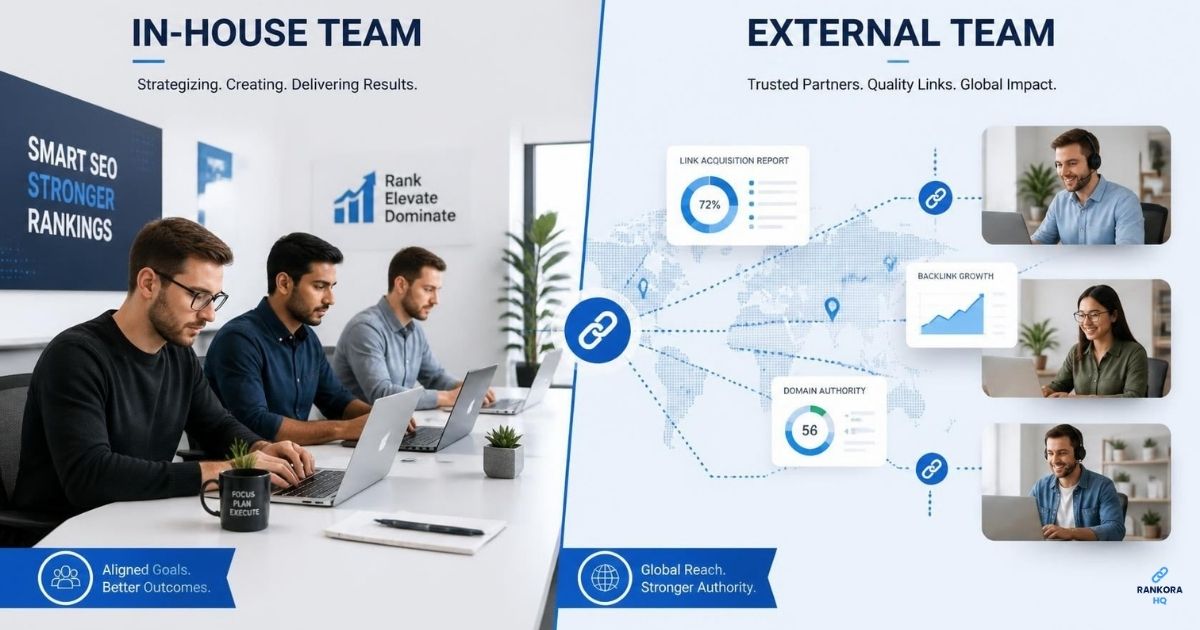
The main difference is simple: in-house link building gives you more direct ownership, while white-label link building gives you more flexible fulfillment capacity. Neither model is automatically better. The right choice depends on your team size, monthly link volume, client expectations, and how much operational work your agency can handle.
For most agencies, this is not only a link building decision. It is a staffing, systems, cost, risk, and scaling decision.
The Short Answer for Agency Owners
If your agency has stable demand, strong margins, and someone experienced enough to manage outreach daily, an in-house team can make sense.
If your agency needs faster delivery, lower fixed costs, and the ability to scale across multiple clients without hiring more people, white-label fulfillment is usually the easier model.
The best answer often sits between the two. Many agencies keep strategy, client communication, and quality control in-house, then use white-label support for execution.
Side-by-Side Comparison
| Factor | In-House Link Building | White-Label Link Building |
| Staffing | Requires hiring and training an internal team | Uses an external fulfillment team |
| Systems | Agency must build outreach, content, QA, and reporting systems | Systems are already built by the provider |
| Control | Higher direct control over every step | Strong control if approvals and reporting are transparent |
| Costs | Higher fixed costs through salaries and tools | More flexible, usually based on campaign or placement volume |
| Risk | Team turnover, slow output, weak outreach systems | Quality risk if the provider is not transparent |
| Speed | Slower to start because systems take time | Faster to launch because infrastructure already exists |
| Scale | Harder to scale quickly without more hires | Easier to scale across multiple clients |
The Core Difference: Building Capacity vs Buying Capacity
In-house link building means your agency is building its own fulfillment machine. You own the people, tools, processes, training, and quality checks.
White-label link building means your agency is buying fulfillment capacity from a specialist team. You still manage the client relationship, but the heavy delivery work is handled outside your internal team.
That is the real comparison: do you want to build the operation yourself, or plug into one that already exists?
Why This Decision Matters Before Scaling SEO Clients
Link building becomes difficult when client growth moves faster than fulfillment capacity. One or two clients may be manageable with a small internal team. Ten or twenty clients can expose weak systems quickly.
This is where agencies often feel the pressure. Sales keeps moving, but outreach, content, approvals, publisher communication, and reporting all need time.
Choosing the right model early helps protect delivery quality, client trust, and agency margins.
What Each Link Building Model Actually Means
Before comparing costs, control, and scale, it helps to define both models clearly. In this article, I am not using “white-label” as a broad marketing term. I am comparing it directly against building and managing an internal link building operation.
What In-House Link Building Means for an Agency
In-house link building means your agency handles link fulfillment with its own team.
That usually includes prospecting websites, managing outreach, writing or editing content, negotiating placements, checking quality, tracking links, and reporting results to clients.
What White-Label Link Building Means in This Comparison
White-label link building means an external fulfillment team handles the delivery under your agency’s brand.
Your client does not need to know another provider is involved. The work is presented through your agency, while the provider supports the backend execution.
For a deeper explanation of the model itself, read the parent guide: What Is White-Label Link Building? Complete Guide for SEO Agencies.
Staffing and Internal Management Requirements
Staffing is one of the biggest differences between in-house and white-label link building. An in-house model needs people, training, and daily supervision. A white-label model reduces the hiring burden, but it does not remove agency management completely.
Roles Needed for an In-House Link Building Team
An internal link building team usually needs more than one person.
At minimum, you need someone to find prospects, send outreach, manage replies, review sites, coordinate content, check anchors, and prepare reports.
As volume grows, this often turns into several roles:
- Outreach specialist
- Link prospecting assistant
- Content writer
- Editor
- Quality reviewer
- Campaign manager
The challenge is not only hiring these people. The real challenge is keeping their work consistent across every client campaign.
What Agencies Still Manage With White-Label Fulfillment
White-label link building removes a large part of the execution work, but the agency still owns the client relationship.
You still need to set the strategy, approve publishers, review anchor text, check content quality, and make sure the final report matches the client’s expectations.
This is important because outsourcing fulfillment does not mean outsourcing responsibility. The client still trusts your agency.
Which Model Requires More Daily Oversight?
In-house link building usually requires more daily oversight.
Your team needs direction, feedback, training, quality checks, and workload management. If one person slows down, the whole campaign can fall behind.
White-label fulfillment usually requires less daily involvement. The agency’s role is more focused on approvals, communication, and final quality control.
The Hidden Cost of Founder or Account Manager Time
Many agencies underestimate management time.
If the founder or account manager is constantly checking prospects, fixing outreach issues, chasing writers, or preparing reports, that time has a real cost.
This is often where in-house link building becomes heavier than expected. The salary cost may look manageable, but the internal management cost can quietly reduce profit margins.
Systems, Tools, and Process Ownership
Link building does not run on outreach alone. It needs systems. The agency that owns the system also owns the responsibility for speed, quality, follow-ups, content flow, and reporting.
What an Internal Outreach Team Must Build From Scratch
An in-house team needs its own process for every step.
That includes finding prospects, checking site quality, managing outreach emails, tracking replies, writing content, reviewing anchors, confirming live links, and preparing client reports.
You also need tools for prospecting, SEO checks, email outreach, inbox management, project tracking, and reporting.
These systems take time to build. They also need constant updates as campaigns grow.
What White-Label Link Building Usually Brings Ready-Made
White-label fulfillment usually comes with existing systems already in place.
The provider often has publisher relationships, outreach workflows, content processes, quality checks, and reporting templates ready to use.
This can save an agency months of setup time.
The agency still needs its own approval process, but it does not have to build the full fulfillment engine from zero.
Cost Structure and Operational Economics
Cost is not only about the price of a link. It is about people, tools, time, systems, and how predictable your monthly delivery needs are.
In-House Link Building Costs
An in-house team usually creates fixed costs.
You may need to pay for salaries, training, SEO tools, outreach software, email accounts, content writing, editing, and project management.
Even when campaign volume is low, these costs still remain.
That can work well if your agency has steady client demand. But if link volume changes every month, fixed costs can hurt margins.
White-Label Link Building Costs
White-label link building usually works as a variable cost.
You pay based on campaign needs, placements, or monthly fulfillment volume.
This makes budgeting easier for agencies that do not want to hire before demand is stable.
It also helps when you need extra capacity for a short period without adding permanent staff.
Fixed Costs vs Variable Costs
In-house link building gives you more ownership, but it locks your agency into fixed monthly expenses.
White-label fulfillment gives you more flexibility because the cost usually moves with client demand.
This difference matters when your agency is growing. A fixed team can become profitable at high volume, but expensive during slow months.
When In-House Becomes More Economical
In-house link building can make more financial sense when your agency has consistent link volume every month.
It also works better when you already have trained staff, strong outreach systems, and enough campaigns to keep the team fully busy.
Without steady volume, the cost per successful placement can become higher than expected.
When Outsourcing Protects Agency Margins
White-label outsourcing can protect margins when client demand is unpredictable.
Your agency does not need to pay for idle staff, unused tools, or months of training before delivery starts.
This is why many agencies use white-label fulfillment while they are growing. It lets them sell link building services without carrying the full operational cost too early.
Control Over Campaigns, Quality, and Client Experience
Control is not only about who builds the links. It is about who sets the standards, approves the work, and protects the client relationship.
Where In-House Gives Agencies More Direct Control
In-house link building gives your agency direct control over every step.
Your team controls outreach messaging, prospect selection, publisher standards, content quality, anchor text, timelines, and reporting.
This can be useful for agencies with strict client requirements or highly sensitive niches.
The downside is that more control also means more responsibility. If a campaign slows down or quality drops, the issue sits fully inside your agency.
Where White-Label Can Still Give Strong Control
White-label link building does not have to mean losing control.
A transparent workflow can still give your agency approval over publishers, content topics, anchor text, and final reports before anything is delivered to the client.
This is the model I prefer in real campaigns. The agency should never feel blind. Nothing should go live without review and approval.
The Difference Between Control and Workload
Many agencies confuse control with doing everything themselves.
You can keep strategic control without handling every manual task.
For example, your agency can own the client strategy, approve placements, and check quality, while a white-label team handles prospecting, outreach, content coordination, and fulfillment.
That gives you control without carrying the full workload.
Why Quality Control Must Stay Inside the Agency Either Way
Whether you build links in-house or use outsourced backlinks, quality control should stay with your agency.
Your client hired you. So your team should still review relevance, traffic quality, anchor usage, content fit, and final reporting.
This protects the client relationship and keeps your agency accountable for the result.
Risk, Reputation, and Accountability
Risk exists in both models. The real question is who controls the risk, who checks the work, and who is accountable when something goes wrong.
Risks of Building Links In-House
In-house link building can create risk when the team lacks experience.
Common issues include weak outreach, poor publisher vetting, slow follow-ups, thin content, and bad anchor text decisions.
Team turnover is another risk. If your main outreach person leaves, campaigns can slow down immediately.
This is why an internal team needs clear standards, not just activity.
Risks of White-Label Link Building
White-label link building can create risk if the fulfillment partner is not transparent.
The biggest concerns are low-quality publishers, unclear reporting, irrelevant placements, and links going live without proper approval.
For agencies, this is dangerous because the client sees the work as yours.
That means poor fulfillment can damage your agency’s reputation, even if the work was outsourced.
Which Model Carries More Reputational Risk?
Both models carry reputational risk, but in different ways.
With in-house link building, the risk comes from your own team’s mistakes or lack of capacity.
With white-label fulfillment, the risk comes from relying on another team’s standards.
The safer model is not always in-house or white-label. The safer model is the one with better checks, clearer approvals, and stronger quality control.
Why Approval Workflows Reduce Risk in Both Models
Approval workflows protect the agency before anything reaches the client.
For in-house teams, they prevent rushed outreach and weak placements from slipping through.
For white-label teams, they make sure the agency can review publishers, anchors, content, and final reports before publication.
In both cases, accountability should be clear. Someone must own the final quality before the client sees the result.
Speed, Capacity, and Scaling Across Multiple SEO Clients
Speed becomes a serious issue when link building moves from one campaign to many. A model that works for two clients may not work when your agency is managing ten, twenty, or more SEO accounts.
Why In-House Teams Often Scale Slowly
In-house teams need time to grow.
You have to hire people, train them, build systems, test outreach angles, create content workflows, and manage quality checks.
Even after hiring, new team members need time to understand your standards.
This makes in-house scaling slower, especially when new client demand comes in quickly.
Why White-Label Link Building Is Usually Faster to Scale
White-label link building is usually faster because the fulfillment system already exists.
The provider may already have outreach processes, publisher relationships, content workflows, and reporting structures in place.
This helps agencies take on more client work without waiting months to build internal capacity.
It does not remove the need for quality checks, but it can reduce delivery pressure.
What Happens When 3 Clients Become 20 Clients
Three clients can often be managed with a small team and manual tracking.
Twenty clients are different.
At that stage, every weak process becomes visible. Outreach gets delayed, content queues pile up, approvals slow down, and reports become harder to manage.
This is where agencies need either a strong internal system or a reliable white-label fulfillment process.
The Real Scaling Question
The real question is not, “Can we sell more link building?”
The better question is, “Can we deliver more link building without hurting quality?”
If fulfillment cannot keep up with sales, client trust suffers.
For growing agencies, the best model is the one that protects delivery quality while giving enough capacity to handle new client demand.
White-Label vs In-House: Decision Framework for Agencies
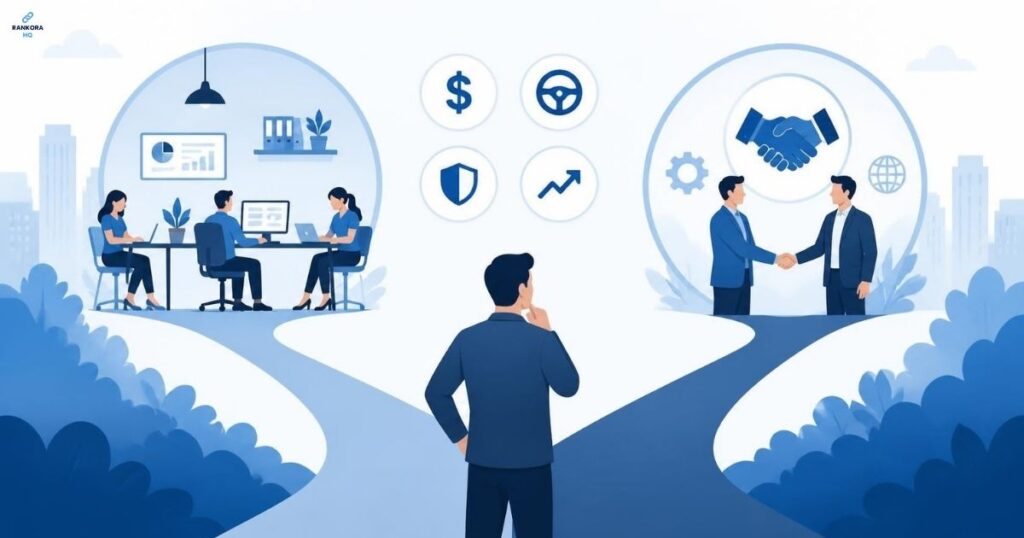
The right choice depends on your agency’s stage, not a universal winner. In-house works best when you are ready to own the full operation. White-label works best when you need flexible delivery without building a full internal team.
Choose In-House Link Building When
In-house link building makes sense when your agency has steady link demand every month.
It also works well if you already have experienced people who understand outreach, content quality, publisher vetting, and client reporting.
This model is better when you need very tight control over campaigns and have enough margins to support fixed team costs.
Choose White-Label Link Building When
White-label link building makes sense when your agency needs more capacity without hiring.
It is useful when client demand is growing, but your internal team is not ready to handle prospecting, outreach, content coordination, and reporting at scale.
This model also helps agencies protect margins because fulfillment costs can move with client demand.
Use a Hybrid Model When
A hybrid model is often the most practical option.
Your agency can keep strategy, client communication, approvals, and quality control in-house. Then a white-label team can support execution and delivery.
This gives you more control than full outsourcing and more capacity than a small internal team.
Simple Decision Checklist
Ask these questions before choosing a model:
- Do we have steady monthly link volume?
- Can we afford fixed team and tool costs?
- Do we have someone experienced enough to manage outreach?
- Are our internal systems already strong?
- Do we need more control or more capacity?
- Can we scale delivery without hurting quality?
- How much risk can we manage internally?
- Will this model protect our margins?
Final Recommendation
If your agency is small or growing quickly, white-label fulfillment usually gives more flexibility.
If your agency has stable demand, strong systems, and enough management time, in-house can make sense.
For many SEO agencies, the strongest model is hybrid: keep the strategy and quality control close, then use white-label support when fulfillment capacity becomes the bottleneck.
Frequently Asked Questions
Is white-label link building better than in-house link building?
White-label link building is better when an agency needs flexible capacity and faster delivery. In-house is better when the agency has stable demand, strong systems, and enough management time.
When should an agency build an internal outreach team?
An agency should build an internal outreach team when it has consistent monthly link volume and can afford fixed staffing, tools, and training costs.
Is outsourcing link building cheaper than hiring in-house?
Outsourcing can be cheaper for agencies with changing demand because costs are usually more flexible. In-house can become cheaper only when the team stays fully used every month.
Can agencies use both in-house and white-label link building?
Yes. Many agencies use a hybrid model where they keep strategy and quality control in-house, while a white-label team supports fulfillment.
What is the biggest risk of in-house link building?
The biggest risk is operational pressure. If hiring, outreach, content, or reporting systems are weak, delivery can slow down and quality can drop.
What is the biggest risk of white-label link building?
The biggest risk is lack of transparency. Agencies should never use a model where links go live without review, approval, or clear reporting.
Which model is better for scaling SEO clients?
White-label link building is usually easier to scale because the fulfillment system already exists. In-house scaling takes more time because the agency must hire, train, and manage the team.
Final Thoughts
There is no single winner in the white label link building vs in house decision. The better model depends on your agency’s current team, client volume, delivery pressure, and ability to manage operations.
In-house link building gives more direct ownership, but it also brings fixed costs and daily management. White-label fulfillment gives more flexibility, speed, and scale, but only works well when quality checks and approvals are clear. For many agencies, the best path is a hybrid model: keep strategy and client control in-house, then use white-label support when fulfillment capacity becomes the bottleneck.
If your agency needs flexible link building support without building a full internal team, Rankora HQ’s white-label editorial content placement service can help you deliver links under your own brand while keeping approval and quality control in your hands.
Author Bio
Author: Muhammad Awais
Title: Founder, Rankora HQ
Muhammad Awais is the founder of Rankora HQ, a white-label editorial content placement service based in Salalah, Oman. He helps SEO agencies and brands build topical authority through high-quality publishing partnerships on DR 40-90 editorial sites.
LinkedIn: linkedin.com/in/muhammad-awais-seo-outreach